


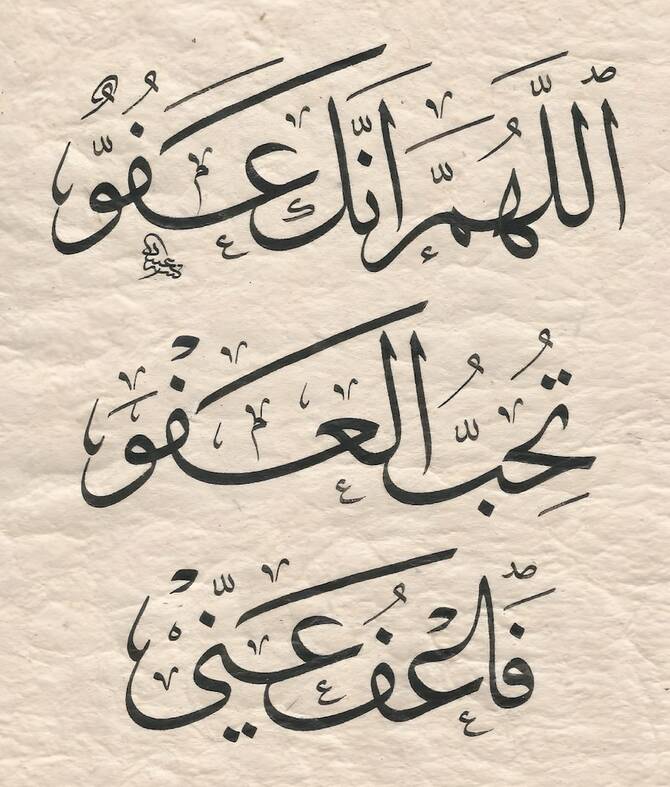
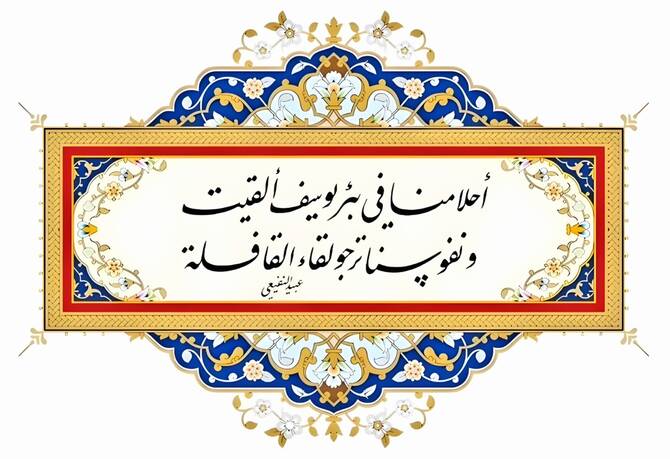
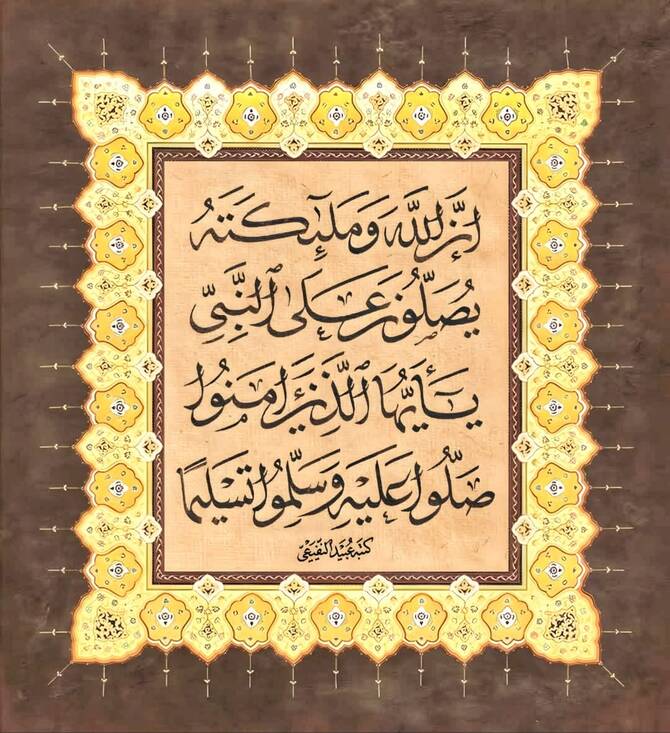


MAKKAH: At a moment of triumph that many might assume to be the apotheosis of a career, it was, for a young Saudi calligrapher, the beginning of a greater question.
Obaid Al-Nafie, winner of the Prince Mohammed bin Salman Global Center for Arabic Calligraphy competition, does not speak of the victory as a completed achievement but rather as a turning point that redefined his relationship with art, himself and others.
Al-Nafie told Arab News recently that winning did not grant him a sense of accomplishment as much as it placed on him a greater responsibility.
The true value, as he describes it, does not lie in the moment of achievement but in the ability to continue after it. Now his view of his work has changed, becoming more rigorous and concerned with searching for meaning rather than merely proving ability.
His journey begins with the text, which he “lives with and absorbs” until it becomes part of him, before allowing it the freedom to lead him toward its visual form.
Sketching, for him, is not merely preliminary lines but an attempt to understand the work’s balance and rhythm, how it “breathes” and where it “falls silent.”
As for execution, it is the decisive moment of truth: either the work is born alive, or it remains merely an attempt.
Evoking environment, architecture, or history is not aimed at informing but at making viewers feel, he says.
He believes that the relationship between tradition and modernity is not one of conflict but complementary. Tradition provides stability, while modernity grants freedom, and the deeper the artist explores the origins, the more sincere his ability to innovate becomes.
This balance, in his view, is what creates a work with a genuine character.
As for criticism, he does not see it as a destructive tool but as a means of awakening. He stresses the importance of listening to what lies beyond the words, as a single sentence may carry the power to change an artist’s perspective on an entire work.
In this context, he always asks himself two questions: Does this work represent me? And does it add to what I have previously presented? If it lacks this addition, the work becomes repetitive, no matter how beautiful it may be.
Technology “saves time and effort, but it does not shorten experience nor replace genuine practice,” he said.
He emphasizes that true competition is not with others but with oneself, and that the winning work is not always the most beautiful but the most impactful and clear.
He stresses that a solid foundation begins with mastering the principles of calligraphy, then benefiting from the experiences of those who came before, along with the courage and self-confidence to experiment.
He warns against a possible loss of talent due to undue haste or preoccupation with appearances, such as collecting tools or imitating those who have not yet matured.
Al-Nafie says the true sign of a work’s influence and lasting impact is determined by how many people return to view it.
Amid the Kingdom’s flourishing art scene, Al-Nafie believes that opportunities abound, but the real challenge lies in elevating public taste and allowing space for multiple perspectives, rather than a single viewpoint.
His dreams are beyond the limits of the canvas.
He believes in “a work that is not only read but lived; a work before which the viewer stands in silence, because they have felt something that cannot be put into words.
“And a project that makes Arabic calligraphy a living experience, accessible to all who wish to understand it and draw closer to it.”


