Saudi Ma’aden awards $921m contracts for its 3rd phosphate fertilizer plant

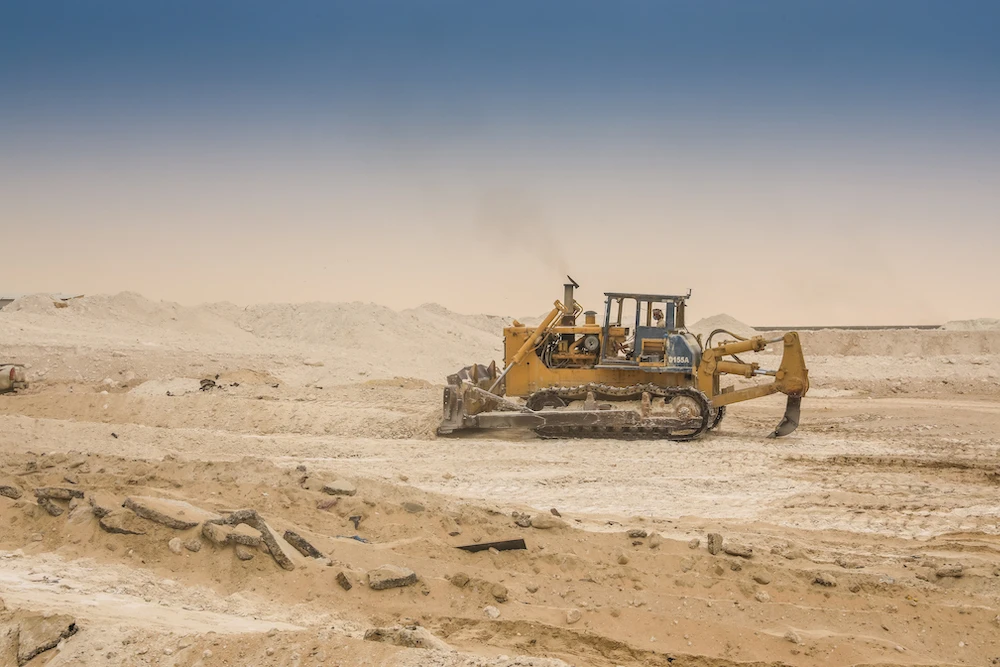
Ma’aden announced significant discoveries of gold and copper in the Arabian Shield region during the Future Minerals Forum 2025 in Riyadh, further advancing its mining ambitions. Shutterstock
Short Url
Updated 16 January 2025
Follow

Saudi Ma’aden awards $921m contracts for its 3rd phosphate fertilizer plant

  • Project designed to add 3 million metric tonnes annually to Kingdom’s phosphate production capacity
  • Contracts align with Saudi Arabia’s broader strategy to diversify its economy and expand its industrial base

JEDDAH: Saudi Arabian Mining Co. has awarded three contracts worth SR3.45 billion ($921.58 million) for its third phosphate fertilizer plant, reinforcing the Kingdom’s position in the global market.

In a filing with the Tadawul stock exchange, the national mining firm, also known as Ma’aden, named the contractors as China National Chemical Engineering Co., Sinopec Nanjing Engineering and Construction, and Turkiye-based Tekfen Construction and Installation Co.

First announced in 2016, the project is designed to add 3 million metric tonnes annually to Saudi Arabia’s phosphate production capacity. Estimated to cost SR24 billion, the facility is being developed in phases and was initially projected to reach full capacity by 2024, the company said at that time.

The contracts align with Saudi Arabia’s broader strategy to diversify its economy and expand its industrial base. As part of Vision 2030, the Kingdom is capitalizing on its vast reserves of phosphate, gold, copper, and bauxite to reduce its reliance on oil.

Valued at approximately $2.5 trillion, the Saudi mining sector is regarded as the fastest-growing globally and is positioned as the third pillar of its industrial economy.

The three contracts awarded include an SR1.22 billion agreement for general construction at Ras Al-Khair with China National Chemical Engineering. A second contract, worth SR1.36 billion, was awarded to Sinopec’s subsidiary for construction at Wa’ad Al-Shamal. Tekfen Construction secured the third contract at SR877 million, with work at Wa’ad Al-Shamal included.

The development aligns with Ma’aden’s 2016 announcement of a feasibility study for a world-class phosphate fertilizer production complex in Wa’ad Al-Shamal Minerals Industrial City, situated in Saudi Arabia’s Northern Province.

Ma’aden announced significant discoveries of gold and copper in the Arabian Shield region during the Future Minerals Forum 2025 in Riyadh, further advancing its mining ambitions.

The discoveries include extensive gold deposits at Wadi Al-Jaww and copper reserves at Jabal Shayban. Mineralization at these sites extends from shallow depths of 20 meters to depths of up to 200 meters, highlighting their potential for large-scale extraction, the company added.

Ma’aden also unveiled promising developments at its Mansourah-Massarah gold mine, where drilling has revealed high-grade gold mineralization beyond the current pit design. 

The financial impact of these discoveries is yet to be determined, Ma’aden said in a statement to the stock exchange.


Egypt’s non-oil exports rise 17% as trade deficit narrows

Updated 9 sec ago
Follow

Egypt’s non-oil exports rise 17% as trade deficit narrows

RIYADH: Egyptian non-oil exports increased by over 17 percent year on year in 2025, reaching approximately $48.6 billion, new figures showed.

Latest foreign trade indicators released by the country’s Ministry of Investment and Foreign Trade revealed the trade deficit narrowed by 9 percent over the 12 months, reaching around $34.4 billion, according to a statement.

This supports Egypt’s ambition to enter the global top 50 in trade performance, boost exports to $145 billion a year, and narrow the trade deficit.

It also aligns with the country’s efforts to streamline procedures, maximize the benefits of trade agreements, and protect local industry in line with international agreements.

The newly released data said: “Egyptian gold exports also saw a substantial increase, reaching $7.6 billion in 2025 compared to $3.2 billion in 2024, an increase of $4.4 billion.”

It further indicated that the largest markets for Egyptian non-oil exports in 2025 included the UAE, Turkiye, and Saudi Arabia, as well as Italy and the US. 

The most important export sectors included building materials at $14.9 billion, chemicals and fertilizers at $9.4 billion, and food industries at $6.8 billion.

In October, Egypt’s credit rating was raised by S&P Global to “B” from “B-,” while Fitch reaffirmed its “B” rating, citing reform progress and macroeconomic stability.

S&P said at the time that the upgrade reflects reforms implemented over the past period by the country, including the liberalization of the foreign exchange regime, which boosted competitiveness and fueled a rebound in growth.

Prime Minister Mostafa Madbouly also said at that time that both rating agencies’ decisions signal confidence in the government’s reform agenda and its expected returns.

In September, Egypt’s Ministry of Planning, Economic Development and International Cooperation reported that the economy expanded 4.4 percent in fiscal year 2024/25, driven by a strong fourth quarter when gross domestic product growth hit a three-year high of 5 percent.

This reflects the impact of the more flexible exchange rate regime adopted since March 2024, which has helped stabilize the balance of payments and restore investor confidence.