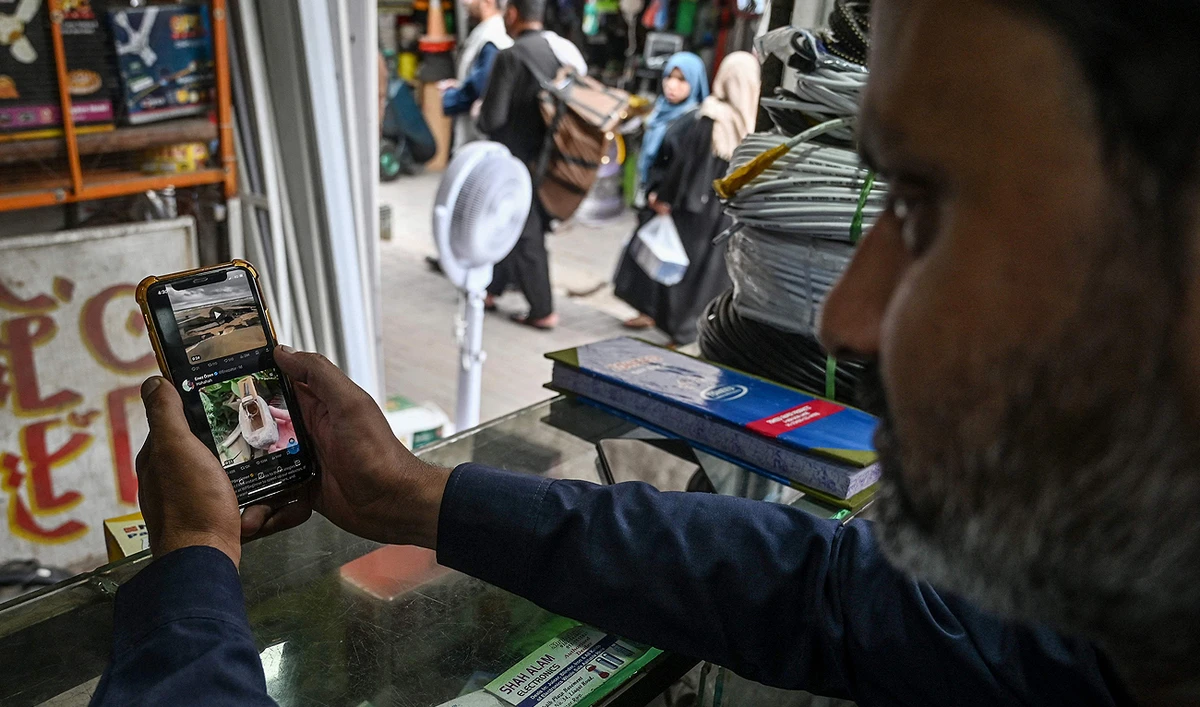
ISLAMABAD: Pakistan is working on a draft law to regulate social media to “protect digital rights” of millions of users, encourage responsible Internet use and regulate online content to prevent hate speech and disinformation, confirmed a senator belonging to the ruling Pakistan Muslim League-Nawaz (PML-N) party on Saturday.
The authorities have long struggled to regulate the social media content through different legislations, prompting critics to accuse it of trying to quell dissent. The popular social media platform X remains blocked in the country after widespread allegations of election manipulation in the wake of the February 8 national polls.
Earlier this month, the government notified a National Cybercrimes Investigation Agency to probe electronic crimes and is now working on another draft law related to the social media content, making digital rights activists describe it as yet another official attempt to stifle criticism online.
“The government is currently working on a draft law to regulate the social media content as we want to curb disinformation and hate speech being spread through these platforms,” Senator Afnan Ullah Khan told Arab News.
“A committee led by the federal law minister is discussing the draft law as we have to ensure people’s right to freedom of speech and freedom of expression as well,” he continued, ruling out concerns the government wanted to muffle its rivals and critics.
Khan said the draft law would be tabled in parliament within four weeks for discussion and debate.
“The opposition parties or any parliamentarian can object to any clause of the bill once it is presented in parliament for vote,” he said.
“We want to protect digital rights of our users instead of imposing any restrictions, but at the same time we want those to be prosecuted who violate the law by inciting hate speech and pedaling disinformation, or any content against the national security,” he added.
The draft law may propose establishment of a digital rights protection authority to ensure effective enforcement of laws, Khan informed, but “all this will be disclosed to the media and public once the bill is tabled in parliament for discussion.”
Digital rights activists said successive governments in Pakistan had drafted new laws or amended old ones to curb the dissenting voices on social media platforms and file criminal charges against journalists and activists to restrict freedom of speech and expression.
“The government should involve all stakeholders, including civil society and rights activists, while drafting the new law to prevent its misuse,” Sabookh Syed, President of Digital Media Alliance of Pakistan, told Arab News.
“The government may strengthen defamation laws to prevent social media misuse instead of making it a criminal offense that could lead to persecution of activists and violate constitutional guarantees related to free speech,” he added.
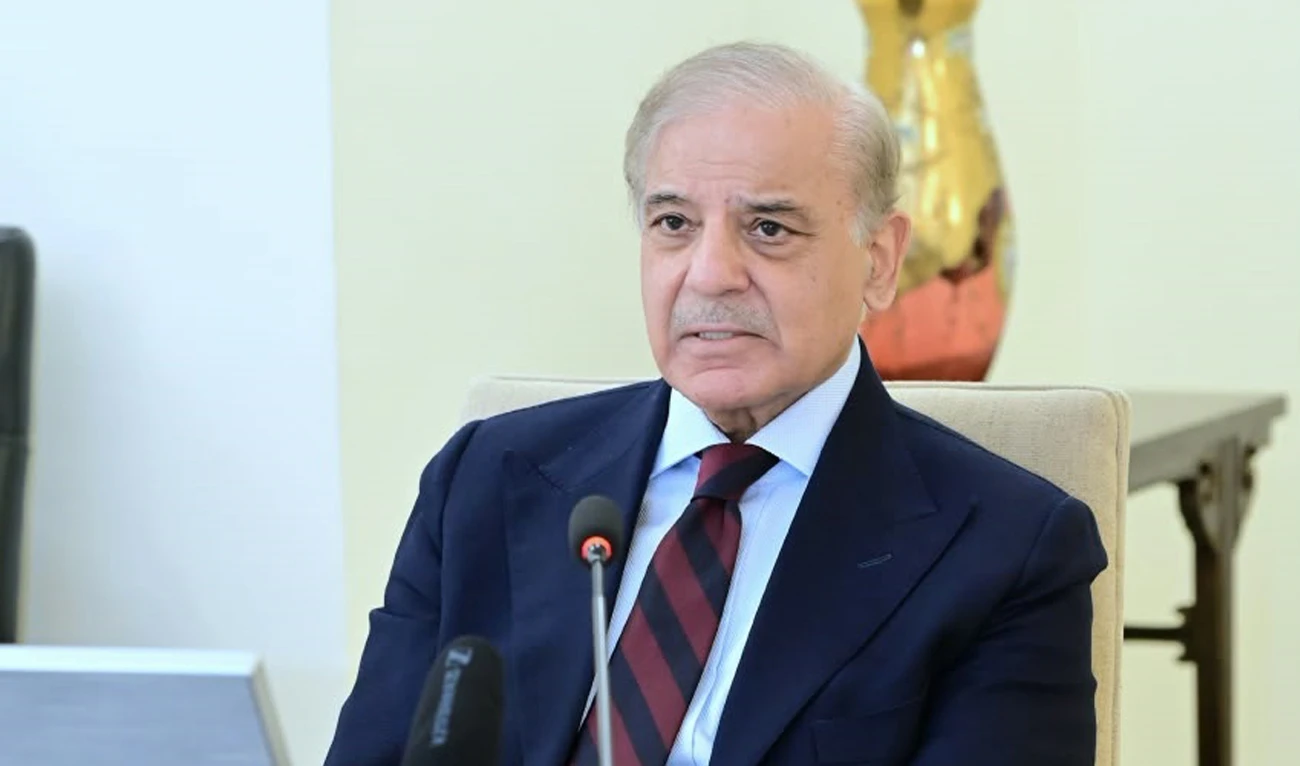
Pakistan drafts new social media regulatory law amid free speech concerns from digital activists
https://arab.news/j8kr6
Pakistan drafts new social media regulatory law amid free speech concerns from digital activists
- The government says it wants the legislation to curb disinformation, hate speech on social media platforms
- Rights activists fear the authorities may curb online dissent instead of encouraging responsible Internet use
Pakistan joins regional talks on Afghanistan in Iran as Kabul stays away
- China, Pakistan, Pakistan, Tajikistan, Uzbekistan, Turkmenistan all joined talks organized by Iran, as did Russia
- Afghanistan was invited but decided not to attend, Taliban-led government was tight-lipped on the reasons
TEHRAN, Iran: Afghanistan’s neighbors met in Iran and agreed to deepen regional coordination to address political, economic and security challenges, as well as calling for sanctions on Afghanistan to be lifted.
The only absent party? Afghanistan itself.
China, Pakistan, Pakistan, Tajikistan, Uzbekistan and Turkmenistan all joined the talks organized by Iran, as did Russia, according to a statement released after the meeting on Sunday.
Afghanistan was invited but decided not to attend. Its Taliban-led government was tight-lipped on the reasons, with the foreign ministry saying only that it would not participate because Afghanistan “currently maintains active engagement with regional countries through existing regional organizations and formats, and has made good progress in this regard.”
The statement from the talks in Iran stressed the importance of maintaining economic and trade ties with Afghanistan to improve living conditions and called for the country’s integration into regional political and economic processes.
The Taliban were isolated after they retook power in Afghanistan in August 2021, but in the past year, they have developed diplomatic ties. They now raise several billion dollars every year in tax revenues to keep the lights on.
However, Afghanistan is still struggling economically. Millions rely on aid for survival, and the struggling economy has been further impacted by the international community not recognizing the Taliban government’s seizure of power in the wake of the chaotic withdrawal of US-led troops in 2021. Natural disasters and the flow of Afghans fleeing Pakistan under pressure to return home have underlined Afghanistan’s reliance on foreign aid to meet essential needs.
The countries at the talks also voiced security concerns and pledged cooperation in combating terrorism, drug trafficking and human smuggling, while opposing any foreign military presence in Afghanistan. They underscored the responsibility of the international community to lift sanctions and release Afghanistan’s frozen assets, and urged international organizations to support the dignified return of Afghan refugees from neighboring countries.
The participants backed efforts to reduce tensions between Afghanistan and Pakistan, which have been particularly strained, with border clashes between the two sides killing dozens of civilians, soldiers and suspected militants and wounding hundreds more.
The violence followed explosions in Kabul on Oct. 9 that Afghan authorities blamed on Pakistan. A Qatar-mediated ceasefire has largely held since October, although there have been limited border clashes. The two sides failed to reach an overall agreement in November despite three rounds of peace talks.
Asif Durrani, Pakistan’s former special representative for Afghanistan, said the Taliban government’s decision to skip the meeting reflected a “lack of political maturity.”
Writing on X, Durrani said the move reinforced concerns that the Taliban were unwilling to negotiate, instead adopting an “I don’t accept” stance that he said would do little to resolve serious regional problems.
Mohammad Sadiq, the current Pakistani special representative for Afghanistan who attended the talks, wrote on X that the Afghan people had already suffered enough and deserved better.
Only an Afghanistan that does not harbor militants would inspire confidence among neighboring and regional countries to engage meaningfully with Kabul and help unlock the country’s economic and connectivity potential, he wrote.
Participants agreed to hold the next meeting of foreign ministers of Afghanistan’s neighboring countries as soon as possible in Ashgabat, Turkmenistan, and welcomed Pakistan’s offer to host the next round of special envoys’ talks in Islamabad in March.
Iran’s foreign ministry spokesman, Esmail Baghaei, on Sunday said that the meeting had not been held for about two years and marked the first such gathering attended by special envoys on Afghanistan from neighboring countries as well as Russia. Russia and Uzbekistan sent the special envoys of their presidents, while Pakistan was represented by a delegate from the prime minister’s office.
Landlocked Afghanistan is sandwiched between the Middle East, Central Asia, and South Asia, making it strategically located for energy-rich and energy-hungry nations.