
JEDDAH: Saudi Arabia’s investment landscape is poised for a prosperous future, fueled by its equity and debt markets, a range of economic experts have told Arab News.
Senior figures from the Kingdom’s branch of investment bank J.P. Morgan, financial media outlet Bloomberg, and Saudi tourism funding firm ASFAR all spoke of the positive impact of the Vision 2030 economic diversification strategy.
By focusing on the growth of various sectors, such as tourism, healthcare, and renewable energy, the Kingdom aims to reduce its economic reliance on fossil fuels, foster innovation, create jobs, and enhance citizens’ quality of life.
This is already bearing fruit, according to Amine Fichtali, head of investment banking at J.P. Morgan Saudi Arabia.
He told Arab News that the Kingdom stood out as an exciting, compelling investment story for investors.
Fichtali added that Saudi Arabia is a top-down, long-term structural story underpinned by socio-economic transformation and the execution of several regulatory reforms that help to promote the Kingdom globally.
These sentiments were echoed by European Director of Bloomberg Constantin Cotzias.
He believes that Saudi Arabia — with various reforms in its regulatory framework — is emerging as a favorite destination for international investors.
Cotzias told Arab News that international investors want three things.
“They want liquidity, a framework of governance and regulation that works, and a balance of good supervision and innovation to be properly balanced. And then they want that framework to encourage them with investment and the growth in that investment,” he said, adding that Saudi Arabia is on the right path.
One of the initiatives to attract businesses to the Kingdom was to offer tax breaks and other incentives to companies that applied to move their regional headquarters to Riyadh before the end of 2023.
This helped encourage some 200 firms to make the shift, including Northern Trust, Bechtel and Pepsico from the US, and IHG Hotels and Resorts, PwC, and Deloitte from the UK.
Google, Microsoft and IBM as well as Oracle, Pfizer and Amazon, also have regional headquarters in Riyadh.
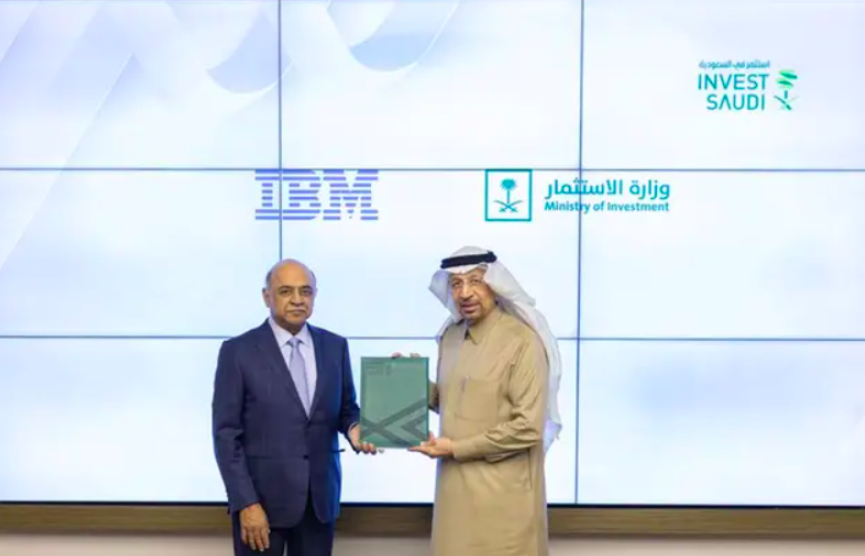
Saudi Arabia’s Minister of Investment Khalid Al-Falih presented IBM executives with the regional HQ license in January. IBM
Tourism strategy
Tourism is one of the key sectors driving the economic shift in the Kingdom, and Saudi Arabia has launched several initiatives to grow the industry.
These include the opening of historical sites, easing of visa restrictions, and the promotion of cultural heritage to attract international visitors.
All these measures are expected to have huge economic returns and boost the tourism sector resulting in the creation of direct and indirect jobs.
The Kingdom is targeting more than 30 million pilgrims and 150 million tourists every year as part of its ambitious Vision 2030, having already met its original goal of 100 million visitors.
Speaking during a ministerial panel session at the Private Sector Forum held in Riyadh in February, Tourism Minister Ahmed Al-Khateeb said that the total number of hotel rooms in the Kingdom reached 280,000 in December.
“The quality of rooms and projects is excellent and will place the Kingdom among the best in the world. The target for 2030 is approximately 550,000 hotel rooms,” the minister informed.
Moreover, the Ministry of Tourism recently unveiled the Tourism Investment Enablers Program, aimed at streamlining business practices and bolstering investment appeal for both local and international investors.
As part of the program, the Ministry of Tourism, in collaboration with the Ministry of Investment, announced the Hospitality Sector Investment Enablers Initiative, aiming to increase and diversify tourism offerings and bolstering the capacity of hospitality facilities in targeted tourist destinations across the Kingdom.
This initiative aims to attract investments in the hospitality sector, with a value of approximately SR42 billion ($11.46 billion), projecting estimated revenues of about SR16 billion to the Kingdom’s gross domestic product by 2030, reported SPA.
Al-Khateeb stated: “We witnessed a 390 percent increase in demand for tourism activity licenses last year, marking the beginning of the Kingdom’s significant investment in the tourism sector over the next decade, providing opportunities and a conducive investment environment for both local and international investors.”
Meanwhile, ASFAR CEO Fahad bin Mushayt told Arab News many regulations have recently changed, and more are yet to come, including the facilitation of visa issuance, be it for business, religious, or tourism purposes.
ASFAR is a company owned by the Public Investment Fund to drive investments in tourist destinations and projects across the Kingdom.
“The other target that the country has set as part of Vision 2030 is to drive the contribution of tourism to the gross domestic product from 3 percent to 10 percent by 2030,” he added.
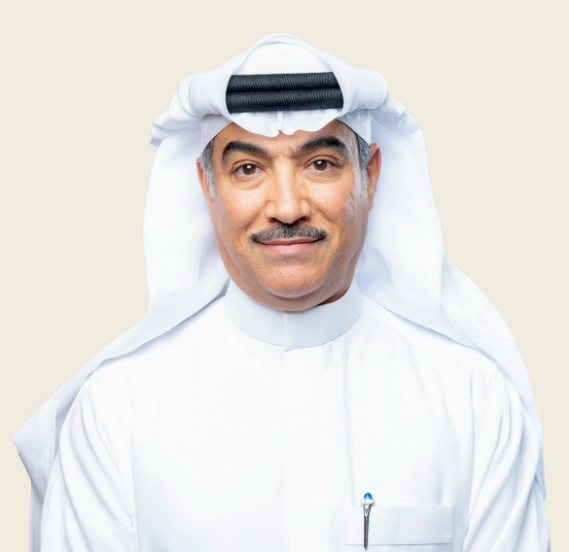
Fahad bin Mushayt, CEO of ASFAR. (Supplied)
National industrial program
The Saudi industrial sector is significantly contributing to economic diversification through various programs and initiatives.
One of these is the National Industrial Development and Logistics Program, which seeks to elevate the Kingdom into a premier industrial powerhouse and a worldwide logistics center.
NIDLP focuses on optimizing the mining and energy sectors’ value while harnessing the full potential of other local resources.
Speaking at the NIDLP annual ceremony in December, Minister of Industry and Mineral Resources Bandar Alkhorayef explained that the program acquired five new renewable energy projects to ensure reasonable costs.
He noted that the NIDLP program has significantly contributed about 35 percent of the non-oil GDP, making up to SR345 billion.
Furthermore, NIDLP announced investments worth SR206 billion in non-oil exports and SR97 billion in nongovernmental funds.
Alkhorayef also highlighted the mining sector’s record revenues of over SR1.45 billion in 2023.
Economic journalist Jamal Banoon told Arab News that diversifying the industrial base is a strategic challenge for Saudi Arabia, as it seeks to develop this sector sustainably and achieve economic diversification.
“One of the most important aspects is investing in infrastructure and research and development, while enhancing industrial infrastructure to accommodate investments and develop industrial projects, with the aim of improving production techniques and processes and enhancing efficiency,” he said.
Banoon added that, in recent years, Saudi Arabia has focused on emerging industries, including renewable energy, information and communications technology, robotics, and smart manufacturing.
Consequently, this direction will drive it toward more alliances with international companies to transfer technologies and experiences, enhance competitiveness, and expand markets.
Furthermore, he added that Saudi Arabia has invested around $50 billion in infrastructure and research and development so far, especially in the field of emerging industries. It has also achieved significant growth in sectors such as aviation, space, and maritime industries.
Renewable energy drive
Saudi Arabia has been actively pursuing renewable energy initiatives to diversify its energy mix and reduce its reliance on fossil fuels, with Vision 2030 outlining ambitious goals for the Kingdom's renewable energy sector.
The vision aims to increase the share of renewable power in the energy mix to 50 percent by 2030.
NEOM, for instance, is a flagship project aimed at developing a futuristic city powered entirely by renewable energy. It envisions a sustainable and environmentally friendly urban center with a focus on renewable energy and innovation.
Moreover, the Green Riyadh Initiative aims to transform the capital city into a more sustainable and environment-friendly metropolis. It includes plans for expanding green spaces, promoting energy efficiency, and implementing renewable energy projects.
Furthermore, Saudi Arabia has been investing in research and development of renewable energy technologies to drive innovation and enhance the efficiency of renewable power generation.
According to Banoon, Saudi Arabia is expected to become a leader in clean energy and achieve environmental sustainability.
“Within its plans and programs toward further economic liberalization and income source diversification, the Kingdom has invested in renewable energy sources. It aims to increase productivity from the current 300,000 megawatts through the Sakaka solar power plant and the Dumat Al-Jandal wind farm, expecting to reach 2 gigawatts of renewable resources,” he said, adding this project relies on generating electricity from traditional fuel sources.
Healthcare development
Saudi Arabia’s efforts to diversify its economy through healthcare are commendable and strategically significant.
By focusing on the healthcare sector as a key driver of economic diversification, the Kingdom aims to enhance the quality of healthcare services, improve accessibility, and foster innovation and technological advancement within the industry.
Banoon commented that the healthcare sector diversification strategy is crucial for Saudi Arabia’s economic resilience and sustainability.
“Saudi Arabia’s investments in healthcare infrastructure are pivotal for attracting foreign investment and talent, driving economic growth in the long term,” the economist said, adding that investing in preventive healthcare not only improves public health outcomes but also reduces costs in the long run, contributing to economic stability.