


RIYADH: Air transport from the UAE to Saudi Arabia surged 13 percent in March compared to the previous month, driven by rising demand due to Ramadan.
According to the UAE’s General Civil Aviation Authority, weekly flights from the UAE to the Kingdom reached 383 in March, from around 338 the previous month.
The Hajj season is always a key time for Saudi Arabia’s tourism sector, and in 2023 regional airports transported 1.5 million religious visitors and 3.2 million passengers through 102 airlines during the pilgrimage period.
GCCA revealed that this year flydubai increased its service to the Kingdom to support the Hajj season by 40 percent, from 93 weekly trips in February to 130 in March, state news agency WAM reported.
These flydubai flights to Saudi Arabia covered destinations including Abha, Jazan, Neom, as well as AlUla, and Qaisumah.
Additional destinations covered by flydubai in March included Riyadh, Dammam and Qassim, as well as Jeddah, Taif and Tabuk.
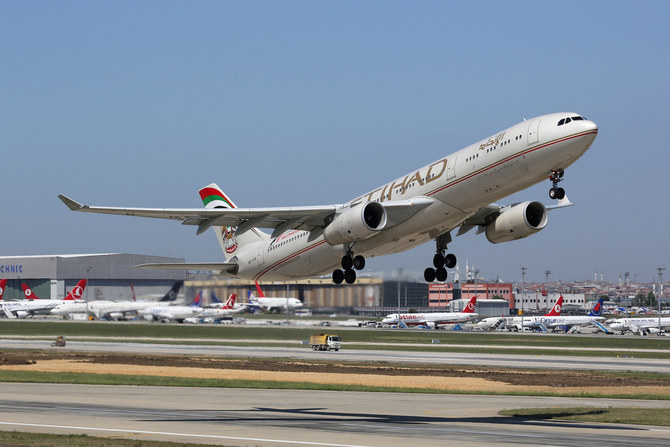
The statement indicated that Etihad Airways also increased its weekly services by more than 22.2 percent to 77 in March compared to February, covering destinations such as Dammam, Jeddah, and Riyadh.
Etihad Airways also disclosed that it transported around 45,000 passengers to Saudi Arabia during Ramadan and the Umrah season, from March 11 to April 7.
The airline stated that Jeddah was the top choice for travelers during the holy month, with flights to the city achieving a passenger occupancy rate exceeding 95 percent.
As of March 15, Etihad has permanently increased its services to Saudi Arabia. The airline now operates a total of 77 weekly flights, with 28 trips each to Jeddah and Riyadh, and 21 to Dammam.
Meanwhile, the number of weekly trips by the UAE’s biggest carrier, Emirates, reached 67 in March, covering Dammam, Jeddah and Madinah, as well as Riyadh.
Low-cost airline Wizz Air Abu Dhabi operated about 21 weekly flights to Dammam and Madinah in March.
Similarly, Air Arabia operated around 88 weekly services to destinations like Abha, Al-Jowf and Dammam in March.
Additional destinations covered by Air Arabia in March were Qassim, Hail, and Jeddah, along with Madinah, Riyadh, and Taif, as well as Yanbu.
The report further noted that the majority of passengers visiting Saudi Arabia during the holy month were from the UAE, India, Pakistan, and Indonesia.
Developing the tourism sector and increasing the number of pilgrim tourists is essential for Saudi Arabia, as the Kingdom is steadily reducing its dependence on oil, aligning with the goals outlined in Vision 2030.
The number of travellers during the 2023 Hajj season increased by over 86 percent compared with 2022, a statement from the General Authority of Civil Aviation said last year.
In March, Saudi Arabia’s Transport Minister Saleh bin Nasser Al-Jasser inspected Jeddah’s King Abdulaziz International Airport to ensure operations were running smoothly for Ramadan.
From the beginning of the month of Sha’ban on Feb. 11 until Ramadan 10, which fell on March 20, KAIA recorded the arrival and departure of over 5.4 million passengers on 30,572 flights, the Saudi Press Agency reported.


