BEIRUT: The US-backed force that defeated the Daesh group in Syria five years ago warned Saturday that the extremists still pose grave dangers throughout the world and called on the international community to find solutions for thousands of fighters still held in its jails.
The statement by the Kurdish-led Syrian Democratic Forces to mark the fifth anniversary since Daesh lost the last sliver of its self-declared caliphate came hours after the group claimed responsibility for Friday’s attack in Moscow that left 133 people dead.
On March 23, 2019, SDF fighters captured the eastern Syrian village of Baghouz marking the end of the extremist group’s caliphate that was carved out of large parts of Syria and Iraq. During its rule, Daesh brutalized millions of people and attracted thousands of men and women from around the world to join it ranks.
“The liberation of Baghouz marked a pivotal moment. Our forces freed millions from the organization’s terror, safeguarding not only our region but the world from its barbarity,” the SDF said.
Despite its defeat, Daesh sleeper cells and its affiliates in Asia and Africa still claim deadly attacks as well as in Syria and neighboring Iraq where the extremists were defeated in 2017.
“The terrorist organization still poses a great danger to our regions and the world,” the SDF said, adding that “it seeks to rebuild itself through its sleeper cells and tries to revive its dreams of regaining geographical control over some areas.”
The SDF said that in order to completely eradicate Daesh it must dismantle “its ideological breeding ground.”
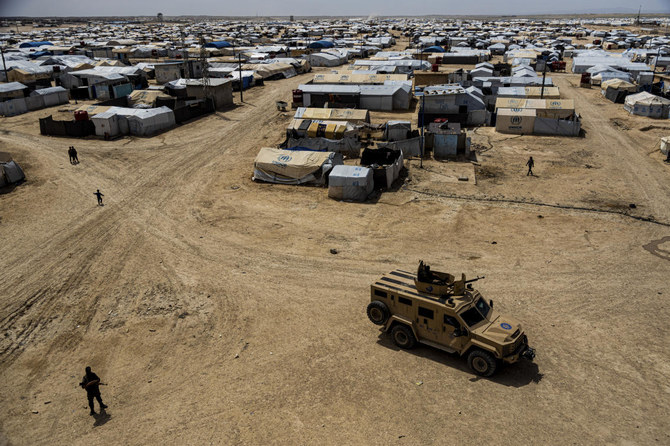
The SDF is holding some 10,000 captured Daesh fighters in northeast Syria in around two dozen detention facilities — including 2,000 foreigners whose home countries have refused to repatriate them. US-backed Kurdish fighters also oversee some 45,000 family members of Daesh fighters, mostly women and children in the sprawling Al-Hol camp. The camp once had a population of 73,000 but dropped as some countries have been repatriating their citizens.
Many of the women and children remain die-hard Daesh supporters, and the camp has seen bouts of militant violence. In February, the SDF concluded a dayslong security operation at Al-Hol during which they detained 85 people, captured weapons and freed a Yazidi woman who was raped and forced to marry Daesh fighters.
“The issue of Daesh detainees requires a global solution,” the SDF said, using a term to refer to Daesh. It added that their home countries should repatriate their nationals, or an international court established in northeast Syria where they can stand trial.
The SDF said that ending the case of Daesh families at Al-Hol camp “is a priority that cannot be overlooked or ignored, as the camp is still a ticking time bomb.”
“Concerns are growing about the children of Daesh who are receiving the organization’s teachings within this terrorist-infested environment,” it said.
“This in itself poses a threat to the future of the region and the world,” the SDF said.


![]()

US-backed Syrian force that defeated Daesh 5 years ago warns group still poses international threat
Short Url
https://arab.news/nc97r
US-backed Syrian force that defeated Daesh 5 years ago warns group still poses international threat
- “Our forces freed millions from the organization’s terror, safeguarding not only our region but the world from its barbarity,” the SDF said
- Despite its defeat, Daesh sleeper cells and its affiliates in Asia and Africa still claim deadly attacks as well as in Syria and neighboring Iraq


Latest updates





© 2026 SAUDI RESEARCH & PUBLISHING COMPANY, All Rights Reserved And subject to Terms of Use Agreement.