US says welcomes ‘productive and peaceful’ India-Pakistan talks on Kashmir

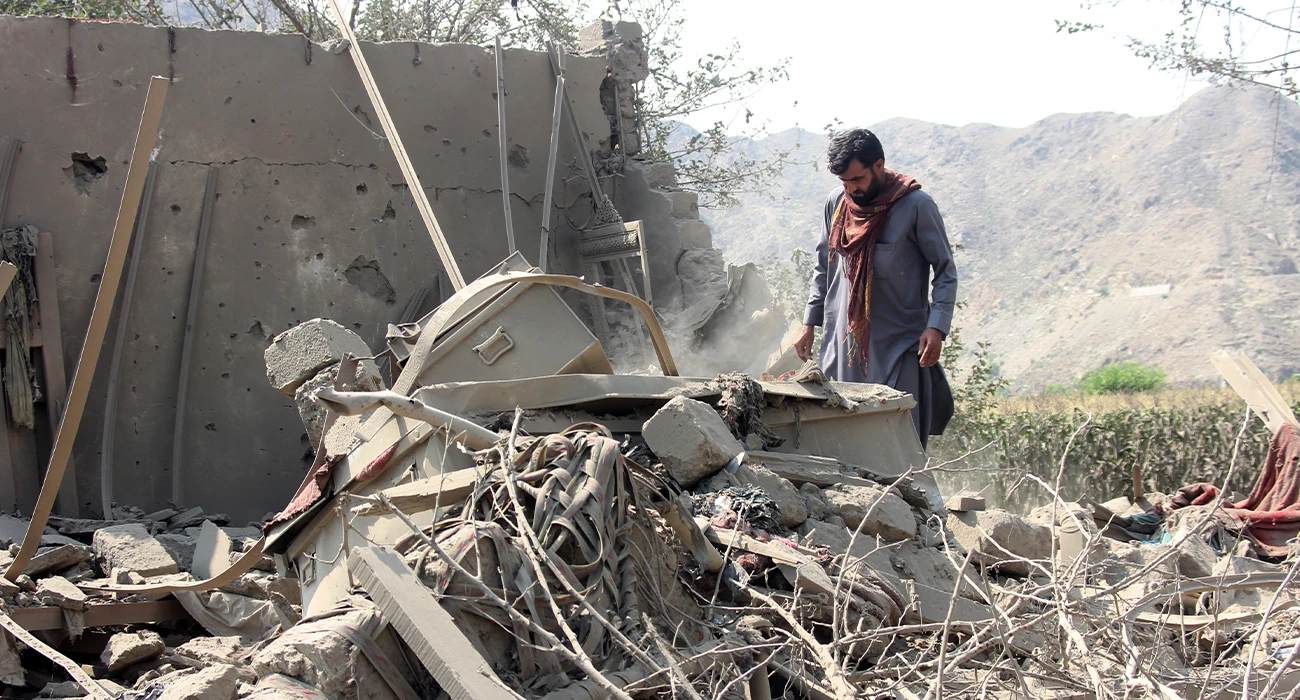
US State Department Spokesperson Matthew Miller addresses a press briefing at the Department of State, in Washington, US, on February 12, 2024. (US State Department)
Short Url
Updated 07 March 2024
Follow

US says welcomes ‘productive and peaceful’ India-Pakistan talks on Kashmir

  • Pakistan and India have fought two wars, engaged in numerous clashes over the Himalayan region since 1947
  • Relations have been particularly tense since 2019 when Modi’s government revoked the special status of Kashmir

ISLAMABAD: The US State Department said on Wednesday it welcomed “productive and peaceful talks” between Islamabad and New Delhi on disputed Kashmir, after Indian Prime Minister Narendra Modi congratulated Shehbaz Sharif on taking oath as Pakistan’s new premier.

Kashmir is claimed in full, but controlled only in part, by nuclear-armed India and Pakistan, which have fought two wars and engaged in numerous clashes over the Himalayan region since 1947.

Relations have been particularly tense since 2019 when Modi’s government revoked the special status of Kashmir and split the region into two federally administered territories, provoking outrage in Pakistan and the downgrading of diplomatic ties and suspension of bilateral trade.

“The United States values its relationship with both India and Pakistan, and we want to see them have a productive and peaceful relationship,” US State Department Spokesman Matthew Miller said when questioned about Modi’s congratulatory message for Sharif.

When asked if the US would welcome future talks between India and Pakistan on all issues, including Kashmir, Miller added:

“Of course we would welcome productive and peaceful talks between India and Pakistan, but the pace, scope, and character of any dialogue is a matter for India and Pakistan to determine.”

Media has widely reported that the two governments have re-opened a back channel of diplomacy since 2021, aimed at a modest roadmap to normalizing ties.

Both countries have reasons to seek a rapprochement. India has been locked in a border stand-off with China and does not want the military stretched on the Pakistan front.

China-ally Pakistan, mired in economic difficulties and on an IMF bailout program that expires this month, can ill-afford heightened tensions on the Kashmir border for a prolonged period, especially as it also faces problems of cross-border militants on its frontiers with Afghanistan and Iran. 

Pakistan offloads wheat stocks, boosts provincial supply to stabilize prices

Updated 5 sec ago
Follow

Pakistan offloads wheat stocks, boosts provincial supply to stabilize prices

  • ECC approves sale of 500,000 tons of wheat, allocates 300,000 tons to Punjab
  • Cabinet body also clears utility arrears and approves vaccine and fertilizer funding

KARACHI: Pakistan’s top economic decision-making body on Wednesday approved the disposal of surplus government wheat stocks and a major inter-provincial allocation to stabilize domestic flour prices, as Islamabad seeks to manage food security risks while containing fiscal pressures.

The decisions come as Pakistan grapples with food inflation sensitivity, climate-related supply disruptions and the fiscal burden of carrying large public stocks. Wheat, the country’s staple food, is politically and economically critical because flour prices directly affect household inflation and living costs, and past volatility has triggered public unrest and costly emergency imports.

On Wednesday, the Economic Coordination Committee (ECC) of the Cabinet authorized the sale of 500,000 metric tons of wheat held by the Pakistan Agricultural Storage and Services Corporation (PASSCO), the federal grain procurement agency, through competitive bidding. It also approved the release of 300,000 metric tons to the Punjab government to ensure uninterrupted supplies to flour mills, according to an official statement issued by the Finance Division.

“The disposal of 500,000 metric tons of PASSCO wheat stock through competitive bidding aims at managing surplus stocks, reducing carrying and storage costs, and ensuring price stability in the domestic wheat market while safeguarding food security considerations,” the Finance Division said in a statement following the ECC meeting.

In a related move, the committee approved the provision of PASSCO wheat to Punjab, the country’s most populous province and a key driver of national wheat consumption, to help maintain adequate supplies for flour mills and prevent supply chain disruptions, the statement said.

Beyond food security, the ECC approved a technical supplementary grant - an off-budget allocation used to meet urgent funding needs - of Rs 10.98 billion ($39 million) to clear long-standing liabilities owed by the Pakistan Post Office Department to utility companies, part of broader efforts to address inter-government arrears that have strained public sector finances.

In the health sector, the committee authorized Rs 29.66 billion ($106 million) for the Federal Directorate of Immunization to ensure uninterrupted procurement of vaccines and syringes under the Expanded Program on Immunization, a move aimed at sustaining routine immunization coverage and preventing outbreaks of vaccine-preventable diseases.

The ECC also approved a Rs 23.42 billion ($84 million) subsidy package for imported urea, to be shared equally between the federal and provincial governments, as authorities seek to cushion farmers from rising fertilizer costs and limit spillover effects on food prices.