

Tech, energy transition in Saudi Arabia offer ‘monster’ opportunity: Nigel Vaz

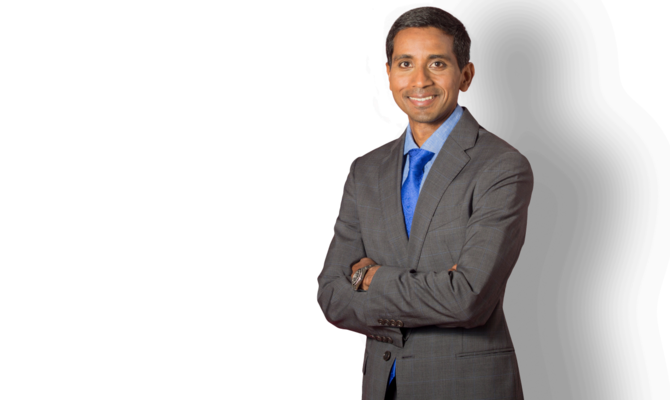
Nigel Vaz, CEO at Publicis Sapient. (Supplied)
Short Url
Updated 20 January 2024
Follow

Tech, energy transition in Saudi Arabia offer ‘monster’ opportunity: Nigel Vaz

  • Publicis Sapient boss says Saudi Arabia is well insulated against current regional instability
  • Says Kingdom is an ideal haven for investors looking for safe-bet opportunities

DAVOS: Saudi Arabia’s commitment to technology, and the role it is going to play in transforming its society, was “a monster opportunity” for investors, the CEO of Publicis Sapient told Arab News.

Nigel Vaz said the Kingdom was going through a “phenomenal” transformation. “The opportunity to transform every facet of society by putting technology at the service of its citizens and businesses is a monster opportunity,” he said.

Publicis Sapient is a global digital transformation consulting company. Vaz, its CEO, says he is particularly impressed with how technology is transforming Saudi society and how it is being driven at a governmental level in the Kingdom.

He also said the Middle East and North Africa region and Asia as a whole have an advantage over other regions because they do not have as much of a “legacy” in their technological adoption, giving them the “ability to leapfrog” other parts of the world.

“Because you are, in many instances, starting from a place where you don’t need to do any heavy lifting, you’re just able to adopt and start afresh,” he said.

“When you think about things like Cloud native infrastructures for healthcare or about financial services, if you’re in other parts of the world there are huge investments (needed) to move to that part of the world. But if you’re going to the Middle East, you’re able to start on a Cloud native basis almost immediately,” he added.

This willingness to adopt new technologies, but also go through with their adoption via strong investments into their development, also makes Saudi Arabia an ideal haven for investors looking for safe-bet opportunities in green energy and energy transition.

“Saudi Arabia is leading that transition globally. The investments being made into alternative sources of energy, but more importantly the economic diversification strategy from a revenue perspective is very apparent,” he said.

“You start to recognize there is a very, very big opportunity for that transition to be way more than just about that, it’s also about how the country will transition from being heavily energy reliant, to one that has multiple facets in terms of how their economy is driven,” he added.

What sets the Kingdom and the rest of the Gulf region apart is how closely linked the public and private sectors are, and how well they work together in achieving economic and technological advancement to diversify its economies, according to Vaz.

“The power of public, private sector partnership in Saudi Arabia is accelerating development faster than we’ve seen almost anywhere in the Middle East, which itself is transforming faster than any other region from an economic growth perspective,” he said.

“That partnership is connecting economic and technological opportunities to create global platforms out of the Kingdom,” he added.

Vaz is not worried by the prospect of political unrest in the region affecting Saudi Arabia’s trajectory of development and attracting investment.

Fighting broke out in Gaza after Hamas’s attacks on Israel on Oct. 7, which resulted in the deaths of 1,200 people, while Israel’s response has killed some 25,000 Palestinians, according to the Hamas-run health ministry.

The conflict has already spread elsewhere in the region. The US and UK mounted retaliatory strikes against Yemen’s Houthis after the militia began attacking commercial shipping in the Red Sea.

Vaz said the region will “definitely ride out” this latest period of political unrest. 

“Saudi Arabia is reasonably well insulated in terms of its stability, both political stability and economic stability. When you have confidence in those two things, it makes for a confluence,” he said.


Jeddah students get closer look at electric motorsport

Updated 24 January 2026
Follow

Jeddah students get closer look at electric motorsport

  • A PIF-linked initiative highlights technical and engineering careers behind electric racing events

JEDDAH: Students from local and international schools in Jeddah were introduced to STEM-related career pathways in electric motorsport this week, as part of an education program linked to the UIM E1 World Championship held on the Red Sea.

The sessions formed part of Driving Force Presented by the Public Investment Fund, an initiative run by Formula E and its electric racing series partners, to familiarize students aged eight to 18 with science, technology, engineering and mathematics through electric racing and sustainability-focused industries.

The sessions for students formed part of Driving Force Presented by the Public Investment Fund, an initiative run by Formula E and its electric racing series partners. (Supplied)

The programme took place alongside the 2026 E1 Jeddah GP and included workshops, school visits and trackside access designed to show how engineering, data, broadcast technology and event operations function within professional motorsport.

According to organisers, the initiative reached more than 60,000 students globally in 2025, with further expansion planned this year. 

HIGHLIGHTS

• The program took place alongside the 2026 E1 Jeddah GP and included workshops, school visits and trackside access.

• Students learned about E1 races and their technical and environmental dimensions and discussed the engineering and marine aspects of electric boats.

• According to organisers, the initiative reached more than 60,000 students globally in 2025, with further expansion planned this year. 

John Williams, managing director at E1, told Arab News: “The PIF is absolutely vital to everything we do here at the E1. They were crucial initial investment partner since the start of the championship and they continue to support us in a number of ways and more specifically around the Driving Force program.”

The sessions for students formed part of Driving Force Presented by the Public Investment Fund, an initiative run by Formula E and its electric racing series partners. (Supplied)

Elaborating more on the program, he said: “What we are doing is presenting and showing these students the available careers of science, technology, engineering and mathematics, as well as careers in sports, not only pilots but also engineers and mechanics.”

Williams added that the main key to the program was bringing a new generation to the mechanism of sport.

“We are introducing to these exciting new technologies around the race but it could be our technology on the boat or our broadcast products, as well as how to manage the event its self. There are a range of opportunities to show it to the children in addition to enjoying the excitement of the race and meeting the pilots.”

The program’s Jeddah activities began at King Abdulaziz University’s faculty of maritime studies, where students took part in a hands-on workshop focused on STEM careers in the motorsport and sustainability areas conducted by technology experts and famous water pilots such as Dani Clos, Emma Kimilainen and Patricia Pita.

Students learned about E1 races and their technical and environmental dimensions and discussed the engineering and marine aspects of electric boats.

They also enjoyed exclusive behind-the-scenes access at the E1 Jeddah GP, pilot meet-and-greets, and front-row seats to watch the RaceBird boats in action.