



Jerusalem: Israel’s defense minister has publicly presented for the first time proposals for the post-war administration of Gaza, where officials said Friday unrelenting bombardment has killed dozens over 24 hours.
Defense Minister Yoav Gallant’s plan for the “day after,” shared with the media late Thursday but not yet adopted by Israel’s war cabinet, says that neither Israel nor Hamas will govern Gaza and rejects future Jewish settlements there.
The minister’s broad outline was unveiled on the eve of US Secretary of State Antony Blinken’s fourth trip to the region since a Hamas attack on October 7 triggered the war.
Questions over the future of the besieged Palestinian territory have multiplied as Israel insists it will continue with its military operations despite international calls for a cease-fire.
Much of the Gaza Strip has been reduced to rubble, while civilian deaths have soared and the UN has warned of a humanitarian crisis that has left hundreds of thousands displaced, facing famine and disease.
Bombing continued through the night in the southern areas of Khan Yunis and Rafah as well as parts of central Gaza, according to AFP correspondents.
The Israeli army said its forces had “struck over 100 targets” across Gaza over the past 24 hours, including military positions, rocket launch sites and weapons depots.
The health ministry in the Hamas-run territory said it had recorded 162 deaths also over the past 24 hours.
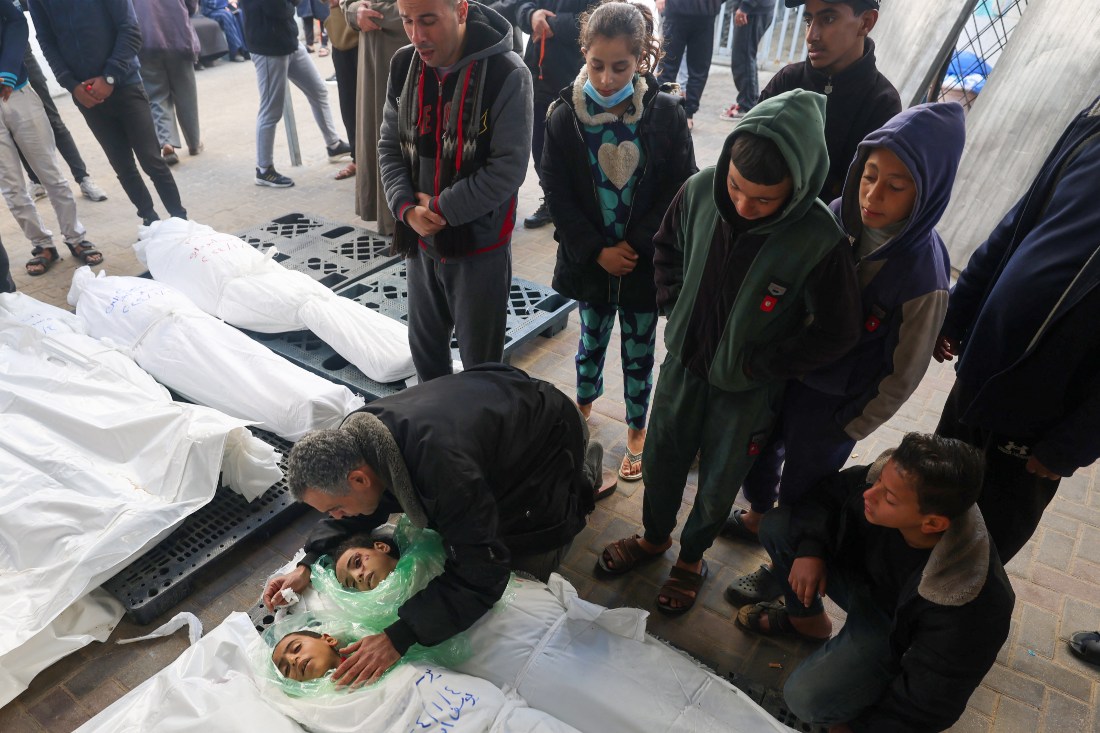
Friday's death toll in Gaza rose to 22,600. (AFP)
A fighter jet hit the central area of Bureij overnight, killing “an armed terrorist cell,” the army said, after what it described in a statement as an attempted attack on an Israeli tank.
And “a number” of Palestinian militants were killed in clashes in Khan Yunis, a major city in southern Gaza that has become the focus of the fighting, the army said.
According to Gallant’s proposed outline, the war will continue until Israel has dismantled Hamas’s “military and governing capabilities” and secured the return of hostages.
After Israel achieves its objectives — for which the proposal sets no timeline — Palestinian “civil committees” will begin assuming control of the territory’s governance, it said.
“Hamas will not govern Gaza, (and) Israel will not govern Gaza’s civilians,” the plan said, while offering little concrete detail.
“Palestinian bodies will be in charge, with the condition that there will be no hostile actions or threats against the State of Israel.”
Israel launched its campaign against Hamas after the militant group’s October 7 attack, which resulted in the deaths of around 1,140 people, most of them civilians, according to an AFP tally based on official Israeli figures.
The militants also took around 250 hostages, 132 of whom remain in captivity, according to Israel, including at least 24 believed to have been killed.
Israel’s relentless bombardment and ground invasion have killed at least 22,600 people, most of them women and children, according to the Gaza health ministry.
Conditions for Gaza’s civilians are precarious, with the United Nations estimating 1.9 million people are displaced.
AFPTV footage showed entire families, seeking safety from the violence, arriving in the southern border city of Rafah in overloaded cars and on foot, pushing handcarts stacked with possessions.
“We fled Jabalia camp to Maan (in Khan Yunis) and now we are fleeing from Maan to Rafah,” said one woman who declined to give her name. “(We have) no water, no electricity and no food.”
A spokesman for the UN agency for Palestinian refugees, UNRWA, told AFP that Rafah is overwhelmed by the influx.
“The city is usually home to only 250,000 persons. And now, it’s more than 1.3 million,” said Adnan Abu Hasna.
“We have recently noticed a major collapse in health conditions” and a “significant spread” of disease, he added.
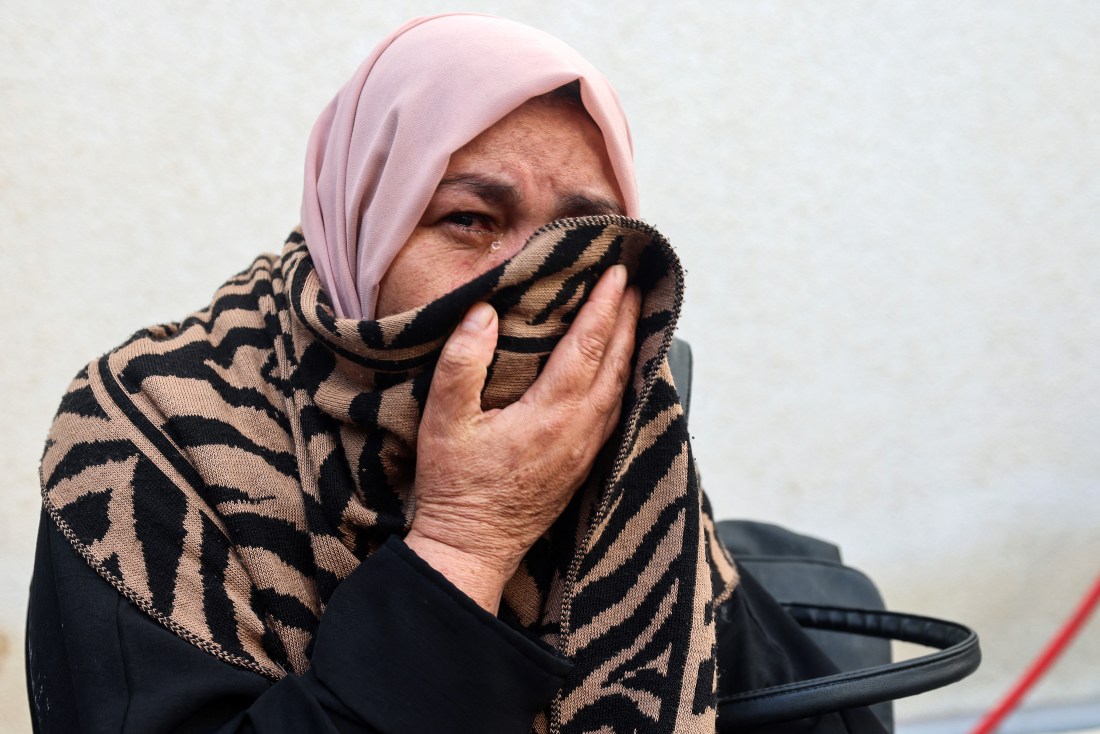
Israel launched its campaign against Hamas after the militant group’s October 7 attack. (FILE/AFP)
Ahmad Al-Sufi, head of the Rafah emergency committee said there was an urgent need for 50,000 tents to house the refugees.
At Al-Amal hospital in Khan Yunis, one of Gaza’s few medical facilities still operating, the Palestinian Red Crescent Society said seven displaced people, including a five-day-old baby, were killed while sheltering in the compound.
Dozens more were killed in nearby strikes during three days of bombardment, the Red Crescent said, reporting renewed artillery shelling and drone fire in the area on Friday.
During his visit, Blinken plans to discuss with Israeli leaders “immediate measures to increase substantially humanitarian assistance to Gaza,” State Department spokesman Matthew Miller said.
Germany’s top diplomat Annalena Baerbock will also travel to the region, foreign ministry spokesman said, beginning Sunday in Israel and also meeting with Palestinian leaders.
She plans to discuss “the dramatic humanitarian situation in Gaza” and tensions on the Israel-Lebanon border, spokesman Sebastian Fischer said.
Aid entering the besieged territory has slowed to a trickle during the war.
The UN’s humanitarian office OCHA said on Thursday that it had been unable to deliver “urgently needed life-saving” aid north of Wadi Gaza — an area including Gaza City — for four days “due to access delays and denials” and active fighting.
The war in Gaza and almost daily exchanges of fire across the border since October 7 have threatened to draw Israel’s northern neighbor into a regional conflagration.
A strike on Tuesday in Lebanon, widely assumed to have been carried out by Israel, killed Hamas deputy leader Saleh Al-Aruri.
It hit the south Beirut stronghold of the powerful Iran-backed Hezbollah movement.
Hezbollah has vowed that the killing on its home turf will not go unpunished, while Israeli army chief Herzi Halevi said troops on the border were “in very high readiness.”
Israel’s military said on Friday its fighter jets had conducted fresh strikes against Hezbollah targets just across the border in Lebanon.
The frequent bombardments has driven 76,000 people from their homes on the Lebanese side of the border, the UN’s migration agency said on Thursday. Israel evacuated thousands of its civilians from the border area in the early weeks of the war.


