



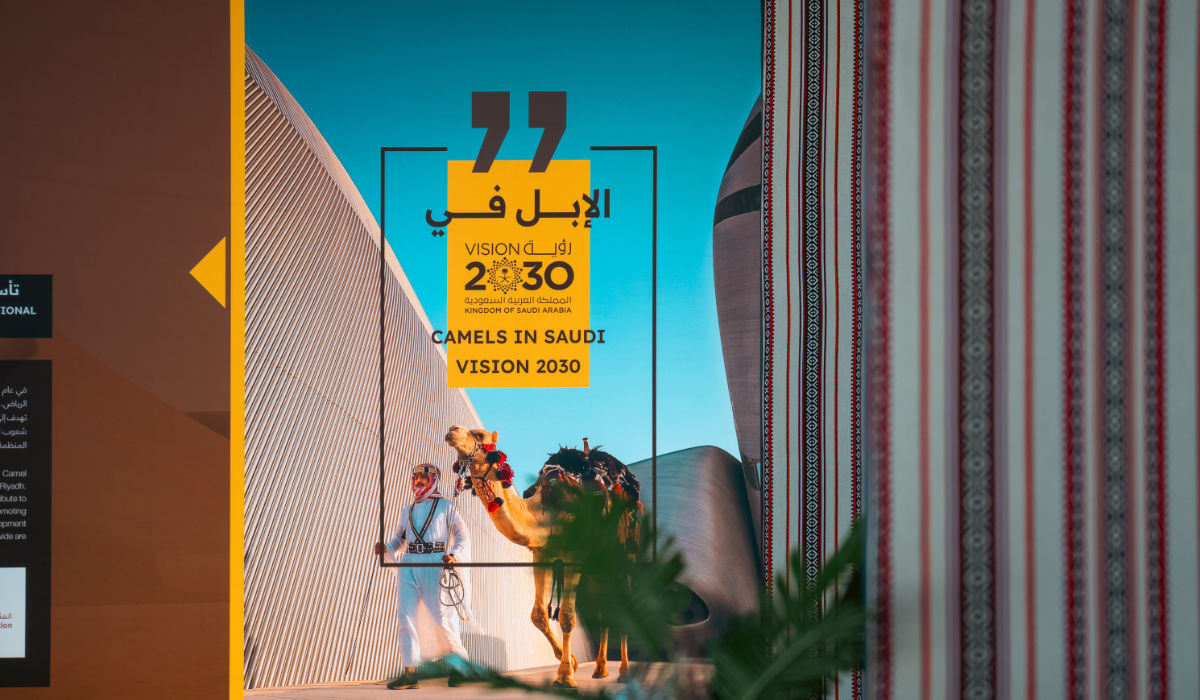
RIYADH: The Mataya Exhibition is taking visitors on a journey through the significance of the camel in Saudi Arabia and the Arab world.
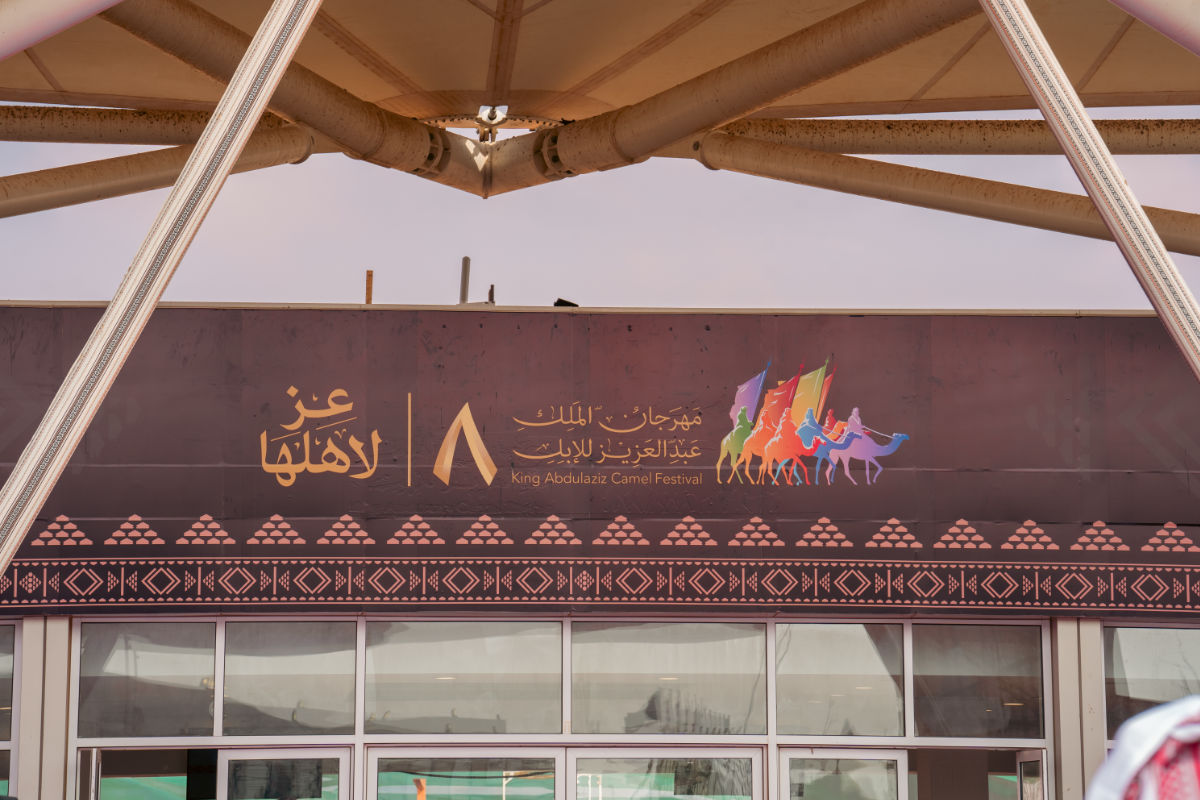
The exhibition, which is part of the eighth King Abdulaziz Camel Festival organized by the Saudi Camel Club, opened on Dec. 1 and will run for 45 days.
Exhibition supervisor Salman Al-Ajmi told Arab News: “The exhibition is called Mataya because, unlike horses, camels are very sturdy and majestic creatures that can carry weight and endure exhaustion more than any other animal in the region.”
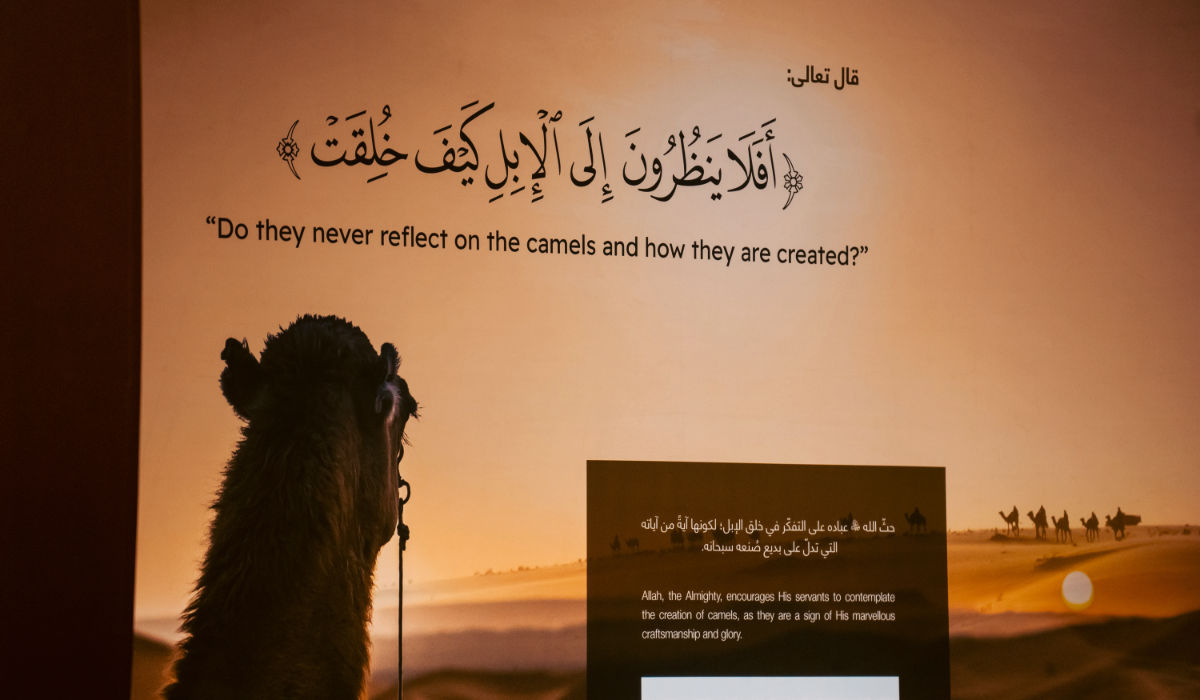
(AN Photo by Abulrhman Bin Shalhoub)
There are about 17 million camels in the Arab world, of which 7.1 million are in Somalia and 4.8 million in Sudan.
Of the 1.6 million camels in Saudi Arabia, 322,579 are in the Riyadh region, 256,079 in the Eastern region, 200,241 in Makkah, 144,486 in Qassim and 131,606 in Asir.
In ancient times, the Arabs used to say: “Camels are the ships of the land, their hides are like sacks, their meat is nourishing, their dung serves as fuel and their value is akin to gold.”
FASTFACTS
• Event runs until mid-January.
• Saudi Arabia is home to about 1.6m camels.
Al-Ajmi said people believe camels are better than all other animals because they provide milk and meat, and can carry heavy loads and people.
Camels play a vital role in the Arab economy, serving as a medium of exchange for goods, gifts to rulers, dowries for brides, blood money for the families of the murder victims, rewards for achievers and heroes and wages for laborers and servants.
“These majestic beings were employed in various professions, including drawing water from wells, pressing sesame seeds for oil extraction, and transporting goods, as their caretakers sought skilled individuals for their care,” Al-Ajmi said.
(AN Photo by Abulrhman Bin Shalhoub)
Camels are the optimal means of transport as they can endure harsh weather, long journeys, scarcity of water, challenging terrains and heavy loads better than any other animal.
Their meat is a favored delicacy among Arabs and their milk is a natural substitute for human milk as it has a lower fat content and higher vitamin C levels than other animals’ milk.
Camel milk, known for its natural anti-coagulant properties, helps expel germs from the body, protects against bacteria and aids in the treatment of various illnesses.
Camel hair is used by Arabs to make clothes and tents.
(AN Photo by Abulrhman Bin Shalhoub)
In ancient times, camels were used to carry military leaders and their armies and were a cause of conflict between tribes. They were sometimes paid as ransom for prisoners and in exchange for protection.
In the past, Arabs prioritized teaching their children how to ride and tame camels. Camel bones were even used for educational purposes in writing, as evidenced by archaeological findings displaying verses from the Holy Qur’an written on camel shoulder bones.
The male camel is known as a “jamal” and the female a “naagah.”
(AN Photo by Abulrhman Bin Shalhoub)
The practice of naming camels reflects the strong connection Arabs have with the animals and is similar to how they name their children. Camels are given names corresponding to their specific characteristics, appearance and functions.
“Camels possess numerous aesthetic qualities that set them apart, and their prices vary based on these qualities. Different types of camels have distinctive aesthetic features,” Al-Ajmi said.
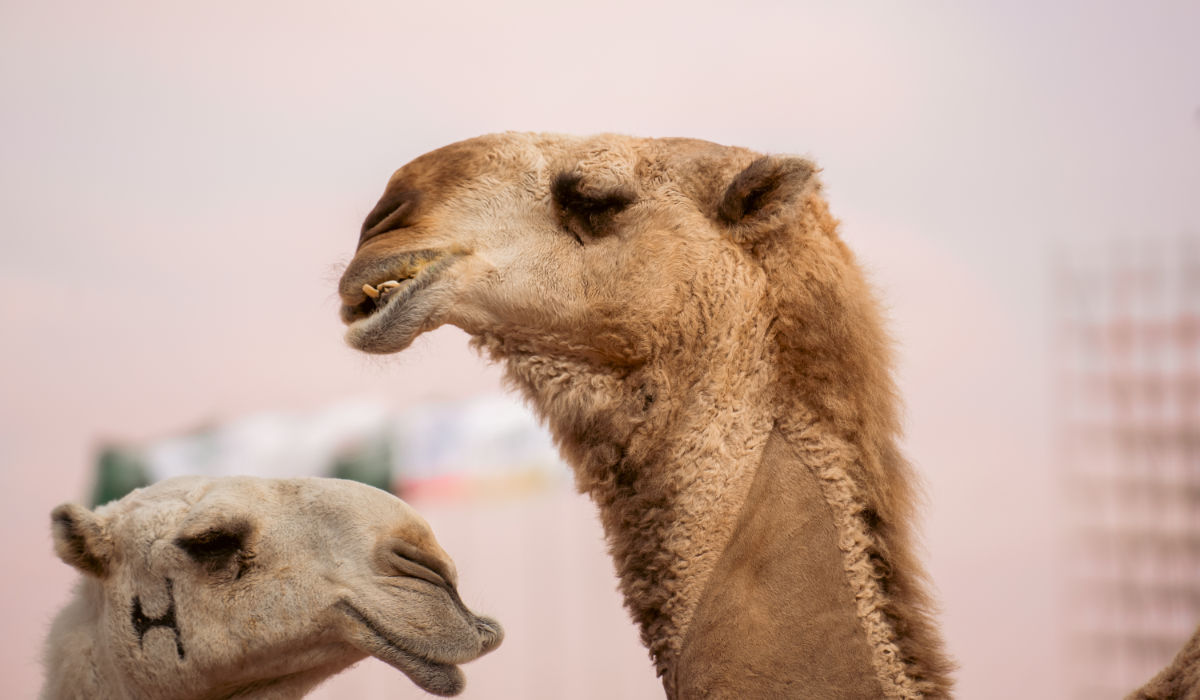
A large head and longer lips enhance beauty, and a raised nose adds to the overall appeal.
“The longer the neck, the higher its arch, and the wider the throat, the more beautiful the camel,” Al-Ajmi said.
The exhibition also display some of the adornments and accessories required for riding a camel.
Al-Hawdaj is an ornate chamber placed on the camel’s back for women to ride. It has four supports and fabric doors. Al-Haniy is a special saddle for warriors engaged in battle while riding camels. Al-Masaamah is a wooden tool strapped to the camel’s back to carry and secure loads.
Established in 2018, Saudi Camel Sports manages and governs all camel racing events in the Kingdom.
A royal decree was issued in 2017 to establish the Camel Club, overseen by the Crown Prince Mohammed bin Salman bin Abdulaziz. It focuses on all scientific and operational aspects related to camels by nurturing and developing the camel sector and innovating investment opportunities.
In 2019, the International Camel Organization was established with its headquarters in Riyadh.


