


QUETTA: Political stakeholders in Pakistan’s restive Balochistan province said on Sunday the government was ready to opt for dialogue with militants demanding independence after a major separatist leader announced his support for talks between the two sides.
Balochistan, which shares a porous border with Iran and Afghanistan, has been the scene of a low-level insurgency by Baloch nationalists for around two decades. The separatists say they are fighting what they see as the unfair exploitation of the province’s wealth by the federation. The Pakistani state denies it.
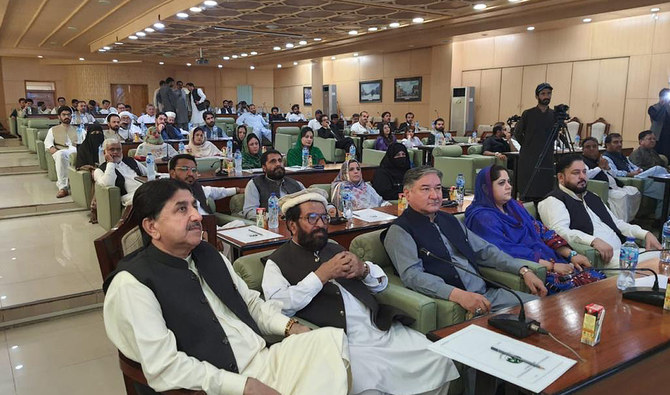
The Balochistan government this week organized a symposium, titled “A Roadmap to Peaceful Balochistan,” to discuss the situation in the restive province and to find a peaceful solution to the insurgency that has claimed hundreds of lives on both sides.
Senator Sarfaraz Bugti, who has in the past served as the Balochistan home minister, said people from different walks of life discussed the reconciliation process and shared their opinions at the symposium.
“The state has all options to address its internal issues and dialogue is one of them,” Bugti told Arab News on Sunday. “We want to exercise this.”
Bugti’s comments came in response to former separatist leader Gulzar Imam’s announcement of support for talks between the government and separatist militants.
The Pakistani military announced the arrest of Imam, the founder of the banned Baloch National Army (BNA), after a “carefully planned and meticulously executed operation” in April this year. The BNA is among several armed factions operating in the province.
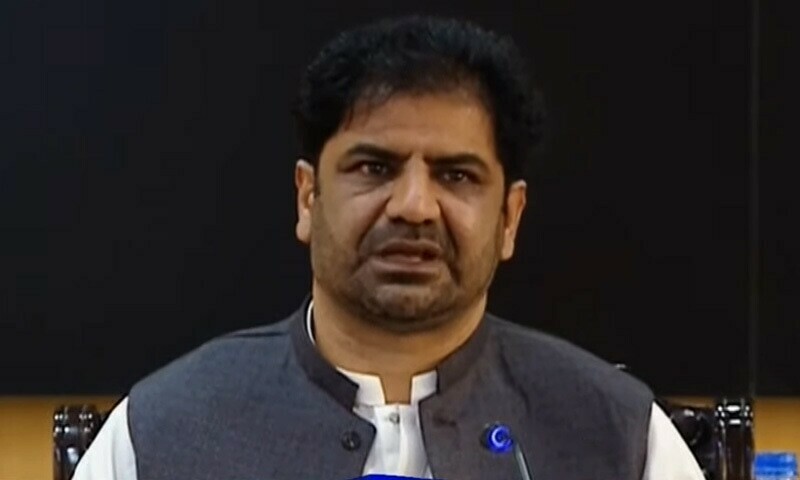
Gulzar Imam Shambay, head of an armed separatist group called Balochistan National Army, speaks during a symposium, titled “A Roadmap to Peaceful Balochistan,” in Quetta on July 14, 2023. (Photo courtesy: Government of Balochistan)
“I am part of the reconciliation process in Balochistan and I am encouraging the path of negotiation between the Pakistani state and Baloch separatist fighters” Imam, who has at least once appeared on mainstream media since his arrest, told attendees at the symposium.
“Every stakeholder in the province should work for a peaceful and developed Balochistan,” he was quoted as saying in a statement issued by the government on Saturday.
Other speakers at the seminar agreed that no group could defeat the state through an armed struggle, according to the statement.
Senator Anwarul Haq Kakar, another senior politician and a strong proponent of reconciliation in Balochistan, said there was a perception that the government was not interested in talks with separatists, but the administration had shown its intent to hold negotiations through the symposium.
“Now the people of Balochistan will see who is losing this reconciliation opportunity,” Kakar told Arab News. “The state has the responsibility to maintain peace because a small number of people can’t be allowed to impose their agenda over hundreds of thousands of people through guns.”
Pakistan has long accused neighboring countries and hostile agencies for harboring Baloch separatist fighters and other armed groups that operate in the Balochistan province. The Pakistani military this week expressed serious concerns over militant “save havens” in Afghanistan after nine Pakistani soldiers were killed in an attack on a garrison in Balochistan.
Shahzada Zulfiqar, a senior journalist who has been covering the insurgency and militancy in Balochistan, blamed corruption and lack of governance for Balochistan’s issues.
“Today, there are many self-exiled Baloch leaders who are interested in talks with the Pakistani government,” Zulfiqar said. “The government has a responsibility to pave the way for them.”
He suggested the government allow the “true leadership” of Balochistan to serve its people, rather than the “seasonal politicians.”


