

Egypt accelerates energy transition with revised climate commitments

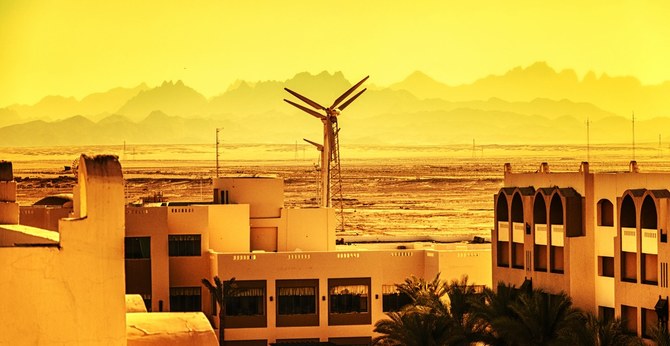
Egypt intends to expedite its efforts to reduce carbon emission volume and increase renewable energy generation ahead of its original target of 2035. (Shutterstock)   
Short Url
Updated 27 June 2023
Follow

Egypt accelerates energy transition with revised climate commitments

RIYADH: Egypt aims to advance its target of generating 42 percent of its energy through renewable sources to 2030 from 2035 as the North African nation submitted updated climate commitments as per the Paris Agreement on Monday.  

In its updated Nationally Determined Contribution document, Egypt noted that the country needs to obtain grants and soft financing worth €500 million ($548 million) as a contribution to achieving the revised targets. 

NDC is a climate plan that a Paris Climate Agreement signatory needs to submit every five years to list various measures it plans to take to cut emissions and adapt to climate impacts.

Egypt submitted its first NDC last year in June, with the updated one released earlier this week as the country intends to expedite its efforts to reduce carbon emission volume and increase renewable energy generation ahead of its original target of 2035.

The second update was announced by the Supreme Committee of the National Council for Climate Change in Egypt, led by Prime Minister Mostafa Madbouly.    

The move of modifying the emissions target demonstrates the nation’s commitment to accelerating the switch to a low-carbon development path, said a top minister.    

Egypt’s Minister of Environment Yasmine Fouad said that this step followed successful discussions between the ministries of foreign affairs, environment and international cooperation.    

It aimed “to obtain grants and soft financing worth €500 million as a contribution to the energy axis of the Nexus for Water, Food and Energy, or NWFE, program, in the framework for updating the NDC through a plan to develop the network, in order to absorb 10 gigawatts of new and renewable energy,” added Fouad. 

A part of the country’s national climate change strategy 2050, the NWFE program was officially launched during COP27 in November last year at a total cost of $14.7 billion, comprising nine projects with three main pillars — water, food and energy. 

The minister went on to say that the private sector is anticipated to raise $10 billion to carry out this strategy.  

Egypt’s Minister of International Cooperation Rania Al-Mashat revealed that the NDC update secures grants, debt swaps, and concessional financing.   

It also stimulates private investments to support the energy pillar within the government-led platform of NWFE, she added.   

Al-Mashat added that this milestone comes in accordance with the declaration that was announced during COP27, among Egypt, Germany and the US.   

The NWFE aims to develop solid relationships with various stakeholders to raise money for climate change projects.   

This will be done by using cutting-edge financing techniques like debt for climate swaps and blended finance, with a particular focus on the private sector and a broader range of financial actors.  

Additionally, the program offers technical support and guarantees for personal investments. 


PIF Private Sector Forum sees multiple deals across key sectors

Updated 14 sec ago
Follow

PIF Private Sector Forum sees multiple deals across key sectors

RIYADH: The first day of the PIF Private Sector Forum marked the signing of several agreements spanning travel, entertainment, advanced manufacturing, innovation, urban development, and industrial sectors.

In the tourism, travel, and entertainment sector, a memorandum of understanding was signed between the Public Investment Fund’s Dan Co. and Fresh on Table to expand the latter’s platform in Saudi Arabia, enhance cooperation, and establish consolidation centers in Dan Co.’s facilities across targeted cities.

Dan Co. also signed an MoU with DRB Arabia to collaborate on the development of the Tuaja Resort Community Center in Al-Ahsa, establishing a framework for cooperation between the two parties.

King Abdullah Economic City and Almosafer Travel and Tourism Co. agreed to a joint venture to support tourism promotion and destination marketing.

Cruise Saudi and FlyAkeed signed an MoU to strengthen initiatives in travel optimization and digital innovation, while FlyAkeed also partnered with Al-Ula Club to explore opportunities in automation and digital transformation. Additionally, the PIF and FlyAkeed signed an MoU to advance digital travel solutions and enhance service delivery leveraging FlyAkeed’s capabilities.

In urban development and livability, the PIF signed an MoU with ABB Academy to develop the Saudi workforce through targeted training programs. Another agreement with Saudi Tabreed will explore expanding high-quality district cooling solutions for large-scale developments, aligning with national sustainability goals. Fraunhofer IAO will collaborate with the PIF on waste management and innovative construction methods to support smart city development.

The industrial and logistics sector also saw multiple agreements. Nupco signed an MoU with Saudi Awwal Bank to strengthen healthcare supply chains, while Saudi Arabia Railways partnered with Siemens Mobility to localize manufacturing, develop the Kingdom’s rail infrastructure, and advance industrial capabilities. The Royal Commission of AlUla signed a deal with TASAMA to support its operational and strategic objectives.

In advanced manufacturing and innovation, Tasaru Mobility Investments signed multiple agreements with Masarat Mobility Park, Shin Young, JVIS, Benteler, Lear Corp., and Fangxin. Electric vehicle maker Lucid also inked deals with Benteler, JVIS, Shin Young, and Lear Corp.

Saudi Arabia’s first homegrown EV brand, Ceer, signed agreements with Mino, Natpet Schulman Specialty Plastic Compounds, Xinyi Glass, MK Tron, Sika, Saudi Controls, AVL, FEV, Zamil Trade and Services, Zamil Plastics, and Arabian Plastic Industrial Co. CEO James DeLuca highlighted that Ceer is set to sign 16 agreements valued at SR3.7 billion ($990 million) at the forum, noting that 90% of these are commercial contracts rather than MoUs.