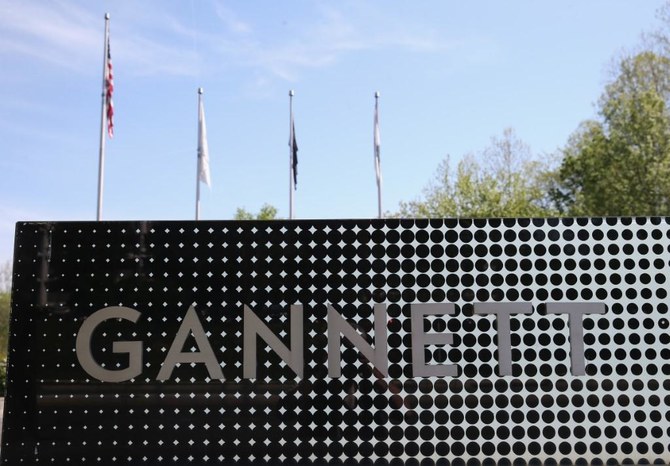
NEW YORK: Gannett, the largest US newspaper chain and publisher of USA Today, on Tuesday sued Google for trying to corner the market for online advertising by monopolizing ad technology.
In a complaint filed in Manhattan federal court, Gannett, which has more than 200 daily newspapers, said Google’s control over tools for buying and selling online ads forces publishers to sell more cheap ad space to the Alphabet Inc. unit.
Gannett said this leaves Google with “exorbitant monopoly profits,” and “dramatically less revenue” for publishers and its ad technology rivals.
“Digital advertising is the lifeblood of the online economy,” Gannett Chief Executive Mike Reed said in an opinion
published in USA Today. “Without free and fair competition for digital ad space, publishers cannot invest in their newsrooms.”
Google did not immediately respond to requests for comment. Gannett said it wants “very substantial” actual, punitive and triple damages.
The lawsuit adds to legal pressure on Mountain View, California-based Alphabet, already in the crosshairs of regulators on two continents.
On June 14, the European Union brought a similar lawsuit, and said Google might have to sell some of its ad technology.
Five months earlier, the US Department of Justice brought its own case against Google, now joined by 17 US states. Another group of states led by Texas is also suing.
In 2022, Google generated $224.5 billion of advertising revenue, accounting for nearly 80 percent of Alphabet’s overall revenue and a major driver of Alphabet’s overall $60 billion profit.
Advertising lets Google offer many services for free, including email, Android and much of its YouTube video platform.
Google’s first-quarter ad revenue was $54.5 billion, little changed from a year earlier.
Like many newspaper publishers, McLean, Virginia-based Gannett has struggled with falling ad revenue as more Americans, estimated at 86 percent, get news online.
Gannett said digital advertising is a $200 billion business, up nearly eightfold since 2009, but newspaper ad revenue fell nearly 70 percent over that time. Print circulation at Gannett-owned newspapers fell nearly 20 percent in 2020 and 2021, the company said.
The case is Gannett Co. v Google LLC et al, US District Court, Southern District of New York, No. 23-05177.


![]()

Gannett sues Google, alleges online ad monopoly
Short Url
https://arab.news/j8fqr
Gannett sues Google, alleges online ad monopoly
- Gannett claims Google’s control over tools for buying and selling online ads leaves publishers with 'dramatically less revenue'


Latest updates


© 2026 SAUDI RESEARCH & PUBLISHING COMPANY, All Rights Reserved And subject to Terms of Use Agreement.