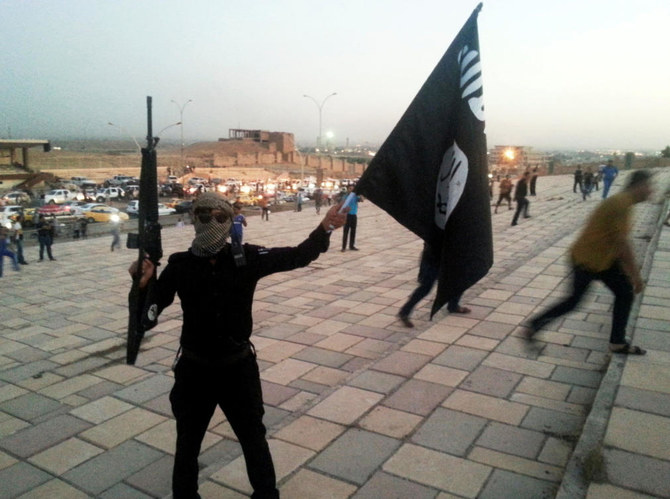
BAGHDAD: The Daesh group still has up to 500 active fighters in Iraq, a senior military official estimated Sunday in the country where militant cells continue to launch sporadic attacks.
But Iraqi General Qais Al-Mohamadawi, part of the anti-militant coalition, stressed that Daesh — now based in remote desert and mountain hideouts — has “lost its ability to attract new recruits.”
The United Nations estimated in a report published last month that Daesh still has “5,000 to 7,000 members and supporters” across Iraq and neighboring Syria, “roughly half of whom are fighters.”
The Daesh extremists in 2014 launched their self-proclaimed “caliphate” across swathes of both countries in a campaign marked by its brutality including mass killings, torture, rape and slavery.
US-backed counter-offensives ended their territorial hold in Iraq in 2017 and in Syria in 2019, but Daesh cells continue to target security forces and civilians in both countries.
With thousands of suspected Daesh fighters and relatives now held in vast detention camps, US General Michael Kurilla, head of Central Command, warned Saturday of the persistent threat of an “ISIS army in detention,” using an alternative acronym for Daesh.
General Mohamadawi, deputy commander of the Iraqi operations unit working with the international anti-militant coalition, said Sunday that hundreds of Daesh fighters remain active in Iraq.
“According to information from intelligence agencies, the total number of Daesh members does not exceed 400 to 500 fighters, in three or four provinces,” he told a press conference.
The group has “lost its ability to attract new recruits,” he added, also pointing to a February 26 military operation that had killed 22 Daesh members and destroyed a “training camp” in Al-Anbar province.
The UN report last month said Daesh had been much depleted by “sustained counter-terrorism operations” in both countries.
It said the group still operates cells of around 15 to 30 individuals across Syria and continues “guerrilla warfare tactics” against government forces, other fighters and civilians.
In Iraq, Daesh cells operate in rural mountain areas, “leveraging the porous Iraqi-Syrian border and retaining maneuverability to evade attacks” while trying to “rebuild and recover,” the UN report said.
The report estimated Daesh’s “dwindling cash reserves” at $25 million to $50 million and said it had started investing in hotels and real estate to launder money and engaging in cattle rustling to raise funds.


![]()

Up to 500 Daesh fighters still active in Iraq: military
Short Url
https://arab.news/meqsg
Up to 500 Daesh fighters still active in Iraq: military
- But Daesh, now based in remote desert and mountain hideouts, has ‘lost its ability to attract new recruits’
- UN report last month said Daesh had been much depleted by ‘sustained counter-terrorism operations’


Latest updates





© 2026 SAUDI RESEARCH & PUBLISHING COMPANY, All Rights Reserved And subject to Terms of Use Agreement.