

New Lonely Planet guide shines a light on Britain’s hidden Muslim heritage

1 / 3
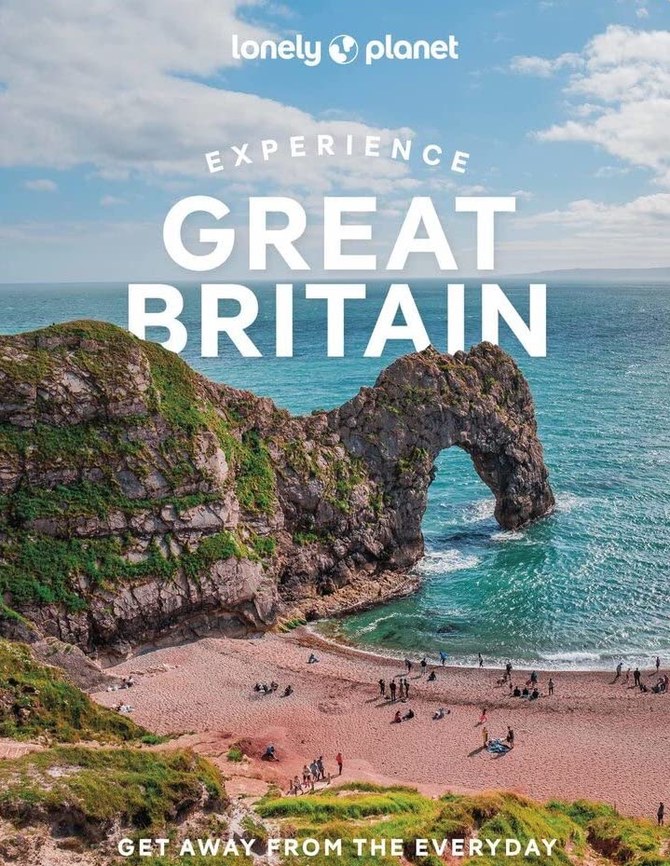
Lonely Planet released a guide to Great Britain featuring an entire chapter on the country’s little-known Islamic heritage. (Lonely Planet)
2 / 3
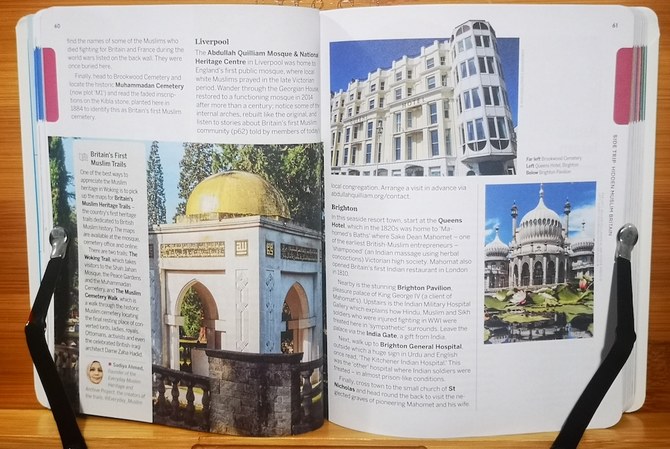
The guide also tells of cultural institutes set up by the Turkish, Palestinian, Bangladeshi and Black communities in London. (Supplied/Tharik Hussain)
3 / 3
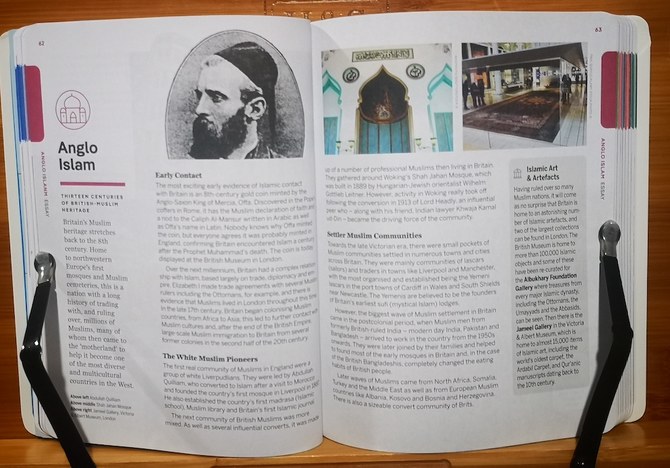
The guide also tells of cultural institutes set up by the Turkish, Palestinian, Bangladeshi and Black communities in London. (Supplied/Tharik Hussain)
Short Url
Updated 01 October 2022
Follow

New Lonely Planet guide shines a light on Britain’s hidden Muslim heritage

  • ‘Experience Great Britain’ is part of publisher’s range of ‘anti-guidebooks’
  • It offers ‘really diverse experiences for visitors,’ contributor Tharik Hussain says

LONDON: A new Lonely Planet guide to Great Britain features an entire chapter on the country’s little-known Islamic heritage, which stretches back more than 1,200 years.

Published this month, “Experience Great Britain” is part of the publisher’s range of “anti-guidebooks,” so-called because of the unique local perspectives they offer travelers.

The guide to Britain has sections and essays titled “Legacies of Empire,” “Bristol’s Black History,” “An Other London” and “Hidden Muslim Britain,” all of which seek to shine a light on the nation’s marginalized cultures and their stories.

Tharik Hussain, the Muslim author of “Minarets in the Mountains: A Journey Into Muslim Europe,” which explores the continent’s indigenous Muslim cultures, contributed to the new travel guide.


“I think it is wonderful to see mainstream guidebooks like this finally going out of their way to include such really diverse experiences for visitors,” he said.

“So often, writers like me are brought onto such projects to tick a box and create the impression there are diverse perspectives in it, but actually we’re often asked to just write about the same things covered by the previous writers. What’s diverse about that?

“To achieve truly diverse perspectives commissioning editors must select writers from different backgrounds and then be brave and empower writers to come back with what they find interesting, even if that goes against the editor’s expectations.”

Hussain, who developed one of the UK’s first Muslim heritage trails, wrote the “Hidden Muslim Britain” chapter, which focuses on Woking — home to the UK’s first purpose-built mosque, the Shah Jahan — Liverpool and Brighton, where some of the country’s most visible Islamic legacies can be found.

These include Britain’s first Muslim cemetery — the final resting place of convert lords, ladies and Muslim royalty — and Brighton Pavilion, where injured Muslim (as well as Sikh and Hindu) soldiers fighting for Britain in World War I were treated.
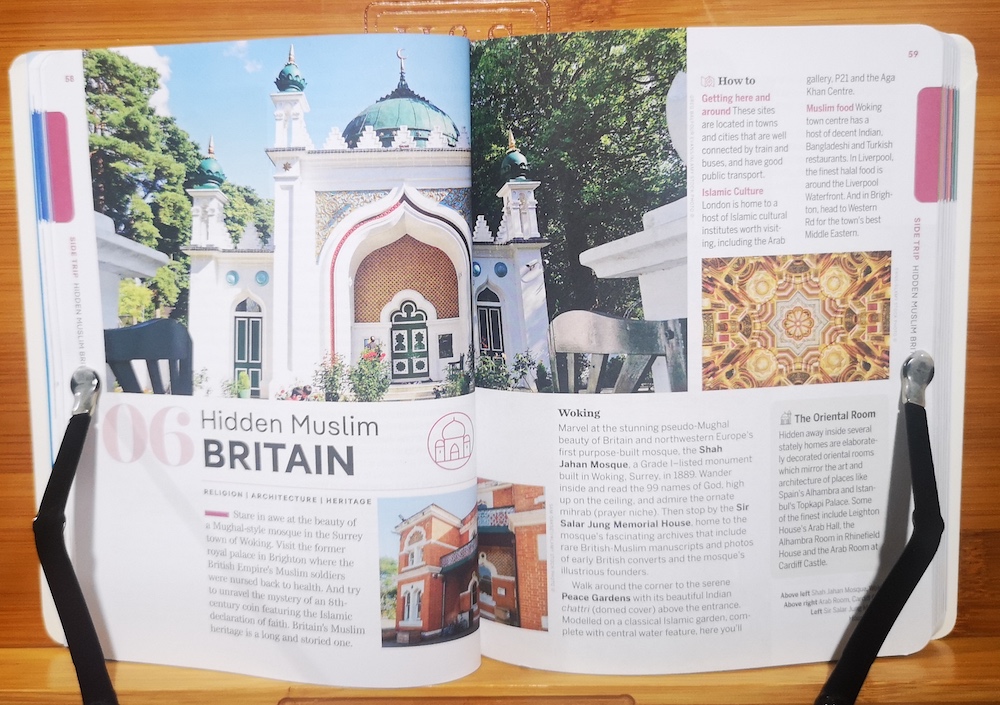


The guide also tells of cultural institutes set up by the Turkish, Palestinian, Bangladeshi and Black communities in London. (Supplied/Tharik Hussain)

“The guide also reveals where to visit spectacular ‘oriental rooms’ modeled on famous Muslim palaces like the Alhambra in Spain and the Topkapi in Turkey,” Hussain said.

“This is supported by an essay called Anglo Islam that reveals how Islam came to the island as early as the 8th century, when an Anglo-Saxon king called Offa minted a gold coin featuring part of the Muslim declaration of faith in Arabic.”

The essay also tells of how Britain’s first real Muslim community “were a group of white, convert Victorians who worshipped at the country’s first mosque in Liverpool, founded by a solicitor called Henry William Quilliam, later Abdullah Quilliam,” he added.

The section on empire tells visitors where they can go to learn about “the horrors of British imperial rule,” and how to experience more positive post-colonial legacies like the stunning Neasden Temple in northwest London, built by immigrants who moved to Britain after the collapse of the empire, Hussain said.

The guide also tells of the cultural institutes set up by the Turkish, Palestinian, Bangladeshi and Black communities in London, like the Black Cultural Archives in Brixton, and offers alternatives to the usual tourist attractions, such as the Muslim History Tours and the Open City walking tours that explore London’s forgotten Chinese heritage.


In the light of Andalusia: Luis Olaso’s new body of work

Updated 9 sec ago
Follow

In the light of Andalusia: Luis Olaso’s new body of work

  • Luis Olaso transforms Andalusian landscapes and light into abstract art, creating canvases that reflect culture, nature, and the artist’s inner state
  • Each work in ‘Photosynthesis’ acts as a sensory and meditative portrait — an immersion into the Andalusian experience and the artist’s emotional universe

DUBAI: Spanish artist Luis Olaso is presenting “Photosynthesis,” his new exhibition, until March 9 at the JD Malat Gallery in Downtown Dubai. The series marks a turning point in his career, born from his recent move to Cadiz, in Andalusia, where the sun, light, and Mediterranean landscapes have profoundly transformed his practice.

For Olaso, relocating to southern Spain was not merely a change of scenery but an immersion into a culture and environment that nourishes his art at every moment.

“It’s very important for me because this is the first exhibition I have created in my new studio … I built it in the middle of the garden, surrounded by nature, fruit trees and olive trees, with a fantastic landscape. The influence of Andalusia and the colors of that place are the driving force behind my work,” said Olaso.

Located at the heart of an estate surrounded by olive, almond, and orange trees, his studio is designed to allow nature to enter the creative process both physically and psychologically. Yet, rather than depicting these elements directly, Olaso absorbs them as a sensory catalyst: Each color, texture, and gesture becomes the expression of a lived moment.

“Even when I work with plants or flowers, I’m not aiming for literal representation; they are vehicles to express abstract metaphors of myself and the moment I’m living while creating the work,” he said.

His artistic process is both spontaneous and meditative. Olaso often works on several canvases simultaneously to free himself from the pressure of the “perfect painting,” allowing intuition to guide his brush. Music —  the Spanish band Triana and 1970s psychedelic flamenco — plays a central role in his focus and inner connection.

“Painting, for me, is similar to meditation. I need to be in that precise moment and feel connected with myself,” said Olaso.

“Photosynthesis” also reflects a profound cultural and artistic dialogue. The artist’s work draws from Spanish tradition— with references to Antoni Tapies and Manolo Millares — as well as major international abstract movements, including American gestural abstraction and the San Francisco Bay Area Figurative Movement.

This meeting point between abstraction, culture, and emotion transforms each canvas into a portrait of a lived instant and the artist’s inner state.

After Dubai, Olaso is expected to present a solo exhibition in Madrid in March 2026, followed by another solo exhibition in Helsinki in April. An art fair is scheduled for September, with additional fairs planned throughout the year, notably with the JD Malat Gallery.

These milestones illustrate his universal approach to art, deeply rooted in a specific cultural context: the light, color, and sensory memory of Andalusia. With “Photosynthesis,” the artist offers viewers an experience in which painting becomes a mirror of the self, an emotional journey, and an encounter with a singular place.