

World Bank allocates $50m for transportation projects in Syria

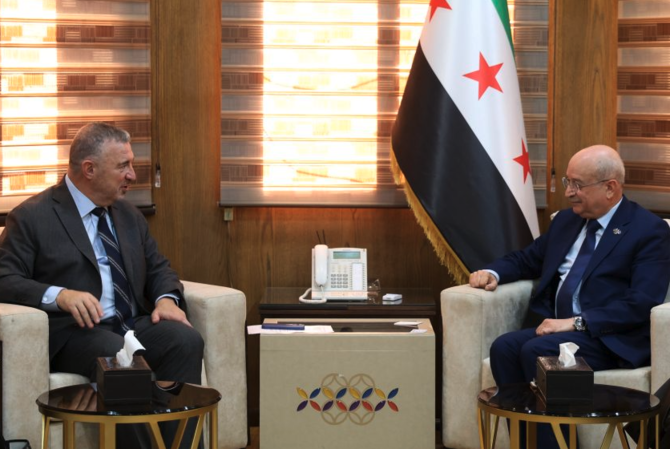
Syrian Transport Minister Yarub Badr, right, with World Bank Regional Director for the Middle East Jean-Christophe Carret. SANA
Short Url
Updated 23 February 2026
Follow

World Bank allocates $50m for transportation projects in Syria

RIYADH: The World Bank has allocated $50 million to support vital transportation projects in Syria as the two sides discuss ways to enhance cooperation in the fields of railway and sustainable transport.

The development comes after Syria’s Transport Minister Yarub Badr met World Bank Regional Director for the Middle East Jean-Christophe Carret at the ministry’s headquarters in Damascus to discuss ways to support and develop the country’s transport sector.

Talks focused on improving the skills of workers in the field, the Syrian Arab News Agency reported.

Funding will be secured for the purchase of 15 new locomotives, in conjunction with a study on maintaining existing locomotives to improve operational efficiency.

The move comes as the World Bank estimates Syria’s reconstruction costs at $216 billion following more than 13 years of conflict, according to its Syria Physical Damage and Reconstruction Assessment 2011–2024 report released in October.

The war impacted almost one-third of Syria’s total assets, with direct damage to infrastructure, homes, and other buildings estimated at around $108 billion.

The newly released statement said: “They also reviewed the phosphate transport corridor project and the importance of reassessing its economic feasibility to determine the necessary financial estimates and clarify the related figures to ensure its sustainability and effective development.”

It added: “Badr stressed the importance of continued cooperation with the World Bank in implementing infrastructure-related projects, noting that such cooperation contributes to accelerating Syria’s economic recovery.”

The statement further highlighted that Carret affirmed the World Bank’s willingness to back development initiatives and stressed the importance of building a long-term, sustainable partnership with Syria.

At the conclusion of the meeting, both parties agreed to convene a technical session next week to follow up on the key points discussed and fast-track cooperation between Syria and the World Bank in the relevant areas.

The discussions build on talks held last week via video conference between Badr and World Bank transport officials, which focused on the readiness of the railway network and the phosphate railway corridor project, including its economic and strategic significance.


Marine insurance companies are considering canceling, repricing policies in the Middle East

Updated 6 sec ago
Follow

Marine insurance companies are considering canceling, repricing policies in the Middle East

RIYADH: Marine insurance companies are considering canceling or repricing policies in the Middle East, according to the Financial Times

This comes after the US and Israeli strikes on targets inside Iran, followed by missile attacks and retaliatory military actions in several countries in the region.

Marine brokers expect insurance premiums for ships to rise by up to 50 percent, given the region’s classification as a “war zone.”

Ship owners are considering rerouting their vessels to avoid the Strait of Hormuz and reduce risks to crews and cargo.

20% of the global oil supply passes through the Strait of Hormuz.

Regarding oil prices, a rise is expected as 20 percent of global oil supply passes through the Strait of Hormuz, amid concerns about continued tensions in the region.

Air traffic in the Middle East was severely disrupted after several countries closed their airspace completely or partially, while regional and international airlines suspended or rescheduled flights.

On the morning of March 1st,  the Iranian capital, Tehran, witnessed several large explosions following Israel's announcement of what it described as a “preemptive strike.”

Flights to countries in the region suspended due to attacks

In a video message, US President Donald Trump announced that the US had begun “major combat operations” in Iran, asserting that the goal was to defend the American people by neutralizing what he described as the “imminent threat” from the Iranian regime.

Several regional and international airlines announced the suspension of their flights to some countries in the region due to the attacks.

These military developments come at a time when major shipping companies had already avoided the Red Sea and Suez Canal routes due to security tensions, reverting to the Cape of Good Hope route, which increases shipping costs and puts pressure on global supply chains.

With the closure of airspace in several countries in the region, the risk of disruption to air traffic and trade is increasing, while oil markets are watching closely for any signs of potential supply disruptions from a region that is one of the world's most important energy production hubs.
