

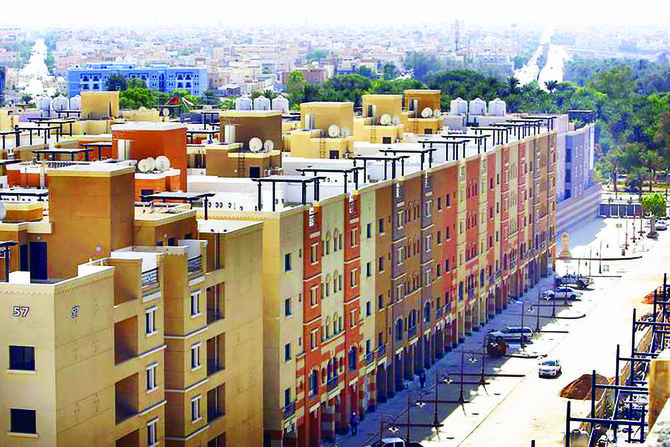
Dar Al Arkan invests in Compass Consulting to venture into projects

‘Sustainability will remain a key factor of expansion into the Kingdom.’ (Reuters)
Short Url
Updated 02 June 2022
Follow

Dar Al Arkan invests in Compass Consulting to venture into projects

  • The company saw COVID-19 as an opportunity to start consolidating with their clients and get their assets out to the market quickly as soon as the market rebounded

RIYADH: Dar Al Arkan, one of Saudi Arabia’s largest real estate developers, has invested in a Dubai-based project consulting firm, Compass Project Consulting.

In an exclusive interview with Arab News at the Future Hospitality Summit, Spencer Wylie, CEO of Compass Project Consulting, confirmed the investment.

According to Wylie, the rationale behind investing in Compass Project Consulting is twofold.

One, it allows Dar Al Arkan to venture into the fast-growing project management space. Two, it equips the real estate giant to bid for the upcoming megaprojects as a project consultant.

Dar Al Arkan wants to approach the larger mega developers, the Public Investment Fund, and other giga programs as a project management company and not just a residential developer.

Spencer Wylie, CEO of Compass Project Consulting

“Dar Al Arkan wants to approach the larger mega developers, the Public Investment Fund, and other giga programs as a project management company and not just a residential developer,” Wylie told Arab News.

With regional coverage and multi-sector expertise, Compass offers clients fully tailored project development solutions that can take an initial concept through to construction completion and handover.

Widely known within the construction, fit-out, engineering and design industries, the company provides a turnkey project consulting service to clients of all sizes. The investment assumes significance as both companies had entered into a strategic partnership late last year.

Wylie added that the growth of the tourism sector in the Kingdom has been phenomenal and well-grounded around Vision 2030.

The company saw COVID-19 as an opportunity to start consolidating with their clients and get their assets out to the market quickly as soon as the market rebounded.

“Sustainability will remain a key factor of expansion into Saudi Arabia and as the company aims to develop more assets in the Kingdom,” said Wylie.


Egypt’s non-oil exports rise 17% as trade deficit narrows

Updated 9 sec ago
Follow

Egypt’s non-oil exports rise 17% as trade deficit narrows

RIYADH: Egyptian non-oil exports increased by over 17 percent year on year in 2025, reaching approximately $48.6 billion, new figures showed.

Latest foreign trade indicators released by the country’s Ministry of Investment and Foreign Trade revealed the trade deficit narrowed by 9 percent over the 12 months, reaching around $34.4 billion, according to a statement.

This supports Egypt’s ambition to enter the global top 50 in trade performance, boost exports to $145 billion a year, and narrow the trade deficit.

It also aligns with the country’s efforts to streamline procedures, maximize the benefits of trade agreements, and protect local industry in line with international agreements.

The newly released data said: “Egyptian gold exports also saw a substantial increase, reaching $7.6 billion in 2025 compared to $3.2 billion in 2024, an increase of $4.4 billion.”

It further indicated that the largest markets for Egyptian non-oil exports in 2025 included the UAE, Turkiye, and Saudi Arabia, as well as Italy and the US. 

The most important export sectors included building materials at $14.9 billion, chemicals and fertilizers at $9.4 billion, and food industries at $6.8 billion.

In October, Egypt’s credit rating was raised by S&P Global to “B” from “B-,” while Fitch reaffirmed its “B” rating, citing reform progress and macroeconomic stability.

S&P said at the time that the upgrade reflects reforms implemented over the past period by the country, including the liberalization of the foreign exchange regime, which boosted competitiveness and fueled a rebound in growth.

Prime Minister Mostafa Madbouly also said at that time that both rating agencies’ decisions signal confidence in the government’s reform agenda and its expected returns.

In September, Egypt’s Ministry of Planning, Economic Development and International Cooperation reported that the economy expanded 4.4 percent in fiscal year 2024/25, driven by a strong fourth quarter when gross domestic product growth hit a three-year high of 5 percent.

This reflects the impact of the more flexible exchange rate regime adopted since March 2024, which has helped stabilize the balance of payments and restore investor confidence.