Pollution causing more deaths than COVID, action needed, says UN expert

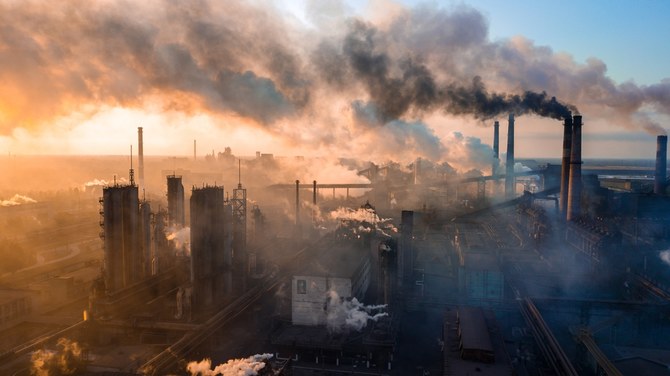
Pollution by states and companies is contributing to more deaths globally than COVID-19, said a UN environmental report published on Tuesday. (Shutterstock)
Short Url
Updated 15 February 2022
Follow

Pollution causing more deaths than COVID, action needed, says UN expert

  • The report said pollution from pesticides, plastics and electronic waste is causing widespread human rights violations and at least 9 million premature deaths a year
  • Coronavirus pandemic has caused close to 5.9 million deaths, according to data aggregator Worldometer

GENEVA: Pollution by states and companies is contributing to more deaths globally than COVID-19, a UN environmental report published on Tuesday said, calling for “immediate and ambitious action” to ban some toxic chemicals.
The report said pollution from pesticides, plastics and electronic waste is causing widespread human rights violations and at least 9 million premature deaths a year, and that the issue is largely being overlooked.
The coronavirus pandemic has caused close to 5.9 million deaths, according to data aggregator Worldometer.
“Current approaches to managing the risks posed by pollution and toxic substances are clearly failing, resulting in widespread violations of the right to a clean, healthy and sustainable environment,” the report’s author, UN Special Rapporteur David Boyd, concluded.
“I think we have an ethical and now a legal obligation to do better by these people,” he told Reuters later in an interview.
Due to be presented next month to the UN Human Rights Council, which has declared a clean environment a human right, the document was posted on the Council’s website on Tuesday.
It urges a ban on polyfluoroalkyl and perfluoroalkyl, man-made substances used in household products such as non-stick cookware that have been linked to cancer and dubbed “forever chemicals” because they don’t break down easily.
It also seeks the clean-up of polluted sites and, in extreme cases, the possible relocations of affected communities — many of them poor, marginalized and indigenous — from so-called “sacrifice zones.”
That term, originally used to describe nuclear test zones, was expanded in the report to include any heavily contaminated site or place rendered uninhabitable by climate change.
“What I hope to do by telling these stories of sacrifice zones is to really put a human face on these otherwise inexplicable, incomprehensible statistics (of pollution death tolls),” Boyd said.
Boyd considers the report, his latest in a series, to be his most hard-hitting yet and told Reuters he expects “push back” when he presents it to the Council in Geneva.
UN rights chief Michelle Bachelet has called environmental threats the biggest global rights challenge, and a growing number of climate and environmental justice cases are invoking human rights with success.
Chemical waste is set to be part of negotiations at a UN environment conference in Nairobi, Kenya, starting on Feb. 28, including a proposal to establish a devoted panel, similar to the Intergovernmental Panel on Climate Change.


Tourists empty out of Cuba as US fuel blockade bites

Updated 3 sec ago
Follow

Tourists empty out of Cuba as US fuel blockade bites

  • Several nations have advised against travel to Cuba since the US tightened a decades-old embargo
  • The island of 9.6 million inhabitants has faced hard times since the US trade embargo took hold in 1962
HAVANA: With rolling power cuts, hotel closures, and flight routes suspended for lack of fuel, tourists are gradually emptying out of Cuba, deepening a severe crisis on the cash-strapped island.
Several nations have advised against travel to Cuba since the US tightened a decades-old embargo by choking vital oil imports.
“I found only one taxi,” said French tourist Frederic Monnet, who cut short a trip to a picturesque valley in western Cuba to head back to Havana.
“There might be no taxis afterward,” he said.
A petroleum shortage has led to regular hours-long power cuts, long queues at petrol stations, and has forced many airlines to announce that they will cancel regular services.
About 30 hotels and resorts across the island are being temporarily closed due to low occupancy and fuel rationing, according to an internal Tourism Ministry document obtained by AFP.
Since January, a flotilla of US warships have stopped Venezuelan tankers from delivering oil to Cuban ports.
Washington has also threatened Mexico and other exporter with punitive tariffs if they continue deliveries.
Several Canadian and Russian airlines are sending empty flights to Cuba to retrieve thousands of otherwise stranded passengers, and others are introducing refueling stops in the route home.
American tourist Liam Burnell contacted his airline to make sure he could get a flight back.
“There was a danger that I might not be able to return, because the airport says it doesn’t have enough fuel for the planes,” he said.
‘Critical, critical’
An absence of tourists is more than an inconvenience for the Cuban government.
Tourism is traditionally Cuba’s second major source of foreign currency, behind revenue from doctors sent abroad.
The revenue is vital to pay for food, fuel, and other imports.
And the 300,000 Cubans who make a living off the tourist industry are already feeling the pinch.
A hop-on, hop-off bus touring Havana’s sites on Thursday was virtually empty.
Horses idled in the shade of colonial buildings, waiting for carriages to fill with visitors.
“The situation is critical, critical, critical,” said 34-year-old Juan Arteaga, who drives one of the island’s many classic 1950s cars so beloved by tourists.
“There are few cars (on the street) because there is little fuel left. Whoever had a reserve is keeping it,” he said.
“When my gasoline runs out, I go home. What else can I do?” he said.
The island of 9.6 million inhabitants has faced hard times since the US trade embargo took hold in 1962, and in recent years the severe economic crisis has also been marked by shortages of food and medicine.
On Thursday, two Mexican navy ships arrived in Cuba with more than 800 tons of much-needed humanitarian aid — fresh and powdered milk, meat, cookies, beans, rice and personal hygiene items, according to the Mexican foreign ministry.
Musician Victor Estevez said because tourism has been “a lifeline for all Cubans...if that is affected, then we are really going to be in trouble.”
“The well-being of my family depends on me.”
The tourism sector had already been severely hit by the Covid-19 pandemic, experiencing a 70 percent decline in revenue between 2019 and 2025.
Tourism expert Jose Luis Perello said the island now faces the prospect of “a disastrous year.”