COPENHAGEN: Premature deaths caused by fine particle air pollution have fallen 10 percent annually across Europe, but the invisible killer still accounts for 307,000 premature deaths a year, the European Environment Agency said Monday.
If the latest air quality guidelines from the World Health Organisation were followed by EU members, the latest number of fatalities recorded in 2019 could be cut in half, according to an EEA report.
Deaths linked to fine particular matter — with a diameter below 2.5 micrometres or PM2.5 — were estimated at 346,000 for 2018.
The clear reduction in deaths for the following year were put down partly to favourable weather but above all to a progressive improvement in air quality across the continent, the European Union's air pollution data centre said.
In the early 1990s, fine particles, which penetrate deeply into the lungs, led to nearly a million premature deaths in the 27 EU member nations, according to the report.
That figure had been more than halved to 450,000 by 2005.
In 2019, fine particulate matter caused 53,800 premature deaths in Germany, 49,900 in Italy, 29,800 in France and 23,300 in Spain.
Poland saw 39,300 deaths, the highest figure per head of population.
The EEA also registers premature deaths linked to two other leading pollutants, but says it does not count them in its overall toll to avoid doubling up.
Deaths caused by nitrogen dioxide — mainly from car, trucks and thermal power stations — fell by a quarter to 40,000 between 2018 and 2019.
Fatalities linked to ground-level ozone in 2019 also dropped 13 percent to 16,800 dead.
Air pollution remains the biggest environmental threat to human health in Europe, the agency said.
Heart disease and strokes cause most premature deaths blamed on air pollution, followed by lung ailments including cancer.
In children, atmospheric pollution can harm lung development, cause respiratory infections and aggravate asthma.
Even if the situation is improving, the EEA warned in September that most EU countries were still above the recommended pollution limits, be they European guidelines or more ambitious WHO targets.
According to the UN health body, air pollution causes seven million premature deaths annually across the globe — on the same levels as smoking and poor diet.
In September, the alarming statistics led the WHO to tighten its recommended limits on major air pollutants for the first time since 2005.
"Investing in cleaner heating, mobility, agriculture and industry improves health, productivity and quality of life for all Europeans, and particularly the most vulnerable," said EEA director Hans Bruyninck.
The EU wants to slash premature deaths due to fine air pollution by at least 55 percent in 2030 compared to 2005.
If air pollution continues to fall at the current rate, the agency estimates the target will be reached by 2032.
However an ageing and increasingly urbanised population could make that more difficult.
"An older population is more sensitive to air pollution and a higher rate of urbanisation typically means that more people are exposed to PM 2.5 concentrations, which tend to be higher in cities," said the report.


![]()

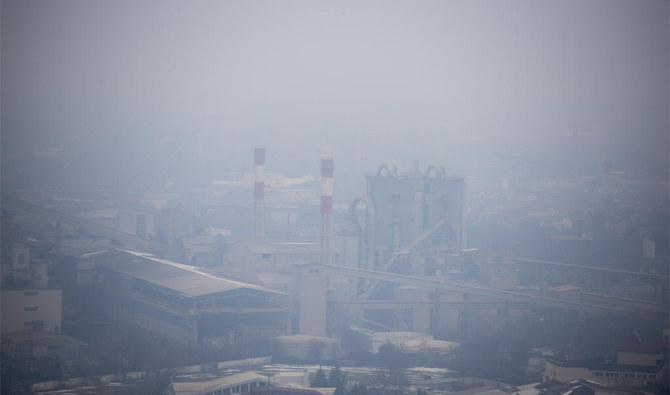
Air pollution in Europe still killing 300,000 a year: report
Short Url
https://arab.news/833wc
Air pollution in Europe still killing 300,000 a year: report
- Deaths caused by nitrogen dioxide — mainly from car, trucks and thermal power stations — fell by a quarter to 40,000 between 2018 and 2019


Latest updates


© 2026 SAUDI RESEARCH & PUBLISHING COMPANY, All Rights Reserved And subject to Terms of Use Agreement.