

Pandemic has spurred engagement with online extremism: Experts

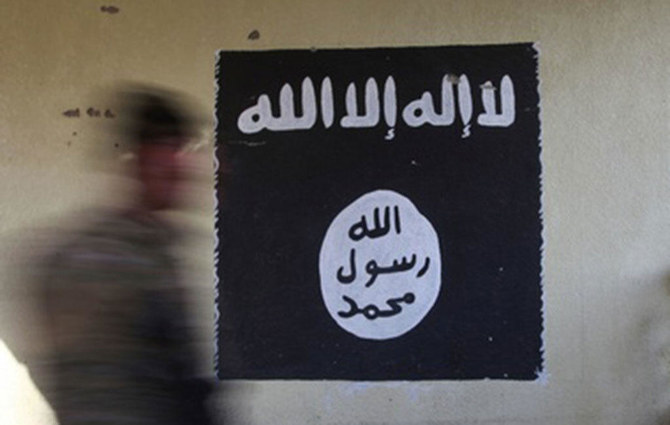
Islamist extremism remains the greatest threat to British public safety. (Reuters file photo)
Short Url
Updated 19 October 2021
Follow

Pandemic has spurred engagement with online extremism: Experts

  • 7% more terror-related content reported in 2020 than preceding year
  • Most people referred to UK’s counter-extremism program have mixed, unclear or uncertain motivations

LONDON: Engagement with extremist content has proliferated over the last 18 months as people have been forced inside and online by COVID-19 lockdowns, experts have warned.

“What we’ve seen is evidence of spikes of online activity in a wide range of extremist issues during lockdown,” Jacob Davey, head of research and policy of far-right and hate movements at the Institute for Strategic Dialogue, told The Guardian.

“It is not just terrorist material but a broad cocktail of online harms, as people spent more time indoors.”

Last year, the UK’s Counter-Terrorism Internet Referral Unit said over 7 percent more pieces of suspected terrorism content were reported to them during 2020 compared with the year before.

Paul Gill, a professor of security and crime science at University College London, said the nature of the terror threat was already evolving after the defeat of Daesh’s so-called caliphate in 2019. “That has meant there were already fewer directed plots and a rise in self-initiation,” he told The Guardian.

The on-off lockdowns of the past 18 months have only served to turbocharge this change, as associating in person became more difficult and social isolation from community and family created “a perfect storm of other risk factors for radicalization,” Gill said.

“If you have any grievance you can go online and find people who will validate your grievance, and make you feel like you are part of something,” he added.

An increasing number of terrorist attacks — or closely related cases — were “hard to define,” he said.

The UK is currently coming to terms with the murder of an MP at the hands of a suspected Islamist, but as Gill alluded to, the circumstances surrounding the murder are not immediately obvious.

Some have blamed Islamist extremism, while others cite a rising tide of online hatred against public officials.

According to MI5, Islamist extremism remains the greatest threat to British public safety, but other forms — such as right-wing extremism — remain a clear threat, as does the growing category of instances with a mixed, unclear or uncertain motive.

Of all referrals to Britain’s counter-radicalization program from 2019 to 2020, the latest period for which figures are available, 51 percent were in the MUU category, while the rest were split between Islamists and right-wing radicals, at 24 and 22 percent respectively.


Macron to set out how France’s nuclear arms could protect Europe

Updated 3 sec ago
Follow

Macron to set out how France’s nuclear arms could protect Europe

PARIS: France will on Monday unveil how it could use the European Union’s only atomic arsenal to protect the continent in an unstable world, with Russia becoming increasingly aggressive and the United States turning away.
The speech by French President Emmanuel Macron, at France’s Ile Longue nuclear submarine base, comes after the launch of US and Israeli attacks against Iran in a campaign that risks destabilising the Middle East.
“What we are experiencing demonstrates that in the world to come, power and independence will be two indispensable forces for dealing with the proliferation of threats,” said a member of Macron’s team.
Macron is set to update France’s nuclear doctrine as Russia’s war against Ukraine grinds into a fifth year and NATO allies worry about Washington’s wavering commitment to Europe.
“There will undoubtedly be some significant shifts and developments,” a source said of the speech set to be delivered from 1415 GMT Monday.
European nations, which have relied on the US nuclear deterrent throughout the Cold War and in the decades since it ended, are increasingly debating whether to bolster their own atomic arsenals.
Paris has been in talks with countries including Germany and Poland over how France could use its atomic arsenal to help protect the continent.
Last year, Macron said he was ready to discuss possible deployment of French aircraft armed with nuclear weapons in other European countries.
Macron said in February he was considering a doctrine that could include “special cooperation, joint exercises, and shared security interests with certain key countries.
France maintains the world’s fourth-largest nuclear arsenal, estimated at around 290 warheads. Britain, which is no longer a member of the EU, is the only other European nuclear power.
By contrast, the United States and Russia, the world’s two main atomic powers, have thousands of nuclear warheads each.

‘27 buttons’

Reassurances from US officials that Washington’s deterrent would continue to cover Europe under the NATO alliance have done little to quell European fears of fickleness under US President Donald Trump.
“It is clear that we will need to reflect together on how French and British deterrence can fit into a more assertive European defense,” Bernard Rogel, who served as top military adviser to Macron, told AFP.
But how exactly nuclear cooperation would work between the EU’s 27 states is another story.
Rogel insisted that control over the launch decision will remain in French hands.
“I can’t see us having 27 buttons. From a credibility standpoint, that just doesn’t work,” he said.

‘Only a good thing’

Rafael Loss, a policy fellow at the European Council on Foreign Relations, said leaders should find confidence in European support for strengthening nuclear deterrence.
He said people in Denmark, Estonia, Germany, Portugal, Spain and Switzerland now tend to support rather than oppose the idea of developing an alternative European nuclear deterrent.
“If there’s going to be some kind of bigger European investments in France or UK’s nuclear deterrence, that’s only a good thing,” Finland’s defense minister Antti Hakkanen told AFP in February.
Florian Galleri, a historian specializing in nuclear doctrines, warned that Macron would have to tread carefully, pointing to his low approval ratings one year before the end of his presidency.
Macron’s address could also spark a backlash ahead of the 2027 presidential election, in which Marine Le Pen’s euroskeptic far-right is seen as having its best chance yet at winning the top job.
“There is a consensus on possessing nuclear weapons in France, but not on nuclear policy,” Galleri said.
The far-right has already issued a warning.
“If Mr. Macron thinks he can give France’s nuclear weapon to the EU, he will face impeachment proceedings for treason,” Philippe Olivier, an adviser to Le