


Herd immunity is priority not COVID-19 elimination: Saudi official

Saudi Arabia is ranked second, equal with Hungary, on the latest Nikkei COVID-19 Recovery Index, released on Aug. 31. (AFP)
Short Url
Updated 22 September 2021
Follow

Herd immunity is priority not COVID-19 elimination: Saudi official

  • Reassurance that the vaccines are safe have largely been successful

JEDDAH: The swift development and implementation of vaccination procedures by Saudi authorities have been key to the Kingdom’s success in managing the COVID-19 pandemic, according to one of the country’s leading health officials.

Hani Jokhdar, the deputy minister for public health, told Arab News that the immediate priority is not to eliminate the virus, but to ensure levels of immunization in the country are as high as possible so that the risk of severe illness or death is minimized.
He added that cooperation between different sections of the Saudi authorities from an early stage had helped to ensure success an effective response to the health crisis. Citizens and expatriates also played their part in the effort to minimize the effects of the pandemic by adhering to the precautionary measures implements by Saudi authorities, Jokhdar said.
Saudi Arabia is ranked second, equal with Hungary, on the latest Nikkei COVID-19 Recovery Index, released on Aug. 31. It rates more than 120 countries based on their performance in terms of infection management, vaccine rollout and social mobility. The Kingdom received a score of 72, just one point behind top-ranked China.
“The acceleration in administering the vaccines through more than 585 vaccination centers spread all over the country has greatly contributed to this classification,” said Jokhdar. “Individuals had the freedom to decide when and where to receive the vaccine.”
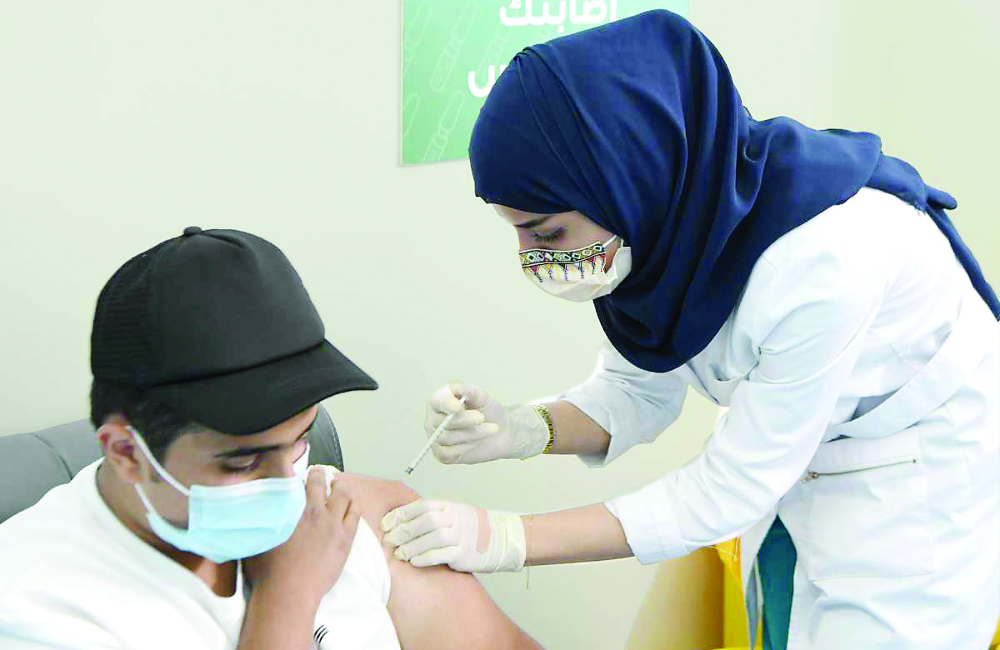
On Saturday, the southern Al-Baha region recorded no cases of COVID-19, and only one case during the last three days of last week. But Jokhdar stressed that achieving zero daily cases is not the priority in the global effort to contain the pandemic.

FASTFACT

The rapid development of the vaccination program has been a key part of the Kingdom’s response to the pandemic, according to deputy minister for public health.

“To completely eliminate the virus is not the main goal” for health authorities around the world, he said. “The top priority is to reach high community immunity levels. We in Saudi Arabia … follow the same strategy in confronting the pandemic: We believe that what is more important than the zero-cases level is the immunity against the virus.”
Despite misleading information and false claims about the vaccines that are circulating worldwide, especially on social media, Saudi health authorities report that efforts to reassure citizens and residents that the vaccines are safe have largely been successful.
Abdullah Assiri, assistant deputy minister for preventive health, said that the only people who continue to refuse to receive the vaccines are “the deceived or the opinionated.”
“If the vaccines were meant to exterminate the poor and the middle class, as some have claimed, then why did the rich countries monopolize the vaccines, leaving Africa to struggle against COVID-19?” he said. He also pointed out that in many countries, politicians and other leaders, the rich and scientists were among the first to sign up for vaccination.
Meanwhile, the Saudi General Authority of Civil Aviation has sent a memo to all airlines operating at the Kingdom’s airports, including private aviation companies, detailing the procedures to be followed when verifying the immunization status of expatriates before they fly to the Kingdom.
And the Ministry of Islamic Affairs has reopened 2,027 mosques after sterilization procedures were completed.
According to data from the Ministry of Health, nearly 41 million doses of vaccine have been administered in Saudi Arabia, and more than 28 million PCR tests have been carried out.
World Health Organization figures reveal that there have been more than 228 million confirmed cases of COVID-19 worldwide, and the global death toll from the disease stands at about 4.7 million.


Jeddah students get closer look at electric motorsport

Updated 24 January 2026
Follow

Jeddah students get closer look at electric motorsport

  • A PIF-linked initiative highlights technical and engineering careers behind electric racing events

JEDDAH: Students from local and international schools in Jeddah were introduced to STEM-related career pathways in electric motorsport this week, as part of an education program linked to the UIM E1 World Championship held on the Red Sea.

The sessions formed part of Driving Force Presented by the Public Investment Fund, an initiative run by Formula E and its electric racing series partners, to familiarize students aged eight to 18 with science, technology, engineering and mathematics through electric racing and sustainability-focused industries.

The sessions for students formed part of Driving Force Presented by the Public Investment Fund, an initiative run by Formula E and its electric racing series partners. (Supplied)

The programme took place alongside the 2026 E1 Jeddah GP and included workshops, school visits and trackside access designed to show how engineering, data, broadcast technology and event operations function within professional motorsport.

According to organisers, the initiative reached more than 60,000 students globally in 2025, with further expansion planned this year. 

HIGHLIGHTS

• The program took place alongside the 2026 E1 Jeddah GP and included workshops, school visits and trackside access.

• Students learned about E1 races and their technical and environmental dimensions and discussed the engineering and marine aspects of electric boats.

• According to organisers, the initiative reached more than 60,000 students globally in 2025, with further expansion planned this year. 

John Williams, managing director at E1, told Arab News: “The PIF is absolutely vital to everything we do here at the E1. They were crucial initial investment partner since the start of the championship and they continue to support us in a number of ways and more specifically around the Driving Force program.”

The sessions for students formed part of Driving Force Presented by the Public Investment Fund, an initiative run by Formula E and its electric racing series partners. (Supplied)

Elaborating more on the program, he said: “What we are doing is presenting and showing these students the available careers of science, technology, engineering and mathematics, as well as careers in sports, not only pilots but also engineers and mechanics.”

Williams added that the main key to the program was bringing a new generation to the mechanism of sport.

“We are introducing to these exciting new technologies around the race but it could be our technology on the boat or our broadcast products, as well as how to manage the event its self. There are a range of opportunities to show it to the children in addition to enjoying the excitement of the race and meeting the pilots.”

The program’s Jeddah activities began at King Abdulaziz University’s faculty of maritime studies, where students took part in a hands-on workshop focused on STEM careers in the motorsport and sustainability areas conducted by technology experts and famous water pilots such as Dani Clos, Emma Kimilainen and Patricia Pita.

Students learned about E1 races and their technical and environmental dimensions and discussed the engineering and marine aspects of electric boats.

They also enjoyed exclusive behind-the-scenes access at the E1 Jeddah GP, pilot meet-and-greets, and front-row seats to watch the RaceBird boats in action.