


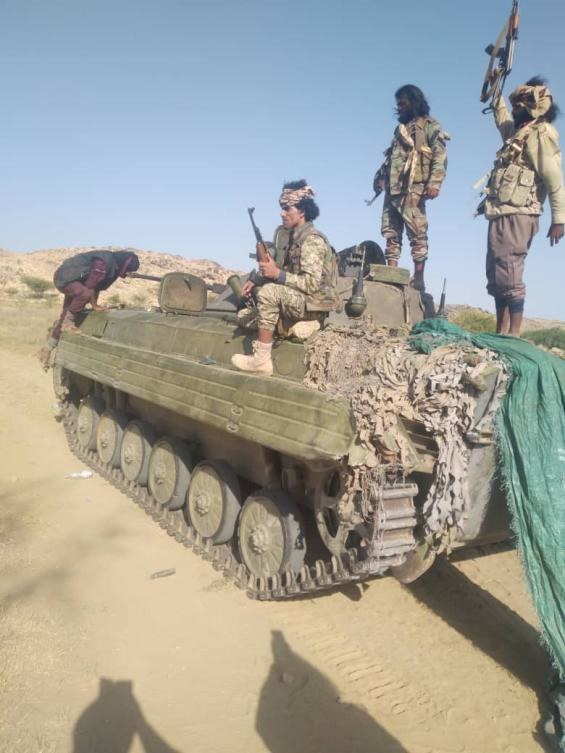

ALEXANDRIA: Government troops and local tribesmen on Sunday liberated several villages and hilly locations in the central province of Al-Bayda during the second day of a military offensive to push Iran-backed Houthis from the area, government and military officials said.
Yemen’s Information Minister Mu’amar Al-Eryani said that government troops scored “major victories” in Al-Bayda after liberating mountains, villages and other military locations, mainly in the Humaiqan area in Al-Zaher district, west of Al-Bayda, adding that loyalists cut off supply lines to pockets of Houthis in Al-Zaher, Al-Jamajem and Al-Nasefa and government forces were still fighting their way into new areas.
“We commend the great role of the tribal leaders and tribesmen and all the honorable people who supported the heroes of the national army and the popular resistance in the major military operation (in the province),” the Yemeni minister said, noting that dozens of rebel fighters were killed or captured and loyalists seized armed vehicles, trucks and ammunition abandoned by the fleeing Houthis.
On Saturday, Yemen’s army started a new offensive to liberate Al-Bayda from the Houthis and relieve pressure on the government forces battling the Houthis in the neighboring Marib province.
State and local media broadcast videos showing what appeared to be government troops on armed vehicles rolling into liberated areas for the first time since 2015 when the Houthis seized control of most of the province districts.
If advances continued on the same scale, local army commanders and analysts said, government troops might be able to liberate Al-Bayda city, the province’s capital, and push further into opening new fronts in the neighboring Thamar and Ibb provinces.
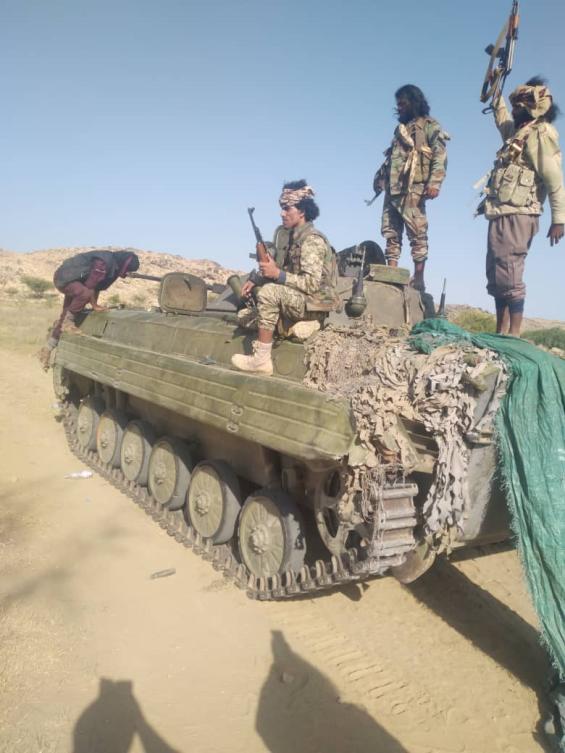
For six years, Yemen government troops have been trying to seize control of new areas in Al-Bayda province, but failed to make advances due to stiff resistance from the Houthis.
For the Yemeni forces to keep up the momentum of the offensive, the Yemeni army should mount similar assaults on the Houthis in Hodeidah, Taiz and Abyan to distract their forces, Yasser Al-Yafae, an Aden-based political analyst, told Arab News.
“There are great military successes for the first time since 2015. For this military offensive to succeed, the legitimate government should simultaneously activate other fronts in Taiz, the Western Coast and other area areas,” he said, warning that if the Houthis were allowed to recapture the liberated areas in Al-Bayda they would kill, displace and blow up houses of tribal leaders who aided government troops.
Meanwhile, at least two soldiers were killed and more than 20 more wounded when an explosion ripped through a mosque at a military base during the afternoon prayer in the southern province of Abyan, a local journalist told Arab News on Sunday.
Dozens of soldiers from the 5th Infantry Brigade were inside the base’s mosque when a large explosion, apparently caused by a ballistic missile or explosive-rigged drone fired by the Houthis, killed soldiers and partially destroyed the building.
“Four soldiers were critically wounded. All of the targeted soldiers are from Abyan,” said the journalist, who preferred not to be identified.


