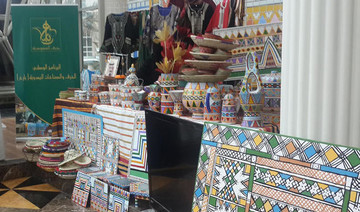


JEDDAH: From weaving to bead making, Saudi handicrafts are a vital part of the Kingdom’s culture and heritage.
The practice of making beads is known in Arabic as “subha,” which is a string of beads commonly used to track the counting of tasbih. It has developed into a cultural handicraft industry rich in social heritage and passed down through successive generations.
Subha epitomizes national identity and is famous in the Arab and Islamic worlds. Some Saudi families make these goods to earn a living.
Craftsman Ibrahim Al-Obaida, one of the most famous bead makers in Hail since the late 1990s, said that he began learning when he was a child. Bead making soon turned into a passion, and he mastered its secrets through a small shop in the popular Barzan Market.
His beads are available in many countries in the Gulf Cooperation Council, Europe and the US.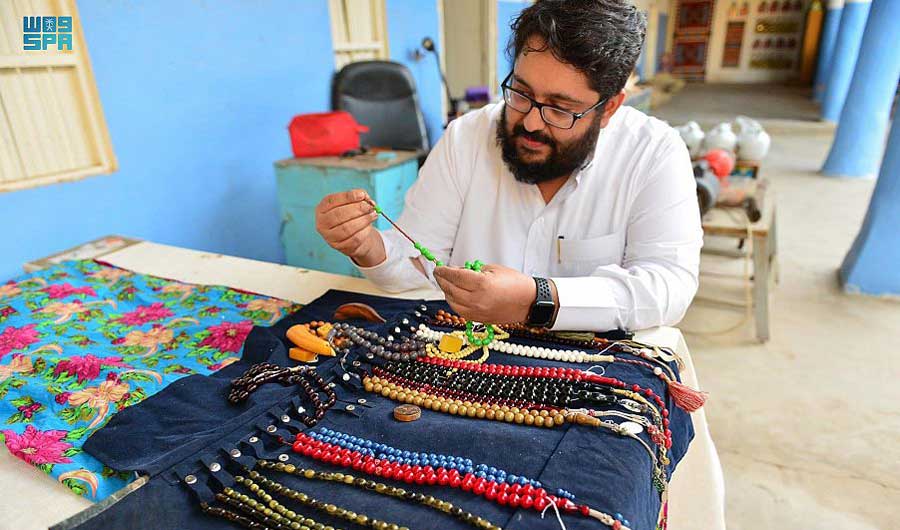
“My passion for beads started some 20 years ago. I was fond of buying beads and doing minor works such as choosing the appropriate thread and tail, known locally as the ‘tarboosh’,” he said. “Five years ago, I started bead making, leveraging my experience, having been trained by bead master Jamal Al-Jahni.”
FASTFACTS
• Making a bead is a multi-stage process and each piece is tailored to the customer’s needs.
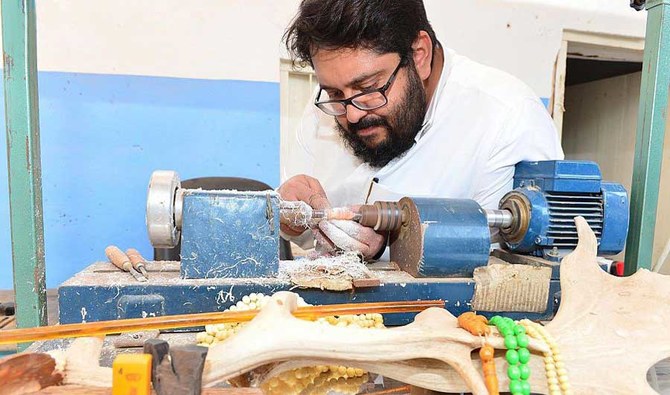
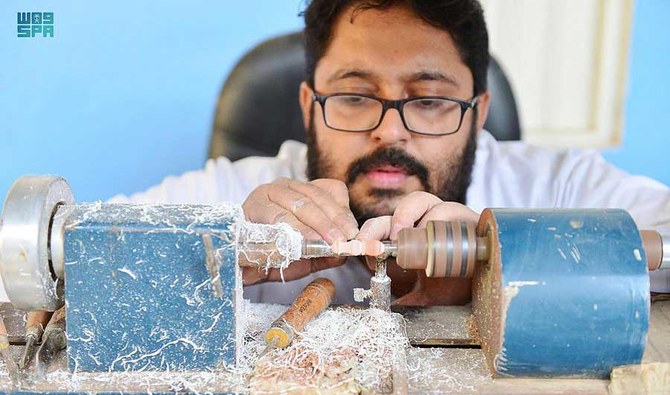
• The manufacturing process begins with cutting the ore, refining the edges and making holes in the middle to form the beads.
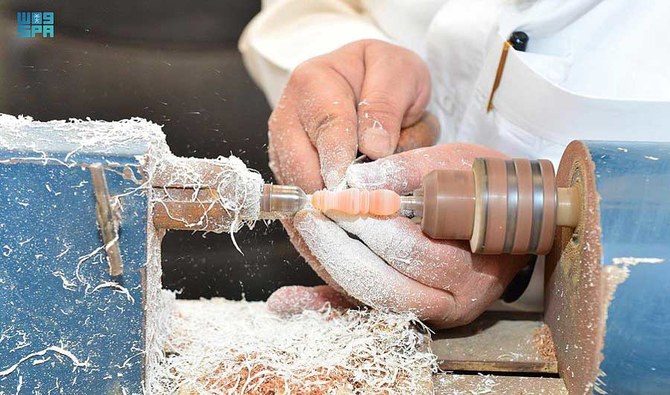
• The beads are then sanded, polished and threaded.
• Beads can be made from many materials such as ivory, hardwoods and precious stones, while others are semi-natural, using organic materials.
• Beads can also be made from industrial materials such as Bakelite, fiber and plastic.
Making a bead is a multi-stage process and each piece is tailored to the customer’s needs. The manufacturing process begins with cutting the ore, refining the edges and making holes in the middle to form the beads. The beads are then sanded, polished and threaded.
Beads can be made from many materials. Some are natural, such as ivory, hardwoods and precious stones, while others are semi-natural, using organic materials. Beads can also be made from industrial materials such as Bakelite, fiber and plastic.
Skilled craftsmen have mastered producing different bead types, colors and patterns. Some pieces may take up to a month, depending on the type of materials used and the workmanship required.
Acquiring a bead is not like purchasing any accessory. It is rather an investment as the value of a well-crafted piece may double over time, and is used by different segments of society — sheikhs and youth alike — as well as by all genders. The sole purpose of the bead used to be for worship but nowadays is used as a luxury accessory, especially on official occasions, and is a good gift or souvenir.
Al-Obaida has participated in several events and festivals, including the Janadriyah Festival, as well as the Souq Okaz, during which he took part in a competition and came second in the Kingdom during his first participation.