

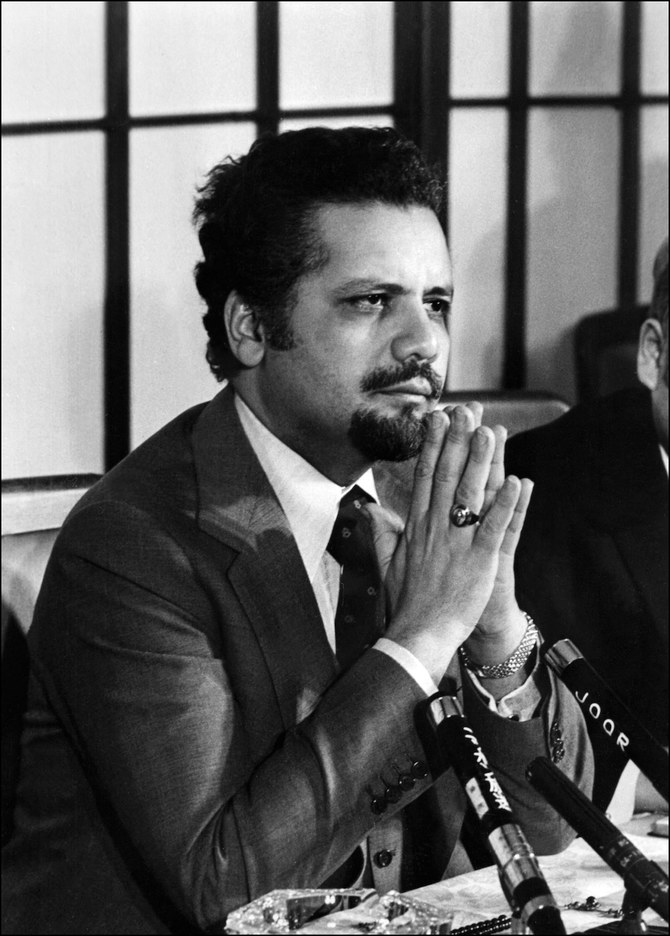
Kingdom mourns long-serving oil minister Yamani

1 / 3
Ahmed Zaki Yamani listens to reporter's questions during a news conference in Doha in 1976. (AP/File)
2 / 3
Ahmed Zaki Yamani in Tokyo in 1974. Yamani, a key player in the first oil shock of 1973, has died at the age of 90. (AFP/File)
3 / 3
Gulf oil ministers and representatives of western nations meet in October 1973 in Vienna to negotiate price boosts sought by oil producers. Ahmed Zaki Yamani is second from left. (AP/File)
Short Url
Updated 23 February 2021
Follow

Kingdom mourns long-serving oil minister Yamani

  • Son of a judge from Makkah was key figure in embargo that shook global markets in the 1970s

JEDDAH: Ahmed Zaki Yamani, Saudi Arabia’s longest-serving oil minister and the man behind the oil embargo after the 1973 Arab-Israeli war, has died in London at the age of 90.

Yamani became oil minister in 1962, replacing Abdullah Tariki, a founding member of OPEC. He promoted Arab interests and effectively negotiated oil production and prices, becoming a dominant figure in setting production quotas in global markets.
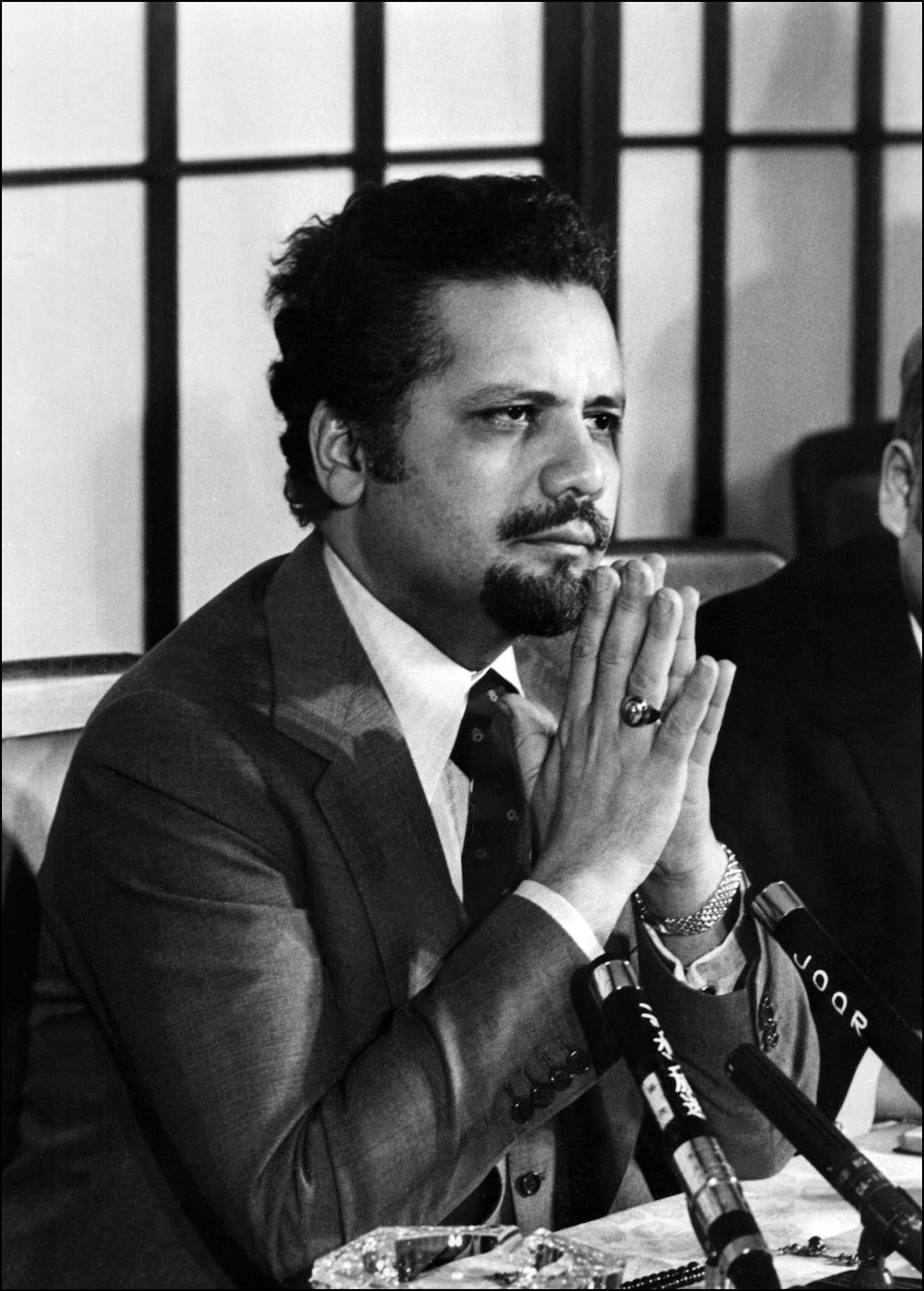


Ahmed Zaki Yamani in Tokyo in 1974. Yamani, a key player in the first oil shock of 1973, has died at the age of 90. (AFP/File)

Born on June 30, 1930, the son of an Islamic scholar and judge in Makkah, Yamani studied in Cairo, then graduated from New York University School of Law and earned a master’s degree from Harvard Law School.

He led the nationalization of the Kingdom’s oil industry, which became fully state owned in 1980, and played an important role in the development of OPEC. He was the public face of the 1973-1974 oil crisis, when the price of crude quadrupled to $12 a barrel.

In 1975, Yamani and 11 other oil ministers were held hostage at OPEC’s conference in Vienna by Venezuelan terrorist Ilyich Ramirez Sanchez, known as Carlos the Jackal. He planned to fly Yamani and Iranian minister Jamshid Amuzegar to Baghdad and execute them. The hostages were eventually released in Algiers after negotiations.
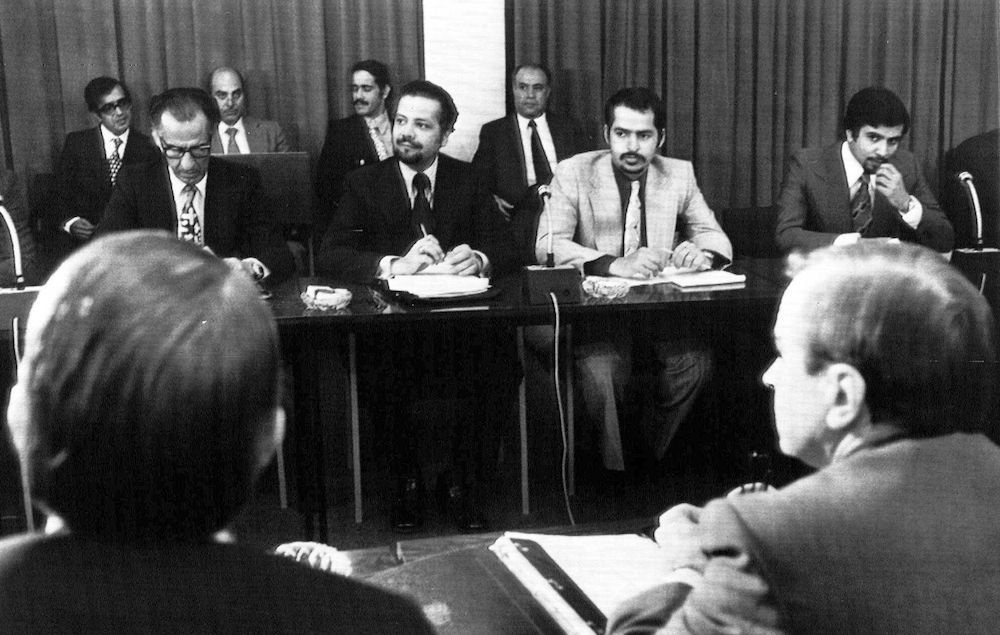


Gulf oil ministers and representatives of western nations meet in October 1973 in Vienna to negotiate price boosts sought by oil producers. Ahmed Zaki Yamani is second from left. (AP/File)

When oil prices began to decline in early 1986 to about $10 from a late-1985 peak of about $31, Saudi Arabia cut production to support prices, which cost revenue and market share. Yamani was replaced as oil minister that year by his deputy, Hisham Nazer.

In an interview in 2000, when shale oil was little known and renewables were in their infancy, Yamani famously predicted that technology would reduce oil consumption and increase production from outside OPEC. “The Stone Age did not end because the world ran out of stone, and the Oil Age will end long before the world runs out of oil,” he said. 


Jeddah students get closer look at electric motorsport

Updated 24 January 2026
Follow

Jeddah students get closer look at electric motorsport

  • A PIF-linked initiative highlights technical and engineering careers behind electric racing events

JEDDAH: Students from local and international schools in Jeddah were introduced to STEM-related career pathways in electric motorsport this week, as part of an education program linked to the UIM E1 World Championship held on the Red Sea.

The sessions formed part of Driving Force Presented by the Public Investment Fund, an initiative run by Formula E and its electric racing series partners, to familiarize students aged eight to 18 with science, technology, engineering and mathematics through electric racing and sustainability-focused industries.

The sessions for students formed part of Driving Force Presented by the Public Investment Fund, an initiative run by Formula E and its electric racing series partners. (Supplied)

The programme took place alongside the 2026 E1 Jeddah GP and included workshops, school visits and trackside access designed to show how engineering, data, broadcast technology and event operations function within professional motorsport.

According to organisers, the initiative reached more than 60,000 students globally in 2025, with further expansion planned this year. 

HIGHLIGHTS

• The program took place alongside the 2026 E1 Jeddah GP and included workshops, school visits and trackside access.

• Students learned about E1 races and their technical and environmental dimensions and discussed the engineering and marine aspects of electric boats.

• According to organisers, the initiative reached more than 60,000 students globally in 2025, with further expansion planned this year. 

John Williams, managing director at E1, told Arab News: “The PIF is absolutely vital to everything we do here at the E1. They were crucial initial investment partner since the start of the championship and they continue to support us in a number of ways and more specifically around the Driving Force program.”

The sessions for students formed part of Driving Force Presented by the Public Investment Fund, an initiative run by Formula E and its electric racing series partners. (Supplied)

Elaborating more on the program, he said: “What we are doing is presenting and showing these students the available careers of science, technology, engineering and mathematics, as well as careers in sports, not only pilots but also engineers and mechanics.”

Williams added that the main key to the program was bringing a new generation to the mechanism of sport.

“We are introducing to these exciting new technologies around the race but it could be our technology on the boat or our broadcast products, as well as how to manage the event its self. There are a range of opportunities to show it to the children in addition to enjoying the excitement of the race and meeting the pilots.”

The program’s Jeddah activities began at King Abdulaziz University’s faculty of maritime studies, where students took part in a hands-on workshop focused on STEM careers in the motorsport and sustainability areas conducted by technology experts and famous water pilots such as Dani Clos, Emma Kimilainen and Patricia Pita.

Students learned about E1 races and their technical and environmental dimensions and discussed the engineering and marine aspects of electric boats.

They also enjoyed exclusive behind-the-scenes access at the E1 Jeddah GP, pilot meet-and-greets, and front-row seats to watch the RaceBird boats in action.