

Saudi women find their calling in ‘elegant, exciting’ fencing

1 / 8
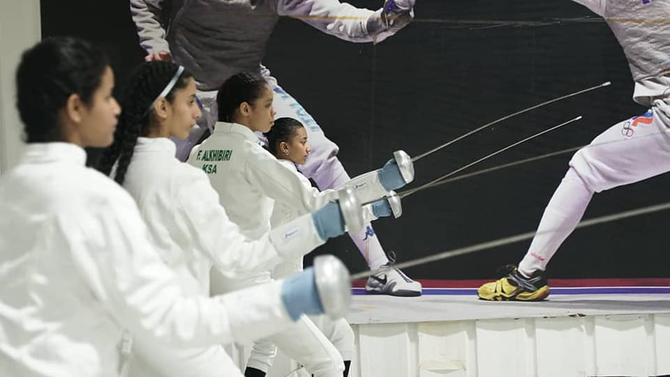
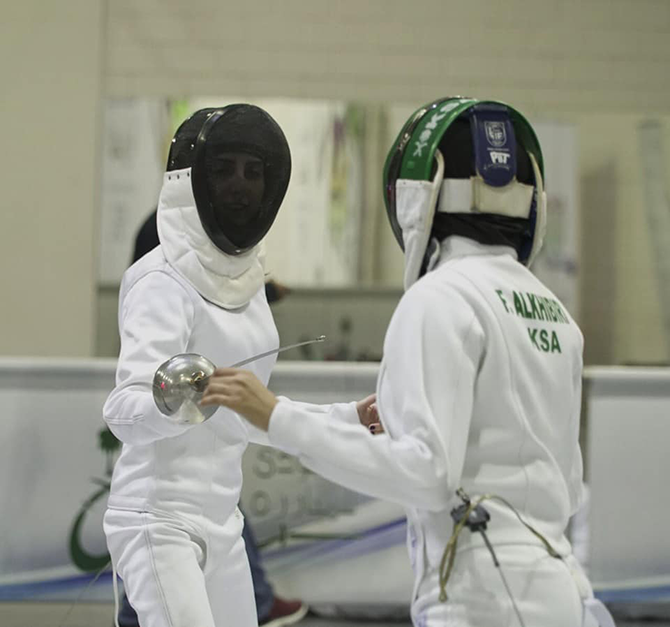
Inspired by her father’s athletic career, Ruba Al-Masri took up fencing three years ago, and has since claimed silver and gold medals in local and international championships. (Supplied)
2 / 8
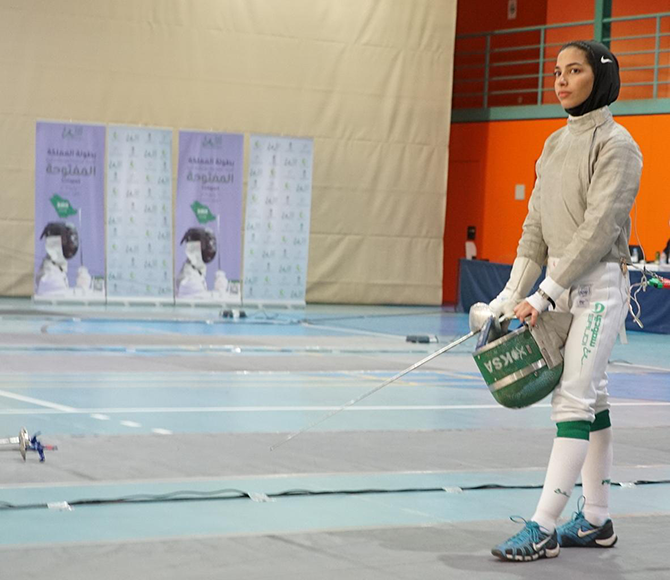
Inspired by her father’s athletic career, Ruba Al-Masri took up fencing three years ago, and has since claimed silver and gold medals in local and international championships. (Supplied)
3 / 8
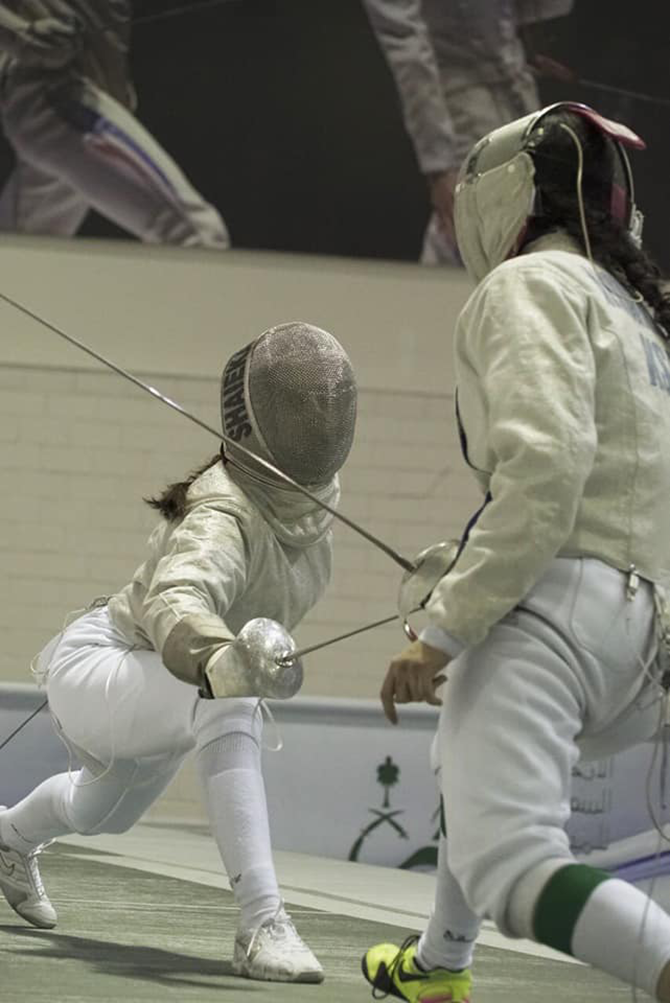
Inspired by her father’s athletic career, Ruba Al-Masri took up fencing three years ago, and has since claimed silver and gold medals in local and international championships. (Supplied)
4 / 8
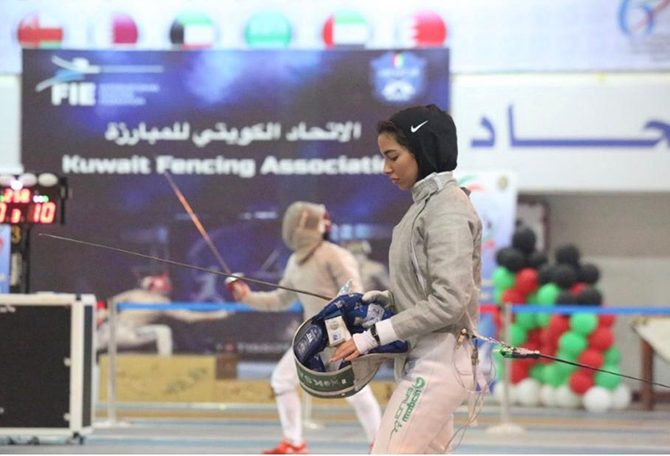
Inspired by her father’s athletic career, Ruba Al-Masri took up fencing three years ago, and has since claimed silver and gold medals in local and international championships. (Supplied)
5 / 8
Inspired by her father’s athletic career, Ruba Al-Masri took up fencing three years ago, and has since claimed silver and gold medals in local and international championships. (Supplied)
6 / 8
Inspired by her father’s athletic career, Ruba Al-Masri took up fencing three years ago, and has since claimed silver and gold medals in local and international championships. (Supplied)
7 / 8
Inspired by her father’s athletic career, Ruba Al-Masri took up fencing three years ago, and has since claimed silver and gold medals in local and international championships. (Supplied)
8 / 8
Inspired by her father’s athletic career, Ruba Al-Masri took up fencing three years ago, and has since claimed silver and gold medals in local and international championships. (Supplied)
Short Url
Updated 08 February 2021
Follow

Saudi women find their calling in ‘elegant, exciting’ fencing

  • Saudi female fencers have won 29 medals in recent times, including four bronze medals at the 2016 Arab Games in Riyadh

JEDDAH: For some young Saudis, the virtues of one particular sport — fencing — have turned out to be nothing short of life-affirming.

“Fencing taught me patience, justice and anger management,” said 21-year-old women’s fencer Ruba Al-Masri.

In the elegant centuries-old sport, it seems she has, alongside many young Saudi female athletes, found her calling.

Inspired by her father’s athletic career, Al-Masri took up fencing three years ago, and has since claimed silver and gold medals in local and international championships.

“From a young age, I used to see pictures of my father and the medals that he achieved during his career,” Al-Masri told Arab News. “My family were my first supporters to tell me to follow the footsteps of my father and begin my journey.”

Since Saudi women first took part in the 2016 Olympics, the country has witnessed increasing female participation in sports. And fencing has turned out to be the most attractive.

“Until now, the number of Saudi female fencers exceeded 200, and work has been done this year to graduate the first five female referees in the history of Saudi fencing,” President of the Saudi Arabian Fencing Federation Ahmed Al-Sabban told Arab News.

Women’s participation in the sport began as recently as 2015 in the Eastern Province, Al-Sabban said, adding that female fencers from the region traveled to Bahrain to practice the sport. One of those fencers, Lubna Al-Omair, was chosen to take part in the 2016 Olympics.

“After that, about three women’s academies were established, starting from 2017 in Riyadh, Jeddah and Dammam,” he said. “We are working to have female fencing academies in all regions of the Kingdom.”

Fencing has been practiced in the Kingdom since the 1960s, Al-Sabban said, pointing to its origins at the Seven Palaces Schools in Jeddah. Many expatriates who moved to Dhahran after the discovery of oil in the Kingdom also played a role in introducing the sport to Saudis.

According to Al-Sabban, the sport first became popular in the Eastern Province and Tabuk, and then spread to all regions of the country. Today, the Saudi Fencing Federation operates academies in Jeddah, Riyadh, Taif, Madinah, Tabuk and the Eastern Province.

The hard work has paid off.

Al-Masri began fencing in April 2018 when she joined the Summer Olympic Fencing Program launched by the Saudi Fencing Federation.

“Fencing is an exciting, interesting sport,” said Al-Masri “It improves the player personality in terms of commitment and accuracy.”

She added that the sport “requires use of all the senses simultaneously, which improves one’s quick wit and observation.”

Coupled with the benefits of physical activity, fencing can boost general health, she said.

From the outset, Al-Masri was fascinated by the uniqueness of the sport in terms of equipment, outfits and techniques.

“Honestly, one of the most attractive things I found in this sport was the elegance of the fencing outfit, and how it is different from other sports,” she said. “I also find it comfortable because it covers almost the entire body.”

After winning a gold in the first Women’s Fencing Championship in the Kingdom, Al-Masri has gone on to represent Saudi Arabia internationally in Egypt, Tunisia, Kuwait, Jordan and the Philippines.

“I also learned that success does not start only from the first gold medal,” she added. “Instead, it begins with persistence and progress.”

Now Al-Masri has ambitions to participate in the Tokyo Olympics and has set her sights on becoming the first Saudi woman to win a gold medal. She also wants to achieve success in Asian championships and the Fencing World Cup.

“Fencing does not require specific physical criteria, therefore everyone can practice it at any age,” she said. “However, it is preferable to start young if you want to be a champion.”

Al-Sabban agreed, saying that there are no prerequisites for learning fencing. However, he said that there are optimal practices that will help fencers succeed, such as daily training, healthy nutrition, fitness and good sleep.

“The Saudi Fencing Federation continues to be the leader of women’s sports in the Kingdom, outperforming other sports federations,” he said.

“We hope that leadership will continue to support this, that fencing will be the first choice for all women in the Kingdom and that we continue to win gold medals in all tournaments.”

Al-Masri and her colleagues are no doubt dreaming of the same goals.


Local ZUMI thermos bottle has heritage-inspired design

Updated 5 sec ago
Follow

Local ZUMI thermos bottle has heritage-inspired design

  • References Zamzam and Hajar’s search for water
  • Helps to tell Kingdom’s story, says firm Teeb Made

ZUMI, a thermos bottle unveiled this month by Saudi Arabia brand Teeb Made, has a design referencing local memory, ritual and place, according to its producers.

“We believe meaningful design can influence how people live, feel, and connect,” said Abeer Alessa, CEO of The Bold Group and co-founder of Teeb Made.

“ZUMI draws from our heritage yet speaks to a global audience seeking intention and authenticity in the objects they choose.”

Developed under The Bold Group, ZUMI reflects a growing movement within Saudi Arabia’s creative sector to translate cultural narratives into tangible products.

Rather than following global design trends, the team focused on grounding the product in a story that resonates locally while remaining accessible internationally.

Above, the team behind Zumi.

The name ZUMI is inspired by Hajar’s call, “Zummi, zummi,” meaning “gather, gather,” during her search for water for her son Ismail between the hills of Safa and Marwah.

That moment led to the emergence of Zamzam water, a source revered for centuries and deeply embedded in Islamic and Saudi identity. For the creators, this origin story became the philosophical core of the product.

“Culture starts with a story,” Alessa explained. “With Teeb Made, we wanted to tell our story not only through communication, but through a product you can touch, live with, and keep close to you.”

Visually, ZUMI draws inspiration from the dorag, the historical vessel used by the Zamazmah men of Makkah to serve Zamzam water to pilgrims for more than 1,400 years.

Traditionally utilitarian, the dorag carried spiritual weight through its purpose rather than ornamentation. Teeb Made reinterpreted this form into a minimal, contemporary silhouette suited for modern lifestyles.

“We wanted ZUMI to be a vessel of meaning, not just water,” said Mohamad Baalbaki, executive creative director of The Bold Group and co-founder of Teeb Made.

“Its form, its patented base, and its simplicity all serve one purpose: to create something that feels familiar, timeless, and deeply personal.”

“We believe meaningful design can influence how people live, feel, and connect,” said Abeer Alessa, CEO of The Bold Group and co-founder of Teeb Made. (Supplied)

The design process was extensive. Translating a historical silhouette into a thermos bottle required more than 18 months of research and development.

The final product received a patented design certification from the Saudi Ministry of Culture, marking a milestone in original Saudi intellectual property within product design.

One of ZUMI’s most talked-about features is that it does not stand upright. This decision was entirely intentional.

“We wanted people to carry it, not leave it on a table,” Baalbaki said. “It’s a statement piece, but more importantly, it’s a personal object that invites interaction and conversation.”

Color selection further reinforces the connection to place. The launch collection features hues inspired by Saudi landscapes, including tin (mud), forest, and matar (rain), reflecting the Kingdom’s environmental diversity and grounding the product visually in its origins.

“ZUMI is a product with a Saudi story that is scalable and built to last,” said Souad Merheb, general manager of Teeb Made. “Our vision is to create intellectual property that can live long, grow as a brand, and carry these stories to new generations without losing their meaning.”

“Teeb Made is, at its core, a product design company,” Merheb added. “Our expertise lies in design and creativity, and ZUMI is a reflection of that focus, a piece of IP developed with intention, patience, and depth.”

“There are many rich and insightful stories in Saudi Arabia that remain untapped,” Alessa said. “With ZUMI, this is just the beginning.”

Beyond the product itself, ZUMI aligns with broader national efforts to elevate Saudi culture through the creative economy.

Teeb Made has engaged with several government entities and cultural platforms that recognize the value of culturally rooted products in shaping global perceptions of the Kingdom.

“Today, every Saudi has a role in telling our story to the world,” Alessa said. “For us, it is an honor to contribute to that narrative through design.”

ZUMI also signals the beginning of a wider design ecosystem under Teeb Made, with future editions and complementary accessories already in development.

According to the team, this is only the first chapter in a larger effort to revive untapped cultural stories through modern design.

ZUMI is available at www.zumibottle.com and on Instagram @zumibottle.