


RIYADH: The signing of the landmark Riyadh Declaration during the visit of Indian Prime Minister Dr. Manmohan Singh to Riyadh in 2010 raised the bilateral relationship between India and the Kingdom to a strategic partnership. The partnership covers security, economic, defense, and political areas and was perhaps the starting point in structured bilateral defense cooperation between India and Saudi Arabia.
Bilateral defense ties gained further momentum following the visit of then-Defense Minister A.K. Antony to Riyadh in February 2012, the first visit by an Indian defense minister to Saudi Arabia.
During the visit, the two sides decided to establish a Joint Committee on Defense Cooperation (JCDC), which would identify areas for cooperation in the field of defense. The JCDC held four meetings — in 2012, 2016, 2017 and 2019 — during which fruitful discussions were held on training and capacity building, intelligence exchange, maritime security, and the promotion of defense industries.
The nascent defense cooperation between the two countries got a major boost with the visit of then-Crown Prince Salman (the present king) to New Delhi in 2014, when a memorandum of understanding on defense cooperation was formally signed.
Saudi Arabia has participated actively in the region’s overall maritime security. India, by virtue of its geostrategic location and energy interests, has played a major role in securing international trading routes in the region.
There have been enhanced bilateral engagements by the Royal Saudi Naval Forces with the Indian Navy and the Coast Guard in recent years. Goodwill visits by Indian ships have been a major component of defense cooperation. Fourteen Indian Navy and Coast Guard vessels have entered Saudi ports since 2015. The first bilateral naval exercise with the Kingdom, originally scheduled for March 2020, had to be postponed due to the coronavirus disease (COVID-19) but is now being rescheduled in the first half of this year.
In August 2015 for the first time, the Kingdom allowed fighter aircraft of the Indian Air Force to land at its military bases in Taif, thereby adding strength to the bilateral partnership.
The depth of defense relations was highlighted during the Yemen evacuations in 2015 when the Saudi Ministry of Defense gave access to Indian aircraft and ships engaged in the evacuation of Indian nationals from the Yemeni capital, Sanaa, as well as from the ports of Aden and Al-Hodeida as part of “Operation Raahat.”
The global and transnational nature of terrorism has been a cause of concern to both India and Saudi Arabia. Security cooperation and intelligence sharing are important elements of the strategic partnership between the two countries. With an eye on both, the possible engagement of India with the Riyadh-based Islamic Military Counter Terror Coalition could be beneficial to the region. The two countries are also discussing an agreement in defense intelligence which would give a further boost to bilateral security cooperation.
Training and capacity building are important elements of bilateral defense cooperation between India and Saudi Arabia. Officers of the Royal Saudi Armed Forces are regularly trained at various Indian armed forces institutes such as the National Defence College, New Delhi; the College of Defense Management, Secunderabad, and the Defense Services Staff College, Wellington. Five Saudi officers are currently attending different courses in India.
Both sides have regularly exchanged high-ranking delegations, including domain experts. Under the Kingdom’s Vision 2030 reform plans and the flagship “Made in India” initiative of the Indian government, cooperation in the research, development and manufacturing of weapon systems and equipment offers great potential. Of particular interest is collaboration in the fields of shipbuilding, ammunition manufacturing, drone technology, cybersecurity, space, and emerging new technologies.
The General Authority of Military Industries of Saudi Arabia and the Department of Defense Production of India signed an agreement in October 2019 on the sidelines of Prime Minister Narendra Modi’s official visit to Riyadh. The deal envisages increased collaboration in military acquisitions, joint research, forming joint ventures, and technology transfers.
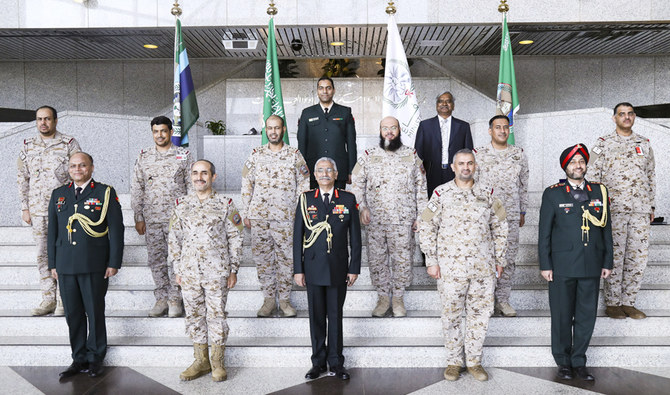
In a historic first, Gen. M.M. Naravane, chief of the Indian Army, undertook a landmark visit to the Kingdom in December 2020. His visit was aimed at strengthening defense ties between the two countries and exploring further possibilities for cooperation.
Overall, the direction of the India-Saudi bilateral defense relationship remains extremely positive with several initiatives being taken. Both countries are ascending powers and major players in their respective regions and are natural partners in addressing the various security challenges confronting the region.
— N. Ram Prasad is deputy chief of mission at the Indian Embassy in Riyadh.


