

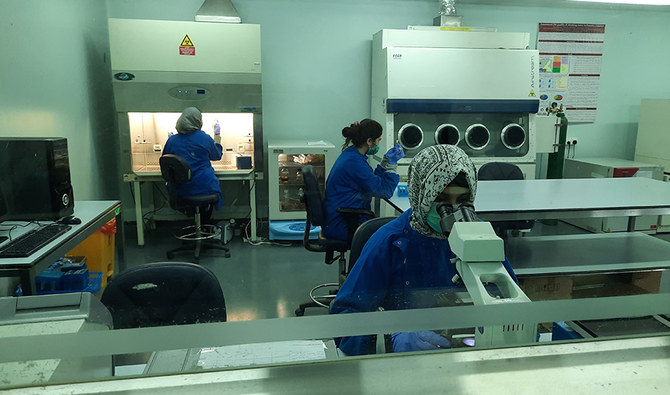

KARACHI: Scientists at Karachi’s Dow University of Health Sciences (DUHS) who are conducting clinical trials of intravenous immunoglobulin (C-IVIG) therapy for the treatment coronavirus, say Pakistan is likely to become the first country to complete the research needed to introduce the treatment at a mass level, saying ‘severe’ patients who had received the product had a 100 percent recovery rate.
The therapy uses immunoglobulin (IG), a blood product extracted from the plasma of people who have recovered from infection, and which is rich in the antibodies that target the virus. Continuous infusion of immunoglobin can neutralize the infection in patients and shorten the course of the disease, Pakistani scientists say.
In June, DUHS trials started on 30 participants, most from the high-risk group of people above the age of 60, with many suffering from diabetes, hypertension and other comorbidities.
“The trials are very encouraging and remarkable,” Dr. Shaukat Ali, head of biotechnology at DUHS and lead on the C-IVIG project, told Arab News. “At the moment, what we have seen is that all severe patients who received C-IVIG treatment had 100 percent recovery ratio while in critical patients the recovery ratio was 50 to 60 percent.”
Besides the high recovery rate, Ali said, the DUHS team had observed that the treatment had significantly reduced the period of hospitalization.
“The results show that the number of hospitalization days were reduced to six and a half days for severe patients, which is very encouraging because normally a severe patient would occupy hospital resources for 20 to 25 days.”
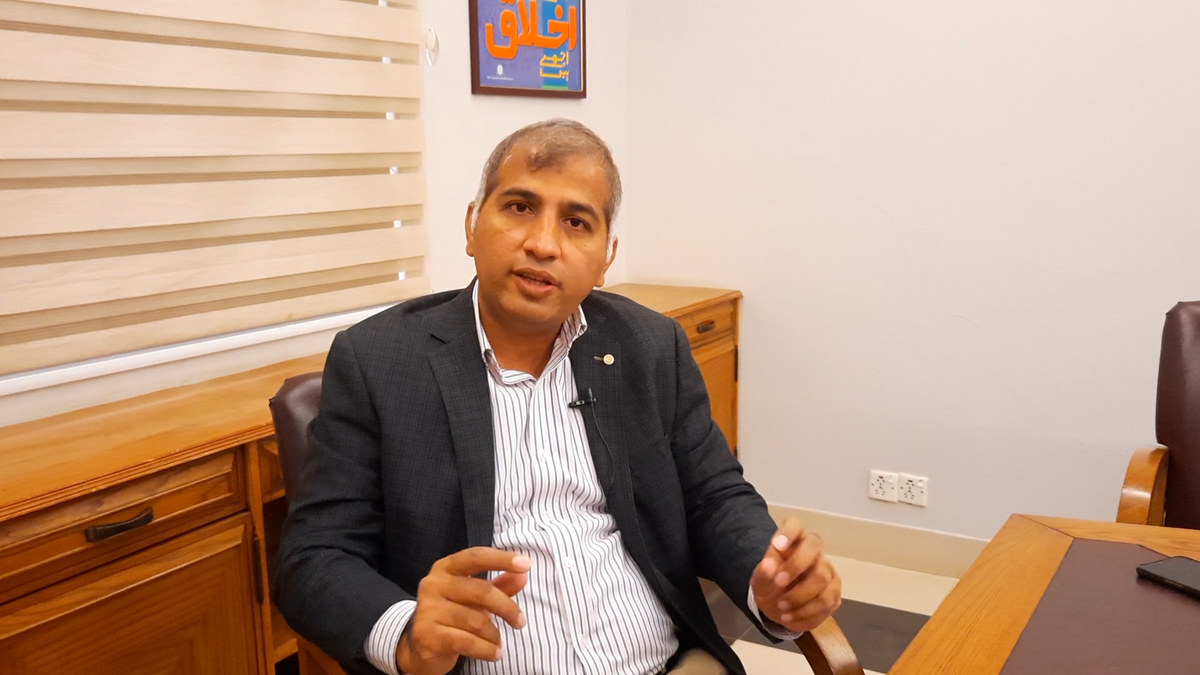
Dr. Shaukat Ali, head of biotechnology at Dow University of Health Sciences (DUHS), speaks to Arab News at his office in Karachi, Pakistan, on December 11, 2020. (AN photo)
Ali said Pakistan was the first country to develop the immunoglobulin solution in April 2020.
“Only a week ago, an announcement was made by a global plasma alliance of big companies of blood producers, including Takeda Pharmaceutical, to work on the project,” Ali added, referring to the CoVIg-19 Plasma Alliance.
Global pharmaceutical giants — Takeda Pharmaceutical of Japan, CSL Limited of Australia, German Biotest AG and private companies from France, Switzerland and United Kingdom — announced research on plasma-based treatment for COVID-19 in early April, but the projects had been delayed several times.
In Pakistan, clinical research started in June, after a series of regulatory approvals. The experiment was also registered with the National Library of Medicine at the National Institutes of Health in the United States, which maintains the biggest global registry of clinical trials.
“Pakistan is the first country in the world which has accomplished the experiment and announced it. There are two clinical trials going on which were registered after us; one is carried out by National Institutes of Health in the US and another one in Israel, both were registered after us,” Ali said.
The Drug Regulatory Authority of Pakistan (DRAP) authorized clinical trials for critically ill COVID-19 patients in mid-April. In the same month, DUHS purified immunoglobulin from the plasma of COVID-19 patients and prepared IVIG formulation to treat severe and critical virus cases.
To seek more plasma donors, DUHS scientists announced the outcome of their trials on November 21, ahead of their scheduled completion in January 2021.
“With the onset of winter, hospitals are full with patients and we want to alert the authorities that we have the solution that we have developed indigenously and to motivate general public to donate plasma,” Ali added.
The announcement was met with substantial public response.
“We are getting plasma from donors and proceeding faster now. We will complete the trial within a month and go for next phase which will be multicentric, where we will add more people across the country at different centers.”


