DUBAI: Small groups of pilgrims performed one of the final rites of the hajj on Friday as Muslims worldwide marked the start of the Eid Al-Adha holiday amid a global pandemic that has impacted nearly every aspect of this year's pilgrimage and celebrations.
Around 1,000 pilgrims made their final journey to the Jamarat wall to stone the three pillars, before heading to Makkah to perform prayers at the Grand Mosque and complete their hajj.
The last days of the annual pilgrimage to Makkah in Saudi Arabia coincided with the four-day Eid al-Adha, or “Feast of Sacrifice,” in which Muslims slaughter livestock and distribute the meat to the poor.
Pilgrims arrived in Muzdalifah last night to rest after spending the day in Arafat where they had scaled Mount Arafat to pray and repent.
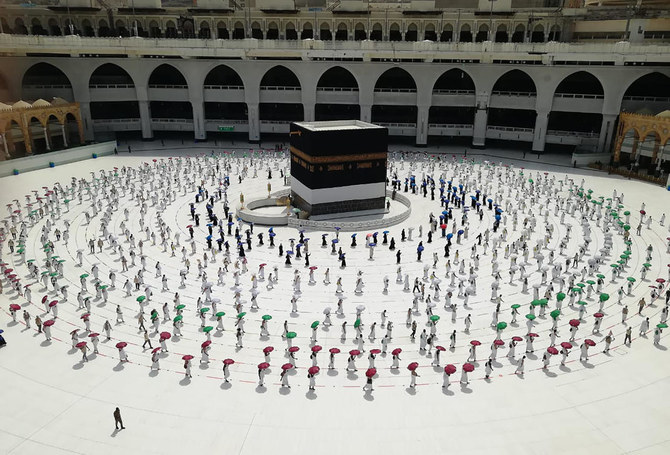
This year’s pilgrimage is the smallest in modern times after the number of participants was greatly restricted to prevent the spread of the coronavirus.
During the last days of hajj, male pilgrims shave their heads and remove the terrycloth white garments worn during the pilgrimage. Women cut off a small lock of hair in a sign of spiritual rebirth and renewal.
The hajj, both physically and spiritually demanding, intends to bring about greater humility and unity among Muslims. It is required of all Muslims to perform once in a lifetime.
Sheikh Abdullah al-Manea, member of the Supreme Council of Senior Scholars of Saudi Arabia, used the hajj sermon Friday to praise the kingdom's leadership for their “wise decision” to limit the number of pilgrims and protect human life.
“We thank the positive role of Muslims around the world that have complied with the regulations of the country to protect them from the spread of this virus, which leads to the protection of Mecca and Medina," the sheikh said.
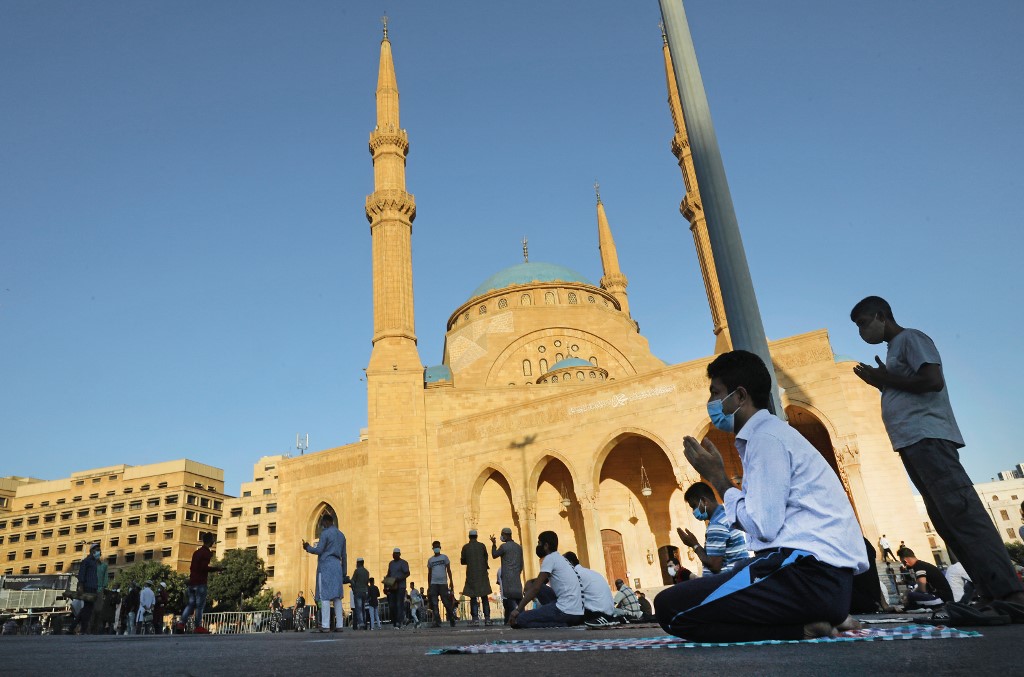
Muslim worshippers pray on the first day of Eid al-Adha outside the Mohammad al-Amin Mosque in Beirut on July 31, 2020. (AFP)
Meanwhile 1.8 billion Muslims around the world celebrate Eid in the age of social distancing amid the pandemic that has so far infected more than 16 million people.
In the Iraqi capital Baghdad, streets were largely empty due to a 10-day lockdown imposed by authorities to prevent further spread of the virus. Eid prayers in mosques were canceled.
“We had hoped that the curfew would be lifted during the Eid period ... we were surprised that the lockdown period included the Eid holiday and more,” said Marwan Madhat, a Baghdad cafe owner. “This will cause losses.”
Kosovo and the United Arab Emirates have also closed mosques to limit the spread of the virus.
In Lebanon, Muslim worshipers prayed in mosques under tight security, despite a partial lockdown imposed Thursday that will continue through Aug. 10. Worshipers at the Mohammad al-Amin Mosque in the capital, Beirut, spilled onto the street outside to maintain social distancing rules.
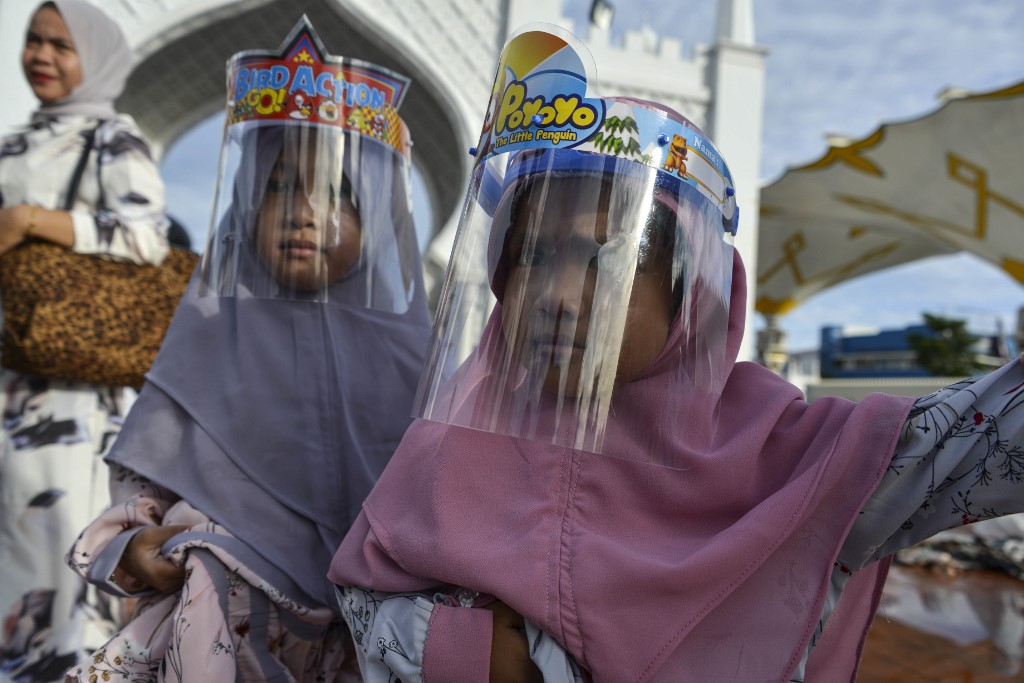
Children wearing face shields attend an Eid al-Adha prayer at the Baiturrahman grand mosque in Banda Aceh on July 31, 2020. (AFP)
In Indonesia, home to the world’s largest population of Muslims, people were allowed to attend Eid prayers in mosques under strict health guidelines, including that they bring their own prayer mats and pray several feet apart from one another. Worshipers must wear masks and are not allowed to shake hands or hug.
Authorities in Indonesia also ordered that meat be delivered door-to-door to the poor to avoid long lines.
“This outbreak has not only changed our tradition entirely, but has also made more and more people fall into poverty,” said Agus Supriatna, an Indonesian factory worker who was laid off this year because of the pandemic.
Muslim leaders in Albania and Kosovo called on people “to be careful" in their festivities to avoid transmission of the virus, including limiting family visits.
A few days ahead of Eid, Alioune Ndong in Senegal said he did not know how he’d come up with the money for his family’s feast He called on Senegal’s government to help struggling families like his.
“COVID-19 has drained my money," said Ndong, a tailor based in the town of Mbour.