

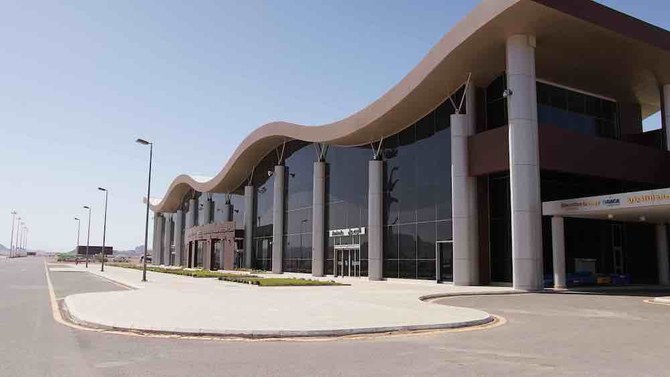

ALULA: The second phase of the development and expansion of Prince Abdul Majeed bin Abdulaziz Domestic Airport in AlUla is complete.
The milestone, which increases the airport’s annual capacity from 100,000 to 400,000 passengers, was announced on Friday by The Royal Commission for AlUla (RCU), in collaboration with the General Authority of Civil Aviation (GACA),
The project is a key component of the commission’s strategy to position the city as a major tourism destination and logistics hub. The improvements include the renovation of the main terminal building, the expansion of the airport apron to add four large aircraft stands and six smaller ones, and an additional 150,000 square meters of taxiways, including two additional connections to the runway.
In addition, a VIP lounge terminal has been built using local materials and a design that reflects the picturesque environment of AlUla and its rich heritage. It also includes a range of other amenities to improve the overall passenger experience.
-------
READ MORE: Neom and AlUla: A tale of two cities
See the wonders of AlUla from the comfort of your couch
-------
The completed improvements will allow the airport to cope with the 15,000 flights a year that will be required to serve the 2 million visitors AlUla expects to welcome annually by 2035.
“Vital infrastructure projects such as this provide the foundations for RCU’s sustainable-growth strategy,” said Adil Jamil, the commission’s head of infrastructure development and asset management. “The airport is continuing to create a range of employment opportunities for local residents as it emerges as a logistical hub catering to the northwest of the Kingdom.”
The completion of the second phase of the project is in line with the RCU’s aim of reopening the area to visitors in October, following the lockdown that was implemented to slow the spread of COVID-19.
The RCU has worked with Saudi Arabian Airlines to resume flights from Riyadh to AlUla. There are currently four a week, and it is expected that domestic flights from Jeddah and other cities will resume soon. The airport will also be capable of receiving direct international flights.
Based on 12 strategic principles drawn from the commission’s framework plan and charter, AlUla’s approach to development aims to balance innovation with heritage, arts and culture, while unlocking the economic potential of the area to provide new opportunities for the local community.
The airport expansion supports RCU’s Cultural Manifesto for AlUla, which details planned developments designed to enhance the cultural landscape of the area over the next 10 years. The RCU hopes ultimately to attract 2 million visitors a year and create 38,000 new jobs. Last year, the airport welcomed about 52,000 passengers on 855 flights.
The first phase of the airport development, completed in 2019, included an expansion to accommodate more flights, a new digital information system in the arrival and departure halls, and the development and redesign of both halls.


