

Neom and AlUla: A tale of two cities

1 / 3
(Saudi Tourism)
2 / 3
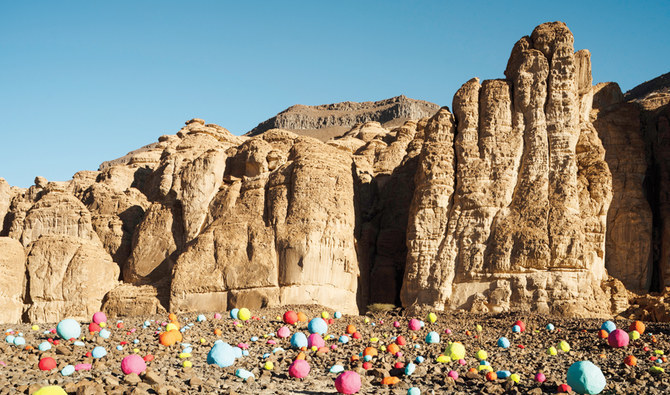
Emirati artist Mohammed Ahmed Ibrahim’s installation called ‘Falling Stones Garden’ on display at the first edition of Desert X AlUla exhibition. (Supplied)
3 / 3
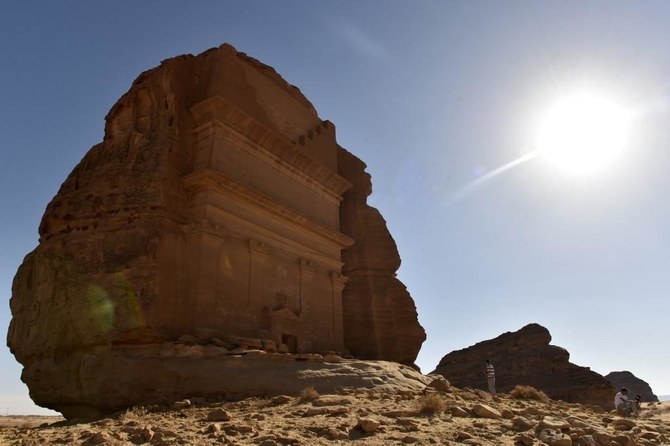
The Lyihyan Bin Kuza (AlFarid) tomb carved into rose-coloured sandstone can be seen in Hegra (Madain Saleh), a UNESCO World Heritage site, near Saudi Arabia’s town of AlUla. (File/AFP)
Short Url
Updated 21 June 2020
Follow

Neom and AlUla: A tale of two cities

  • How Vision 2030 is reviving the past while building the future

LONDON: Separated by 300 km and 4,000 years of history, Saudi Arabia’s oldest and newest cities may seem to have little in common beyond the mutual heritage of the land they share.

In fact, the story of the ancient settlement of Hegra in AlUla and the vast embryonic megacity of Neom is an inspiring tale of two cities that encapsulates the ambition of Saudi Arabia’s Vision 2030, the “bold yet achievable blueprint for an ambitious nation” conceived by Crown Prince Mohammed bin Salman.

Hewn from the rocks of the Hijaz in the Kingdom’s northwest two millennia ago by the Nabateans, the mysterious forebears of today’s Saudis, Hegra was the nerve center of a commercial empire that dominated trade throughout the ancient Middle East.

Neom, launched by the crown prince in 2017, is destined to transform over 26,500 sq. km in Saudi Arabia’s northwestern Tabuk region, including 468 km of Red Sea waterfront. More than 30 times the size of New York City, it is, as the government has declared, nothing less than “the world’s most ambitious project.”

Both cities are centerpieces of the crown prince’s determination to grow and diversify the nation’s economy away from reliance on fossil fuels, and living examples of how the great strategic plan is focused not only on building the nation’s future, but also on safeguarding its past.

Nowhere in the Kingdom is that past more dramatically represented than at Hegra, an archaeological wonderland that in 2008 became the first site in Saudi Arabia to be inscribed on UNESCO’s World Heritage List.

------

READ MORE: Mohammed bin Salman: 3 years as Saudi Arabia’s crown prince

Giant gains for women under Vision 2030

------

Hegra is surrounded by spectacular monumental tombs, carved from the rocks over 2,000 years ago. Many are decorated with carved images of monsters, animals, human faces and Nabatean inscriptions, offering a unique insight into the lives of the people who lived there.

Once at the heart of a dynamic kingdom that attracted traders, travelers and invaders from the four corners of the Middle East and beyond, today the ancient city is the centerpiece of the 22,000 sq. km AlUla region, an area roughly the size of Belgium.

Home to more than 23,000 sites of archaeological interest, and the focus of fast-moving plans to transform its dramatic landscape and heritage into one of the world’s great cultural tourism destinations, AlUla is a cornerstone of Vision 2030.

The Royal Commission for AlUla (RCU) is working to transform an area that throughout history has served as a meeting place for caravans, merchants and pilgrims into a major global destination, a “living, open museum” complete with museums, archaeological sites, luxury hotels and entertainment offerings.

“People from across the world will be touched by the transcendental beauty of AlUla,” RCU CEO Amr Al-Madani said last year. “It is truly a humbling destination. When you visit, you immediately understand why civilization after civilization chose to make this magnificent place their home.”

Tourists will be able to visit soon. This month it was announced that the archaeological sites and other cultural and heritage attractions of AlUla will reopen to the public in October. From then on they will be accessible all year round, adding to the other attractions at AlUla such as the 11-week annual Winter at Tantora cultural festival, which since 2018 has attracted a wide range of international music stars.

Other projects in the pipeline, including the Sharaan Resort and Nature Reserve, due to open in 2023, will boost AlUla’s profile as a must-visit international destination. For those who call AlUla home today, a project that by 2035 is predicted to see 2 million visitors per year will also massively boost the local economy, generating 35,000 jobs and contributing an estimated SR120 billion ($32 billion) to the Kingdom’s gross domestic product.

The project has already had an impact on local lives, demonstrating on a micro scale the massive potential of Vision 2030 to transform the Kingdom’s economic future. Last year, Arab News reported that in under three years Al-Ula, a once-neglected region with few prospects for its residents, had achieved a “negative” unemployment rate of 2 percent.

Many more jobs are on the way. The RCU is running the Hammayah program to train 2,500 residents as advocates for AlUla’s heritage. A scholarship program will also see 1,000 students from AlUla sent overseas to study subjects vital to the region’s development as a cultural tourism destination.

If the ancient city of Hegra dominated the cultural and commercial landscape of its time, 300 km to the northwest a megacity is emerging which, in the words of the crown prince, “will drive the future of human civilization.” Neom, vast and being developed with its own rules and regulations independent of the Kingdom’s existing governmental framework, is perhaps best described as a city-state in the making.

At its launch in October 2017, the crown prince said Neom would “focus on nine specialized investment sectors and living conditions that will drive the future of human civilization — energy and water, mobility, biotech, food, technological and digital sciences, advanced manufacturing, media and entertainment, with livability as its foundation.”

Funded initially to the tune of $500 billion by Saudi Arabia’s Public Investment Fund (PIF), which the crown prince chairs, Neom is expected to attract regional and international investment as its potential becomes apparent.

Without doubt it will be an attractive place to live, work and visit — and a dramatic symbol of Saudi Arabia’s determination to meet the challenges of climate change head-on by diversifying its economy away from reliance on fossil fuels.

The rebirth of AlUla
Hegra, ancient city of the Nabataeans in Saudi Arabia’s historic AlUla Valley, is emerging from the mists of time to take its rightful place as one of the wonders of the world

Enter


keywords

Situated in a part of the Kingdom blessed with breezes and mild temperatures, the development of what will be some of the world’s largest wind and solar farms means Neom will be powered solely by renewable energy.

Future technologies of all kinds, said the crown prince, will “form the cornerstone for Neom’s development,” from automated vehicles, passenger drones and free high-speed wireless internet access, to new ways of growing and processing food, and free world-class continuous online education.

Despite the 4,000-year gulf between them, in many ways the two cities, ancient and modern, are twinned.

Located within eight hours’ flying time of 70 percent of the world’s population, Neom is, in the words of Gavin van Tonder, head of its water sector, “an opportunity to create a template for what the world needs to be in the future.” The clue, after all, is in the name. Neom is derived from neo, the Latin word for new, and M, the first letter of the Arabic word mostaqbal (future).

Hegra, a self-contained city-state positioned at the junction of Arabia’s key trading routes, was the Neom of its day. Now, emerging from the past as part of the cultural reawakening of the AlUla region, it has a key role to play in the building of that new future.


Madinah’s culinary identity lends itself to shared cross-cultural connection

Updated 5 sec ago
Follow

Madinah’s culinary identity lends itself to shared cross-cultural connection

  • Madinah earned the title of UNESCO Creative City of Gastronomy in November 2025

RIYADH: In every part of the Arab world, people have long argued about to whom certain traditional dishes belong, each wanting to claim the “correct” recipe and origin as their own, a contention that stands true across the Kingdom’s cities as well — and that might not be such a bad thing.

One of its most historically and religiously significant cities, Madinah, is a perfect example of how culinary diversity actually lends itself to culinary connection between different homes and cultures.

Chef Heba Ramadan, raised in Riyadh but originally from Madinah, spoke to Arab News about the city’s unique culinary character, which earned it the title of UNESCO Creative City of Gastronomy in November 2025.

To Ramadan, Madinah embodies nostalgic childhood memories, family gatherings and joyful moments — especially those centered around food.

As long as you get to the right flavor, it does not matter how you got there.

“Each house has their own way. That’s why I can’t say this way is right or that way is wrong,” she said.

Ramadan added that recipes are not fixed texts or religious doctrines, but are dynamic pieces of social and geographic history that represent changing people, changing times, and the melding of various customs and influences.

If you visit homes across Madinah today, you will find slight variations in the way that families prepare certain dishes.

“For example, Madini rice — everyone knows this dish, but each family makes it differently. Some families don’t put saffron because the grandfather didn’t like saffron, so they grew up cooking it that way.”

Another popular dish is wheat soup: Ramadan said that some people, like her mother, make it using whole milk, others with goat milk, some with no milk at all, and even some who make it with tomato.

“When I searched, I found that people from Makkah make it with tomato, so you see how the dish changes from family to family.” 

In November 2025, Madinah was named a UNESCO Creative City of Gastronomy. (SPA)

A recipe is a living organism; it is affected by factors of its surrounding environment. Personal preference is one example, while others are more complex and drawn out.

Over generations, recipes naturally evolve due to convenience and changing lifestyles.

Busier lives, more demanding careers and increasingly expensive economies mean that people lack the time to recreate recipes from scratch in the exact way they were once done traditionally.

Instead, puff pastries (i.e. convenience) often win against making handmade dough (i.e. time-consuming manual labor).

On the other hand, sometimes adjustments are added on.

Ramadan said that jareesh, a beloved dish across the Kingdom, was originally made without any protein, just buttermilk.

Over time, chicken or other meats were included in the dish to add nutritional value.

“Mothers added protein so the kids would eat better, and that’s how the recipe changed.”

A vital factor to keep in mind is Madinah’s unique position as a historical religious passageway and gathering point for pilgrims.

Historically, pilgrims did not stay for just a few days, but instead for weeks or even months.

“They didn’t just visit — they lived, they stayed and they exchanged experiences,” Ramadan said. 

Wheat soup is a popular dish in Medinah and Hijaz region. (Supplied)

These long stays led to deep cultural exchange as pilgrims arriving from around the world brought their spices, recipes, ingredients and techniques with them.  

Madinah’s food absorbed these influences over time and foreign dishes were adapted into local versions, and vice versa; a process that Ramadan said does not erase authenticity, but defines it.

Kabuli rice, made with orange zest and citrus juice, is believed to have adapted from these exchanges.

At the end of the day, most of us enjoy dishes the way they were made growing up because those flavors were tied to emotional memory.

Perhaps these reasons explain why Ramadan is a little skeptical of UNESCO’s method of defining “official” recipes.

She believes that culinary heritage cannot be standardized without losing its essence, and trying to standardize it by finding the most common factors between recipes or asking the city’s historical families for the correct methods does not paint a true picture of its culinary character.

And considering the close-knit socialization of residents in a small city like Madinah, “everyone knows the families in Madinah and how each family cooks their dishes,” she added.

Ramadan believes the city was chosen because its food is flavor-driven, historically layered and maintained through households rather than institutions.

She suggests UNESCO may have been fascinated by the number of variation within a single culinary identity, yet, all the flavor profiles feel recognizably “Madini.”

For example, “we have different types of rice. Even if it’s white rice, each one has a different flavor.”

Madinah’s traditional dishes were developed based on the local agriculture, seasonal availability of ingredients and circumstantial factors like electricity availability.

Before refrigeration, daily cooking depended on fresh, same-day ingredients, so every dish was directly tied to the land.

Ramadan, who transitioned into cooking to pursue her passion after spending more than a decade in an accounting and finance career, believes that food is meant to be shared, remembered and respected.

She started out in gastronomy by opening her own business before putting it on hold during COVID-19, after which she returned to work as a baker and in hot kitchens.

As her cooking career took off, Ramadan was selected by Diriyah to create traditional dishes for a few of their major events.

Ramadan began representing the Kingdom internationally as a traditional Saudi chef, working with the Saudi Tourism Authority and continuing her work with Diriyah.

Much of Ramadan’s career was defined by the realization that much of Madinah’s food heritage was undocumented and misunderstood.

And although she sees food as dynamic and flexible, Ramadan also strongly believes that it is her job to represent Saudi food globally in a traditional framework, sans any modern fusions or fireworks.

While she respects chefs who experiment with fusion recipes and welcomes any tourists visiting the Kingdom to try both the modern and the traditional, her role adamantly favors cultural representation, not reinterpretation.

Abroad, authenticity is required in both preparation and plating.

Ramadan is admittedly worried about safekeeping these recipes through future generations; as reliance on convenience increases and families spend less time together in the kitchen, she fears that youth are becoming less interested in cooking or trying new foods.

In her opinion, this had led to losing important skills such as smelling food to identify what spices or ingredients are missing.

“This is something you train. It doesn’t come from reading a recipe … you learn by standing next to your mother, your grandmother, and smelling,” she said.

“It’s not written. It’s sensory.”