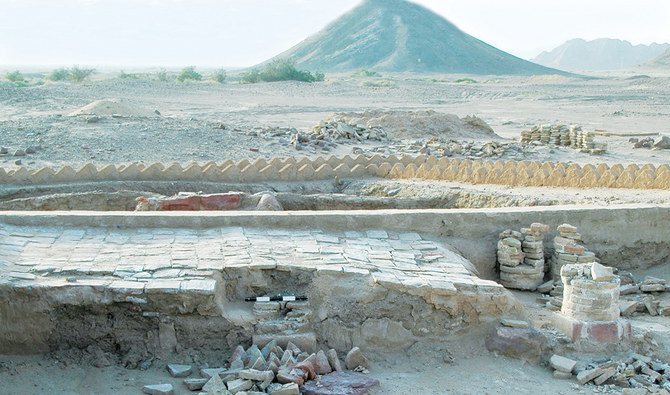
ThePlace: Al-Mabiat, an archaeological site in Madinah region, dates back to the Ummayad and Abbasid periods

Photo/Saudi Tourism
Short Url
Updated 09 May 2020
Follow

ThePlace: Al-Mabiat, an archaeological site in Madinah region, dates back to the Ummayad and Abbasid periods

  • Arab geographer Al-Maqdisi described Garah as the second largest city after Makkah

The ancient archeological site of Al-Mabiat, also known as Garah, dates back to the Umayyad and Abbasid periods. It is one of the most important early Islamic sites in north Arabia.
Excavations made in 1984 showed that a large Muslim city once existed on the site. The survey revealed rich components of archaeological and cultural value. Excavations in 1985 revealed the remains of a mosque, a city wall and complete housing units.
Among the finds of the excavations were narrow streets with shops on both sides and houses decorated with wooden doors and windows and fresco-style art, reminiscent of the famous Samarra culture.
In the 4th century, Arab geographer Al-Maqdisi described Garah as the second largest city after Makkah.


Physical activity in Ramadan can boost public health, expert says

Updated 4 sec ago
Follow

Physical activity in Ramadan can boost public health, expert says

  • Sports must be managed, argues Jazan University specialist
  • Hour before iftar ideal for light muscle-stimulation exercises

RIYADH: Promoting physical activity during Ramadan can boost public health, according to a local expert.

Dr. Ibrahim Bakri, a specialist in sports management at Jazan University, said that exercise during Ramadan should not be stopped but managed, the Saudi Press Agency reported recently.

Practicing low-intensity activities before iftar was a suitable option, such as slow walking, stretching, or light exercises that activate muscles, because of their role in stimulating blood circulation without depleting fluid and energy stores.

He said that the hour before the Maghrib prayer was an ideal time for such light activities and reduces the likelihood of stress or low blood sugar levels.

Bakri also pointed out the importance of avoiding strenuous exercise during fasting hours.

He said that high-intensity sports should be postponed until at least three hours after iftar, to give the body the opportunity to digest food and restore its water and nutritional balance.

Resistance exercises, running and team games need to be undertaken carefully to avoid fatigue or muscle spasms, he added.

He stressed that exercise during Ramadan contributes to weight control, improves cardiovascular fitness, and regulates blood sugar levels.

Physical activity also plays a role in reducing stress and improving sleep quality, which reflects positively on the performance of a fasting person in work and daily life.

He emphasized the importance of drinking sufficient water between iftar and sahoor, and having meals in moderation. Also people should make sure to warm up and cool down when undertaking exercise to reduce the possibility of injury.

Bakri said walking was the simplest and most sustainable form of physical activity because it has a direct impact on promoting heart health and improving mood.