KABUL: At least 30 civilians were killed when the US bombed several drug-making facilities in western Afghanistan in May, a UN agency said in a report Wednesday, though the US military immediately disputed the findings.
The United Nations Assistance Mission in Afghanistan (UNAMA) conducted an investigation over four months looking into what happened May 5 when the US military bombed dozens of sites it had identified as Taliban methamphetamine labs.
Soon after the strikes in Bakwa district of Farah province, and parts of the bordering Delaram district in Nimroz province, UNAMA said it began to receive reports of “significant civilian harm.”
After a fact-finding mission to some of the impact sites and face-to-face interviews with 21 people impacted by the strikes, UNAMA said it had “verified 39 civilian casualties (30 deaths, five injured and four undetermined), including 14 children and one woman, due to the 5 May air strikes.”
The agency went on to say that it had also received “credible information” about an additional 30 deaths — mostly women and children — and was working to further verify these claims.
US Forces-Afghanistan (USFOR-A) blasted the UNAMA findings, questioned the agency’s methodology and insisted its “precision” strikes had accurately targeted meth labs.
“In addition to imagery collection during the precision strikes, USFOR-A conducted exhaustive assessments of the facilities and surrounding areas after the strikes,” the command said in a statement.
“Combined assessments determined the strikes did not cause deaths or injuries to non-combatants.”
Central to the disagreement between the US and the UN is the legal definition of what constitutes a legitimate military target.
UNAMA in its report contended the drug facilities were owned and operated by criminal groups, so “did not meet the definition of legitimate military objectives under international law.”
The US, however, insisted the labs were run and owned by the Taliban, who used revenue to “fund ongoing indiscriminate violence against innocent Afghans.”
The US military in 2017 and early 2018 carried out multiple strikes against Taliban opium processing plants, but the expensive efforts had little impact on the insurgents’ revenue stream and risked alienating rural populations and Afghan farmers, many of whom rely on the poppy crop.
The military then switched its focus to the more lucrative meth industry.
A US defense official told AFP the military had not conducted any additional strikes on meth labs since the May 5 incident.


At least 30 civilians died in May US strikes in Afghanistan: UN probe
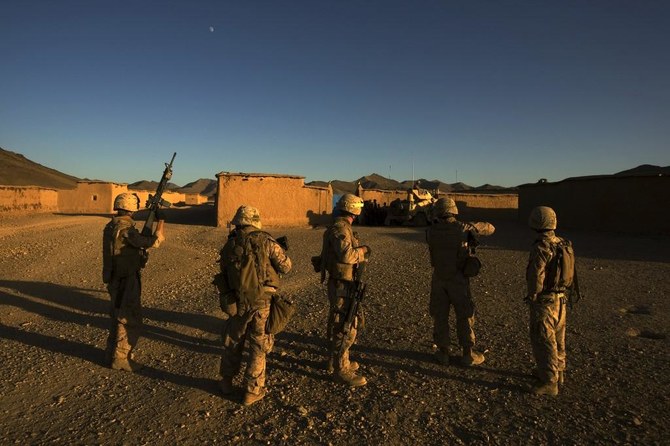
At least 30 civilians died in May US strikes in Afghanistan: UN probe

- US military bombed dozens of sites it identified as Taliban methamphetamine labs
- US Forces-Afghanistan questioned the UN agency’s methodology and findings


Starmer arrives in China to defend ‘pragmatic’ partnership
- British Prime Minister Keir Starmer arrived in Beijing on Wednesday to meet with Chinese leader Xi Jinping, hoping to restore long fraught relations
BEIJING: British Prime Minister Keir Starmer arrived in Beijing on Wednesday to meet with Chinese leader Xi Jinping, hoping to restore long fraught relations.
It is the first visit to China by a UK prime minister since 2018 and follows a string of Western leaders courting Beijing in recent weeks, pivoting from a mercurial United States.
Starmer, who is also expected to visit Shanghai on Friday, will later make a brief stop in Japan to meet with Prime Minister Sanae Takaichi.
For Xi, the trip is an opportunity to show Beijing can be a reliable partner at a time when President Donald Trump’s policies have rattled historic ties between Washington and its Western allies.
Starmer is battling record low popularity polls and hopes the visit can boost Britain’s beleaguered economy.
The trip has been lauded by Downing Street as a chance to boost trade and investment ties while raising thorny issues such as national security and human rights.
Starmer will meet with Xi for lunch on Thursday, followed by a meeting with Premier Li Qiang.
The British leader said on Wednesday this visit to China was “going to be a really important trip for us,” vowing to make “some real progress.”
There are “opportunities” to deepen bilateral relations, Starmer told reporters traveling with him on the plane to China.
“It doesn’t make sense to stick our head in the ground and bury in the sand when it comes to China, it’s in our interests to engage and not compromise on national security,” he added.
China, for its part, “is willing to take this visit as an opportunity to enhance political mutual trust,” foreign ministry spokesman Guo Jiakun reiterated Wednesday during a news briefing.
Starmer is the latest Western leader to be hosted by Beijing in recent months, following visits by Canadian Prime Minister Mark Carney and French President Emmanuel Macron.
Faced with Trump’s threats to impose tariffs on Canada for signing a trade agreement with China, and the US president’s attempts to create a new international institution with his “Board of Peace,” Beijing has been affirming its support for the United Nations to visiting leaders.
Reset ties
UK-China relations plummeted in 2020 after Beijing imposed a sweeping national security law on Hong Kong, which severely curtailed freedoms in the former British colony.
They soured further since with both powers exchanging accusations of spying.
Starmer, however, was quick to deny fresh claims of Chinese spying after the Telegraph newspaper reported Monday that China had hacked the mobile phones of senior officials in Downing Street for several years.
“There’s no evidence of that. We’ve got robust schemes, security measures in place as you’d expect,” he told reporters on Wednesday.
Since taking the helm in 2024, Starmer has been at pains to reset ties with the world’s second-largest economy and Britain’s third-biggest trade partner.
In China, he will be accompanied by around 60 business leaders from the finance, pharmaceutical, automobile and other sectors, and cultural representatives as he tries to balance attracting vital investment and appearing firm on national security concerns.
The Labour leader also spoke to Xi on the sidelines of the G20 summit in Brazil in November 2024.
Jimmy Lai
The prime minister is also expected to raise the case of Hong Kong media mogul and democracy supporter Jimmy Lai, 78, a British national facing years in prison after being found guilty of collusion charges in December.
When asked by reporters about his plans to discuss Lai’s case, Starmer avoided specifics, but said engaging with Beijing was to ensure that “issues where we disagree can be discussed.”
“You know my practice, which is to raise issues that need to be raised,” added Starmer, who has been accused by the Conservative opposition of being too soft in his approach to Beijing.
Reporters Without Borders urged Starmer in a letter to secure Lai’s release during his visit.
The British government has also faced fierce domestic opposition after it approved this month contentious plans for a new Chinese mega-embassy in London, which critics say could be used to spy on and harass dissidents.
At the end of last year, Starmer acknowledged that China posed a “national security threat” to the UK, drawing flak from Chinese officials.
The countries also disagree on key issues including China’s close ties with Russian President Vladimir Putin amid the war in Ukraine, and accusations of human rights abuses in China.


