


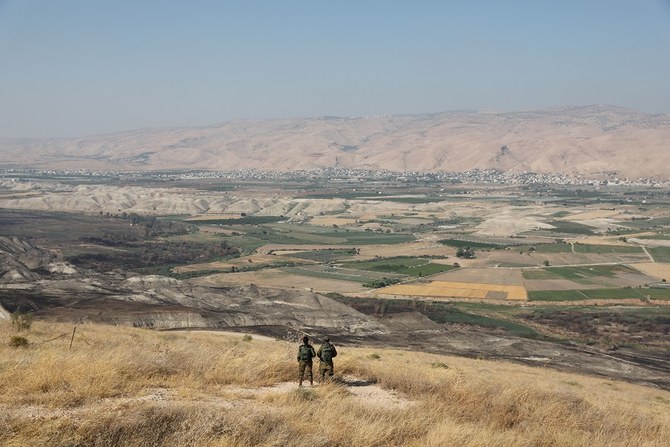

JERUSALEM: Saudi Arabia led a chorus of international condemnation on Wednesday after Israeli Prime Minister Benjamin Netanyahu threatened to annex the Jordan Valley.
The Kingdom said there was “no peace without the return of the occupied Palestinian territories,” and called for an emergency meeting of Arab foreign ministers.
“The Arab and Islamic worlds’ preoccupation with many local and regional crises will not affect the status of the Palestinian cause,” the Saudi Royal Court said.
“Israel’s attempts to impose a fait-accompli policy will not obliterate the inalienable and protected rights of the Palestinian people.”
Netanyahu’s pledge, widely viewed as an attempt to attract hard-line right-wing votes in next week’s Israeli elections, was also condemned by the Gulf Cooperation Council, the Organization of Islamic Cooperation, the UN, the EU, Jordan, Turkey and Palestinian leaders in the West Bank.
In a televised speech, Netanyahu said he would annex the valley and land north of the Dead Sea, about a third of the occupied West Bank, and also annex other Israeli settlements in the West Bank. This would effectively end the possibility of a two-state solution to the Israeli-Palestinian conflict.
“Any Israeli decision to impose its laws, jurisdictions and administration in the occupied West Bank is without any international legal effect,” UN spokesman Stephane Dujarric said.
“Such a prospect would be devastating to the potential of reviving negotiations, regional peace and the very essence of a two-state solution.”
Opinion
This section contains relevant reference points, placed in (Opinion field)
Nabil Shaath, senior adviser to Palestinian President Mahmoud Abbas, told Arab News it would be a mistake to dismiss Netanyahu’s plan as an electioneering gimmick.
“While this is not new to Netanyahu, it is important to know that he is not different from his opponents,” Shaath said. “They want the land without the people.”
A “unified effort and effective strategy” were required to combat this, Shaath said. “We need the Arab world, Muslim countries, Europe and others to stand with us to stop this effort at destroying the two-state solution.”
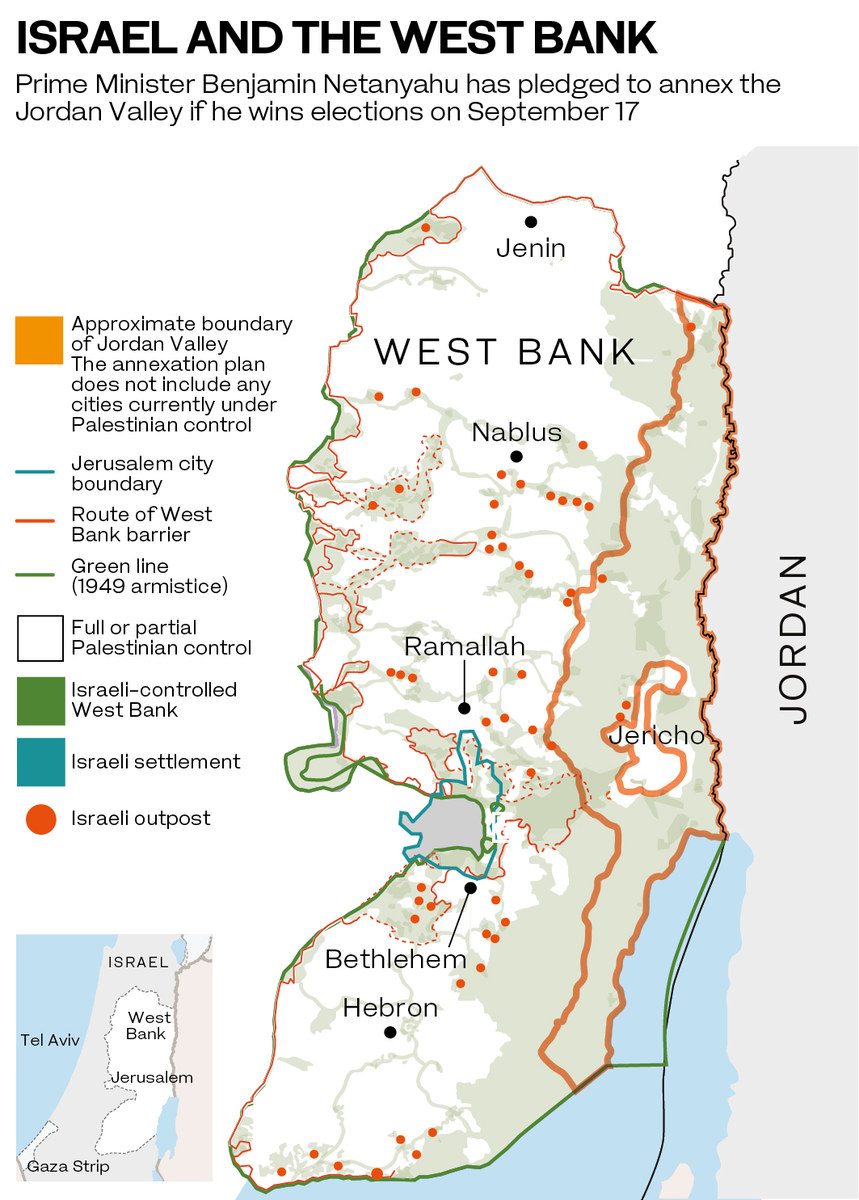
Palestinians in the Jordan Valley said on Wednesday they had been rooted to the land for generations, and would never give it up.
“We tell Netanyahu, and whoever follows him, you will not break the Palestinians’ will, you will never break our will, never, never,” said Hassan Al-Abedi, 55, a farmer in the village of Jiftlik. “It is our parents’ and grandparents’ land. We will hold on to it no matter what it costs.”
Ismael Hassan, 75, from the village of Zbeidat, said: “This is not Netanyahu’s land to give. This land is for Palestine, for the Palestinians.”


