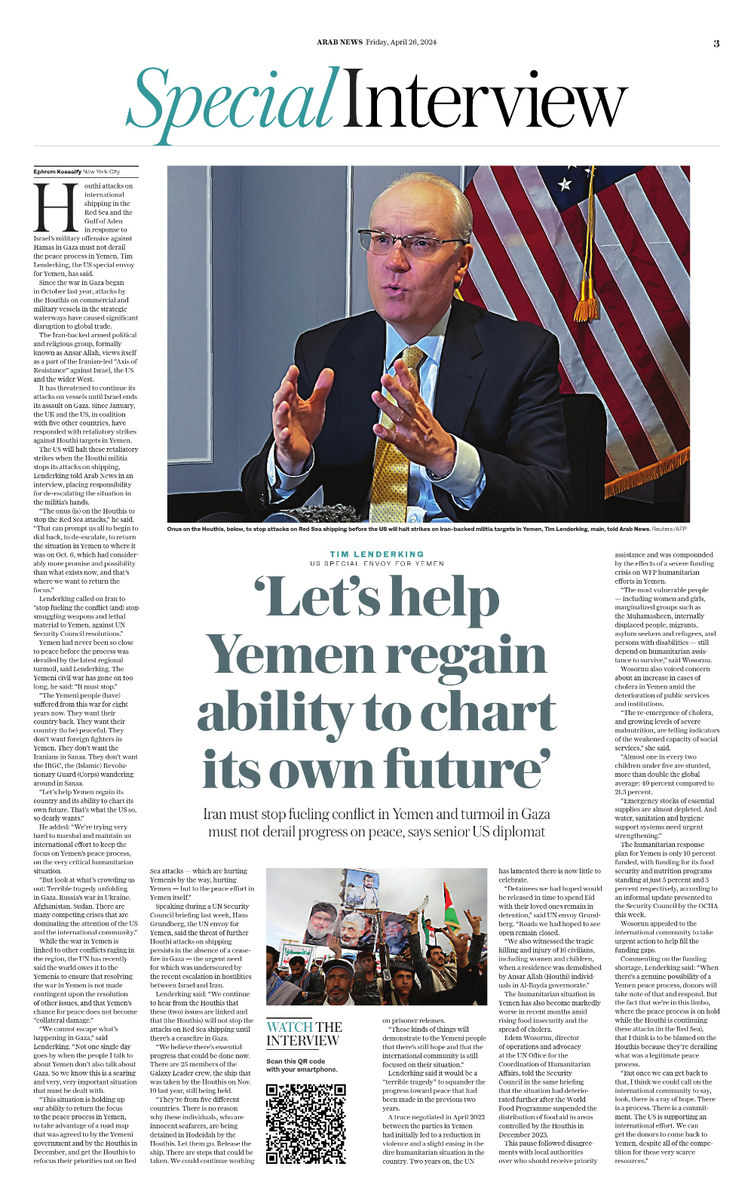
NEW YORK CITY: Houthi attacks on international shipping in the Red Sea and the Gulf of Aden in response to Israel’s military offensive against Hamas in Gaza must not derail the peace process in Yemen, Tim Lenderking, the US special envoy for Yemen, has said.
Since the war in Gaza began in October last year, attacks by the Houthis on commercial and military vessels in the strategic waterways have caused significant disruption to global trade.
The Iran-backed armed political and religious group, formally known as Ansar Allah, views itself as a part of the Iranian-led “Axis of Resistance” against Israel, the US and the wider West.
It has threatened to continue its attacks on vessels until Israel ends its assault on Gaza. Since January, the UK and the US, in coalition with five other countries, have responded with retaliatory strikes against Houthi targets in Yemen.
The US will halt these retaliatory strikes when the Houthi militia stops its attacks on shipping, Lenderking told Arab News in an interview, placing responsibility for de-escalating the situation in the militia’s hands.
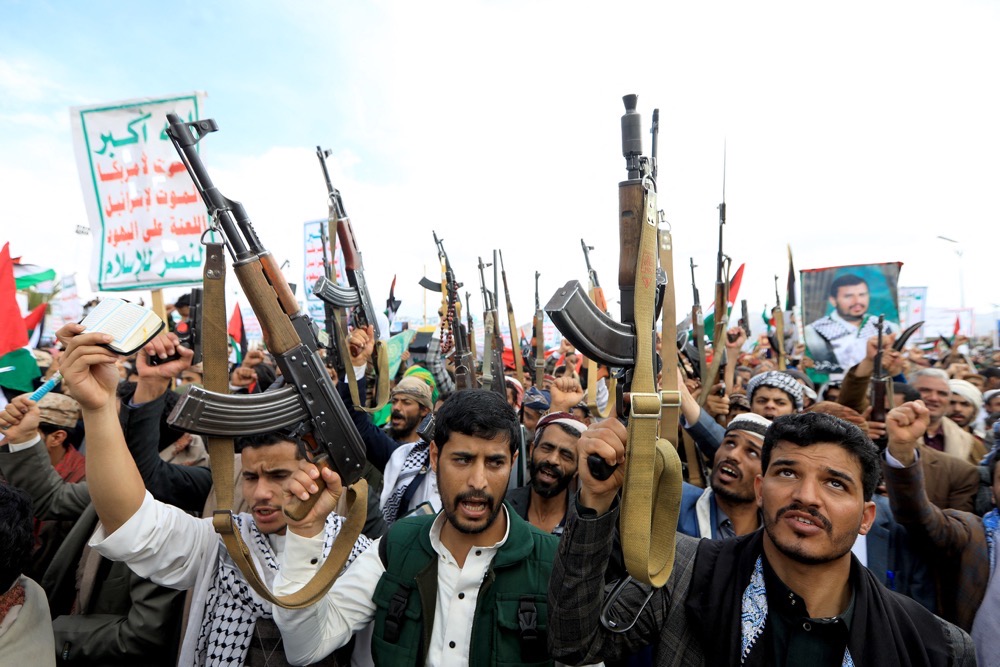
Yemenis hold a pro-Palestine march in the Houthi-run capital Sanaa. (AFP)
“The onus (is) on the Houthis to stop the Red Sea attacks,” he said. “That can prompt us all to begin to dial back, to de-escalate, to return the situation in Yemen to where it was on Oct. 6, which had considerably more promise and possibility than what exists now, and that’s where we want to return the focus.”
Lenderking called on Iran to “stop fueling the conflict (and) stop smuggling weapons and lethal material to Yemen, against UN Security Council resolutions.”
Yemen had never been so close to peace before the process was derailed by the latest regional turmoil, said Lenderking. The Yemeni civil war has gone on too long, he said: “It must stop.”
“The Yemeni people (have) suffered from this war for eight years now. They want their country back. They want their country (to be) peaceful. They don’t want foreign fighters in Yemen. They don’t want the Iranians in Sanaa. They don’t want the IRGC, the (Islamic) Revolutionary Guard (Corps) wandering around in Sanaa.
“Let’s help Yemen regain its country and its ability to chart its own future. That’s what the US so, so dearly wants.”
He added: “We’re trying very hard to marshal and maintain an international effort to keep the focus on Yemen’s peace process, on the very critical humanitarian situation.
“But look at what’s crowding us out: Terrible tragedy unfolding in Gaza. Russia’s war in Ukraine. Afghanistan. Sudan. There are many competing crises that are dominating the attention of the US and the international community.”
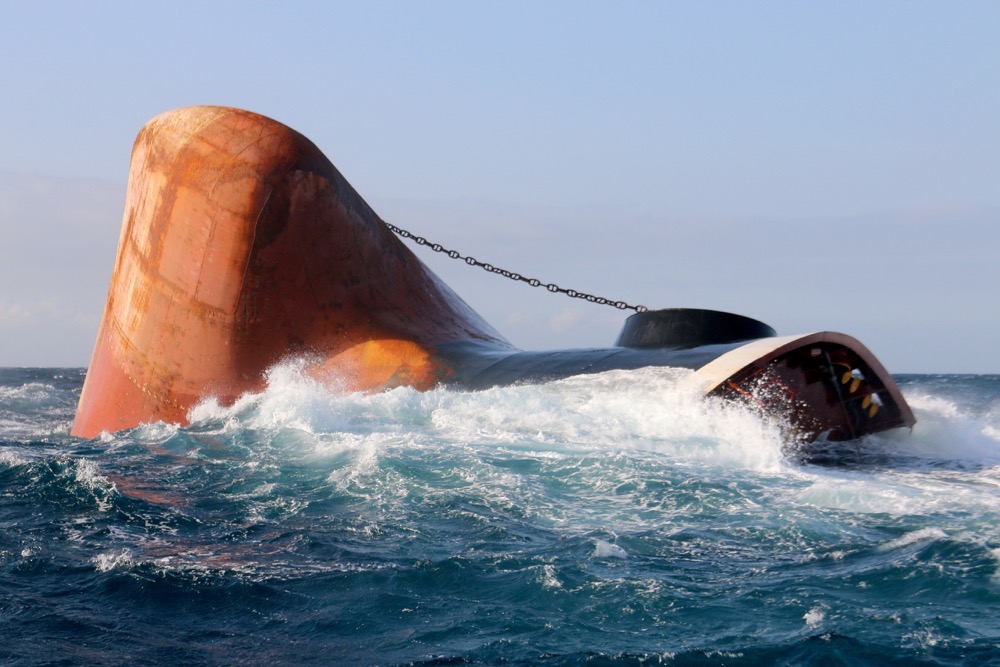
The cargo ship Rubymar partly submerged off the coast of Yemen after being hit by a Houthi missile. (AFP)
While the war in Yemen is linked to other conflicts raging in the region, the UN has recently said the world owes it to the Yemenis to ensure that resolving the war in Yemen is not made contingent upon the resolution of other issues, and that Yemen’s chance for peace does not become “collateral damage.”
“We cannot escape what’s happening in Gaza,” said Lenderking. “Not one single day goes by when the people I talk to about Yemen don’t also talk about Gaza. So we know this is a searing and very, very important situation that must be dealt with.
“This situation is holding up our ability to return the focus to the peace process in Yemen, to take advantage of a road map that was agreed to by the Yemeni government and by the Houthis in December, and get the Houthis to refocus their priorities not on Red Sea attacks — which are hurting Yemenis by the way, hurting Yemen — but to the peace effort in Yemen itself.”
Speaking during a UN Security Council briefing last week, Hans Grundberg, the UN envoy for Yemen, said the threat of further Houthi attacks on shipping persists in the absence of a ceasefire in Gaza — the urgent need for which was underscored by the recent escalation in hostilities between Israel and Iran.
Lenderking said: “We continue to hear from the Houthis that these (two) issues are linked and that (the Houthis) will not stop the attacks on Red Sea shipping until there’s a ceasefire in Gaza.
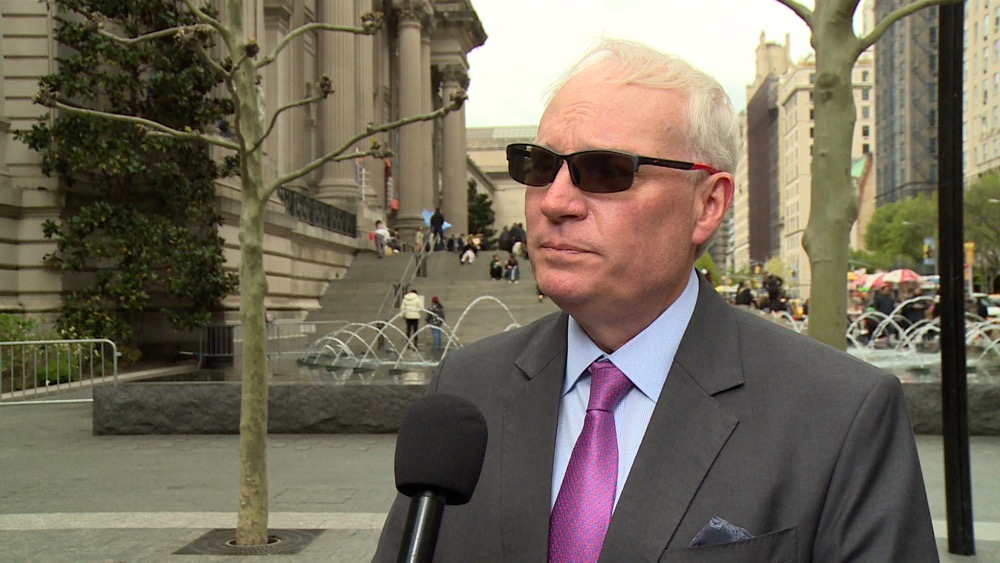
Lenderking called on Iran to “stop fueling the conflict (and) stop smuggling weapons and lethal material to Yemen, against UN Security Council resolutions.” (AFP)
“We believe there’s essential progress that could be done now. There are 25 members of the Galaxy Leader crew, the ship that was taken by the Houthis on Nov. 19 last year, still being held.
“They’re from five different countries. There is no reason why these individuals, who are innocent seafarers, are being detained in Hodeidah by the Houthis. Let them go. Release the ship. There are steps that could be taken. We could continue working on prisoner releases.
“These kinds of things will demonstrate to the Yemeni people that there’s still hope and that the international community is still focused on their situation.”
Lenderking said it would be a “terrible tragedy” to squander the progress toward peace that had been made in the previous two years.
A truce negotiated in April 2022 between the parties in Yemen had initially led to a reduction in violence and a slight easing in the dire humanitarian situation in the country. Two years on, the UN has lamented there is now little to celebrate.
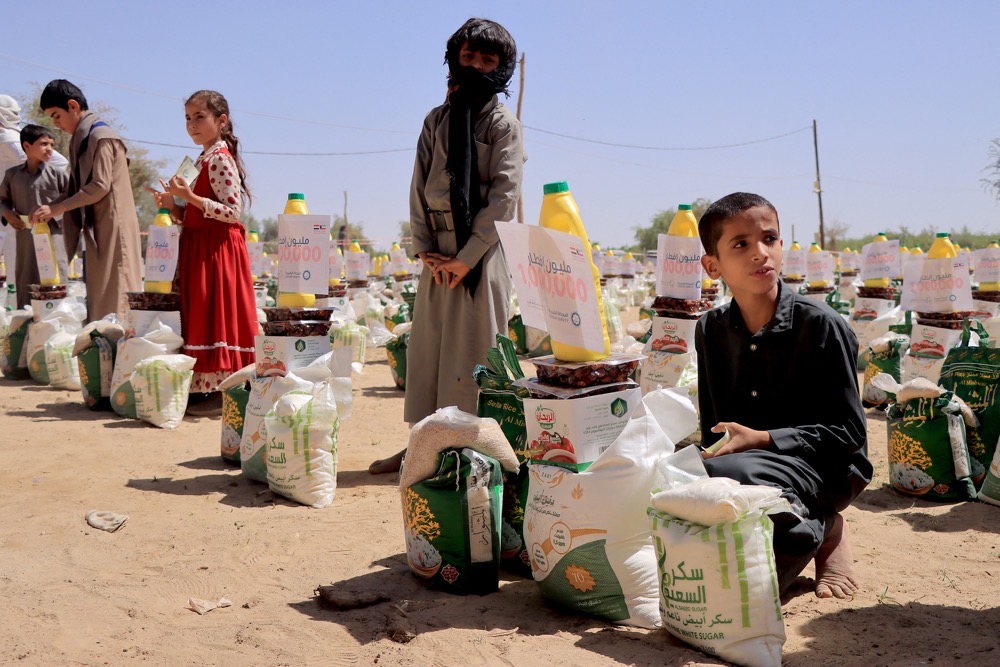
Yemeni children gather to collect humanitarian aid on the outskirts of Marib. (AFP)
“Detainees we had hoped would be released in time to spend Eid with their loved ones remain in detention,” said UN envoy Grundberg. “Roads we had hoped to see open remain closed.
“We also witnessed the tragic killing and injury of 16 civilians, including women and children, when a residence was demolished by Ansar Allah (Houthi) individuals in Al-Bayda governorate.”
The humanitarian situation in Yemen has also become markedly worse in recent months amid rising food insecurity and the spread of cholera.
Edem Wosornu, director of operations and advocacy at the UN Office for the Coordination of Humanitarian Affairs, told the Security Council in the same briefing that the situation had deteriorated further after the World Food Programme suspended the distribution of food aid in areas controlled by the Houthis in December 2023.
This pause followed disagreements with local authorities over who should receive priority assistance and was compounded by the effects of a severe funding crisis on WFP humanitarian efforts in Yemen.
“The most vulnerable people — including women and girls, marginalized groups such as the Muhamasheen, internally displaced people, migrants, asylum seekers and refugees, and persons with disabilities — still depend on humanitarian assistance to survive,” said Wosornu.
Wosornu also voiced concern about an increase in cases of cholera in Yemen amid the deterioration of public services and institutions.
“The re-emergence of cholera, and growing levels of severe malnutrition, are telling indicators of the weakened capacity of social services,” she said.
“Almost one in every two children under five are stunted, more than double the global average: 49 percent compared to 21.3 percent.
“Emergency stocks of essential supplies are almost depleted. And water, sanitation and hygiene support systems need urgent strengthening.”
The humanitarian response plan for Yemen is only 10 percent funded, with funding for its food security and nutrition programs standing at just 5 percent and 3 percent respectively, according to an informal update presented to the Security Council by the OCHA this week.
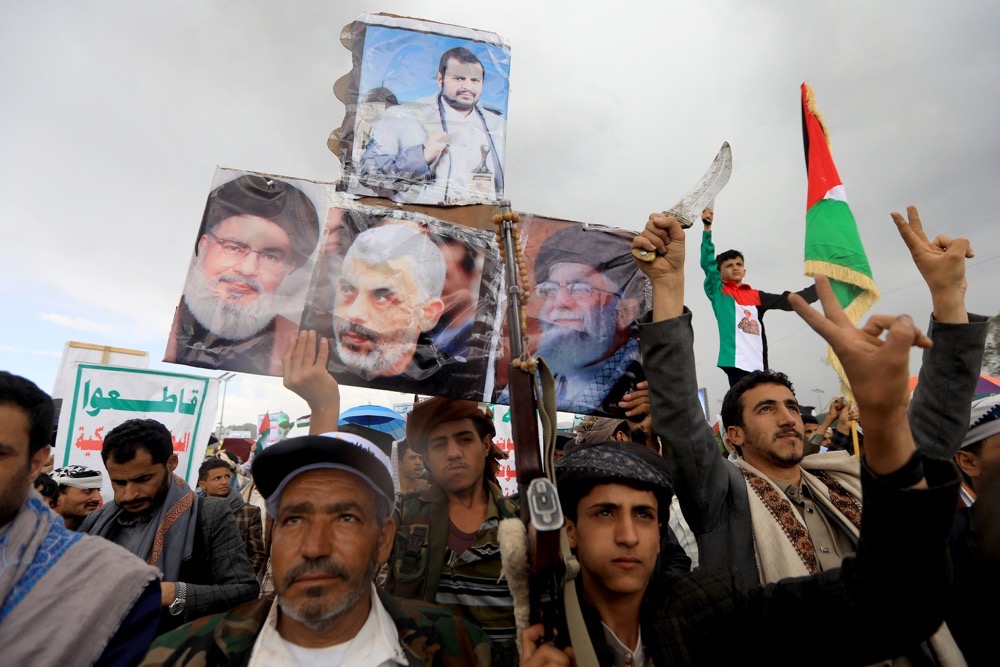
Supporters of Yemen’s Huthi militia attend a gathering to mark annual Quds (Jerusalem) Day commemorations in Sanaa. (AFP)
Wosornu appealed to the international community to take urgent action to help fill the funding gaps.
Commenting on the funding shortage, Lenderking said: “When there’s a genuine possibility of a Yemen peace process, donors will take note of that and respond. But the fact that we’re in this limbo, where the peace process is on hold while the Houthi is continuing these attacks (in the Red Sea), that I think is to be blamed on the Houthis because they’re derailing what was a legitimate peace process.
“But once we can get back to that, I think we could call on the international community to say, look, there is a ray of hope. There is a process. There is a commitment. The US is supporting an international effort. We can get the donors to come back to Yemen, despite all of the competition for these very scarce resources.”