

Bolton: No sanctions relief until Iran stops lying and spreading terror

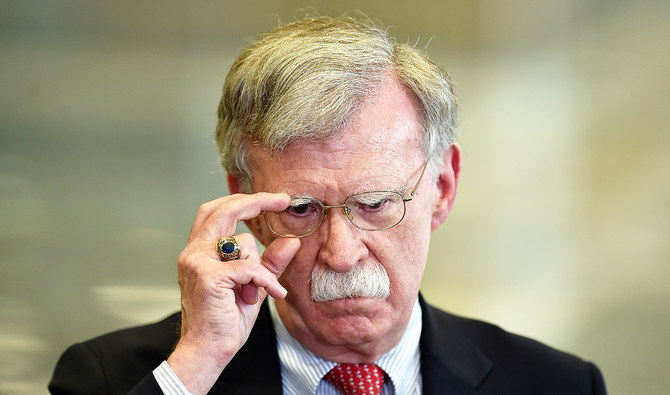
US National Security Advisor John Bolton said Iran needs to stop lying and spreading terror. (File/AFP)
Updated 07 September 2019
Follow

Bolton: No sanctions relief until Iran stops lying and spreading terror

  • “Tehran thinks it’s more important to fund the murderous Assad regime than provide for its own people,” says US official

RIYADH: Iran will not receive any sanctions relief until the regime stops lying and spreading terror, a top US administration official said.

US National Security Advisor John Bolton said, “We can talk, but #Iran’s not getting any sanctions relief until it stops lying and spreading terror!”

Bolton tweeted a picture showing what appears to be a satellite image of the Iranian ship, the Adrian Darya.

“Anyone who said the Adrian Darya-1 wasn’t headed to #Syria is in denial,” President Donald Trump security advisor wrote on Friday.

“Tehran thinks it’s more important to fund the murderous Assad regime than provide for its own people,” Bolton said.
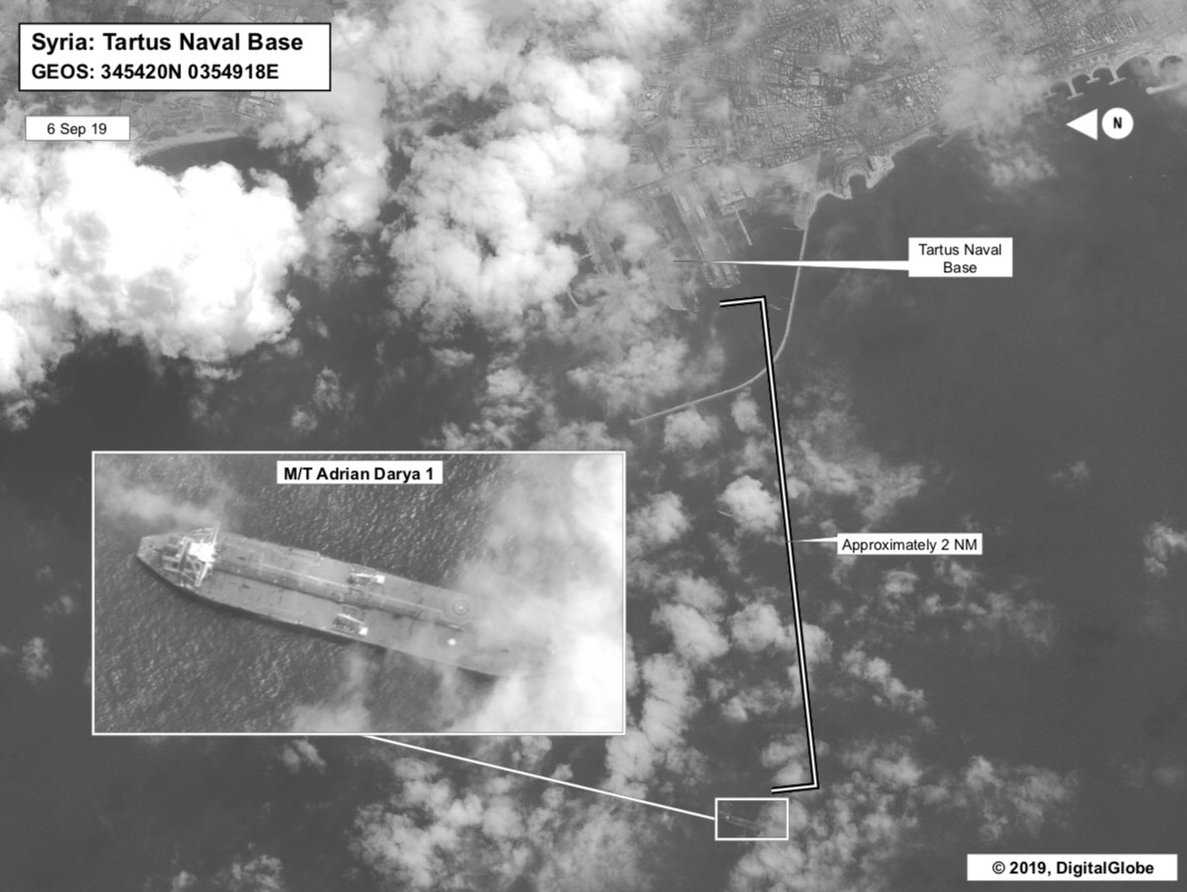


Bolton tweeted a picture showing what appears to be a satellite image of the Iranian ship Adrian Darya-1

The Adrian Darya, which carries 2.1 million barrels of Iranian crude worth some $130 million, switched off its AIS beacon just before 1600 GMT Monday, according to the ship-tracking website MarineTraffic.com. The ship was some 45 nautical miles (83 kilometers) off the coast of Lebanon and Syria, heading north at its last report.

The tanker, which was pursued by the US across the Mediterranean Sea, slowed to a near-stop on Sunday off the coast of Syria.

The US has sanctioned the Adrian Darya’s captain and has sought to impound the vessel.

Iranian officials have said the oil onboard the Adrian Darya had been sold to an unnamed buyer. However, anyone buying Iranian crude oil would be subject to US sanctions.

— with AP


Syrian leader to meet Putin, Russia seeks deal on military bases

Updated 44 min 57 sec ago
Follow

Syrian leader to meet Putin, Russia seeks deal on military bases

  • Russia’s continued sheltering of Assad and his wife since their ouster remains a thorny issue

MOSCOW: Syrian President Ahmed Al-Sharaa will meet Russian counterpart Vladimir Putin in Moscow on Wednesday, as the Kremlin seeks to secure the future of its military bases in the country.
Putin and Sharaa struck a conciliatory tone at their previous meeting in October, their first since Sharaa’s rebel forces toppled Moscow-ally Bashar Assad in 2024.
But Russia’s continued sheltering of Assad and his wife since their ouster remains a thorny issue. Sharaa has repeatedly pushed Russia for their extradition.
Sharaa, meanwhile, has embraced US President Donald Trump, who on Tuesday praised the Syrian leader as “highly respected” and said things were “working out very well.”
Putin, whose influence in the Middle East has waned since Assad’s ouster, is seeking to maintain Russia’s military footprint in the region.
Russia withdrew its forces from the Qamishli airport in Kurdish-held northeast Syria earlier this week, leaving it with only the Hmeimim air base and Tartus naval base on Syria’s Mediterranean coast — its only military outposts outside the former Soviet Union.
“A discussion is planned on the status of bilateral relations and prospects for developing them in various fields, as well as the current situation in the Middle East,” the Kremlin said of the upcoming meeting in a statement on Tuesday.
Russia was a key ally of Assad during the bloody 14-year Syrian civil war, launching air strikes on rebel-held areas of Syria controlled by Sharaa’s Islamist forces.
The toppling of Assad dealt a major blow to Russia’s influence in the region and laid bare the limits of Moscow’s military reach amid the Ukraine war.
The United States, which cheered Assad’s demise, has fostered ever-warmer ties with Sharaa — even as Damascus launched a recent offensive against Kurdish forces long backed by the West.
Despite Trump’s public praise, both the United States and Europe have expressed concern that the offensive in Syria’s northeast could precipitate the return of Islamic State forces held in Kurdish-held jails.
