KABUL/JALALABAD: A deal between the Taliban and the United States for US forces to withdraw from their longest-ever war in Afghanistan could drive some diehard Taliban fighters into the arms of Daesh, Afghan officials and militants say.
Such a deal is expected to see the United States agree to withdraw its forces in exchange for a Taliban promise they will not let Afghanistan be used to plot international militant attacks.
As part of the pact, the Taliban are expected to make a commitment to power-sharing talks with the US-backed government and work out a cease-fire.
The Afghan affiliate of Daesh, known as Daesh Khorasan (Daesh-K), after an old name for the region, first appeared in eastern Afghanistan in 2014, and has since made inroads into other areas, particularly the north.
The US military estimates their strength at 2,000 fighters. Some Afghan officials estimated the number is higher, and could be about to get a boost.
“It’s a big opportunity for Daesh to recruit fighters from the Taliban, and, no doubt, many Taliban fighters will happily join,” said Sohrab Qaderi, a member of the provincial council in Nangarhar province on the border with Pakistan, referring to Daesh.
Daesh militants, who battle government forces and the Taliban, and have carried out some of the deadliest attacks in urban centers, will not be part of the deal between the United States and the Taliban.
For some Taliban, Daesh will offer an opportunity to continue fighting against those they see as infidels and their supporters. For others, who fear retribution if they try to reintegrate into society, it could be a refuge.
“They’ve killed and been killed, they have feuds,” Qaderi said of the Taliban. “Many fighters won’t feel safe returning to normal life.”
A spokesman for President Ashraf Ghani said there was a major concern about the growing strength of Daesh and their attraction for some Taliban.
“Most Daesh are ex-Taliban, and there could be a possibility of some Taliban joining,” said the spokesman, Sediq Sediqqi.
“The Afghan government and the US have shared goals combating terrorism. We need the support of our international partners.”
The government has a reintegration program for insurgents who surrender but critics say it can take too long for people to be vetted and the care they get is inadequate.
From white to black
But a Taliban commander and some members of the group dismissed the possibility of fighters breaking ranks to join Daesh.
“The Taliban leadership has enough control over their fighters to given them orders, and they obey them,” Mawlavi Jamal, a Taliban commander in the western province of Farah, told Reuters by telephone.
But a Taliban fighter in eastern Kunar province said he had no choice but to join Daesh, and he thought others would too.
“During the fighting local people got killed, many people have enemies,” said the fighter, who declined to be identified.
He said had killed one of his father’s cousins who opposed the Taliban and could not return to his village.
“To survive, I have to go to Daesh,” he said. “Our aim is to fight the infidels and corruption, no matter under what name.”
One former Taliban member who joined Daesh in Kunar two years ago denounced the Taliban for negotiating with “infidels.”
“They’re selling the precious lives we’ve sacrificed ... I’m sure more true mujahideen will soon join us,” said the fighter, who spoke by telephone and sought anonymity.
A former senior Taliban member who has defected to the government said fighters might be inadvertently driven into the arms of Daesh if the government did not rehabilitate them properly.
“If nothing else makes Taliban fighters join Daesh, it’ll be government negligence,” he told Reuters in an interview in a safe house provided by the government in Kabul, the capital.
He said he had former Taliban comrades who had wanted to leave the Taliban but been unable to strike a deal with the government, so had joined Daesh instead.
Rivalries, feuds and the anger among some fighters over what they see as their leaders’ compromise with the Americans were also likely to drive defections to Daesh, he said.
“It’s the easiest thing, just change the white flag to a black one,” he said, referring to the white Taliban flag and the black Daesh banner.


![]()

Taliban, US pact in Afghanistan could boost Daesh
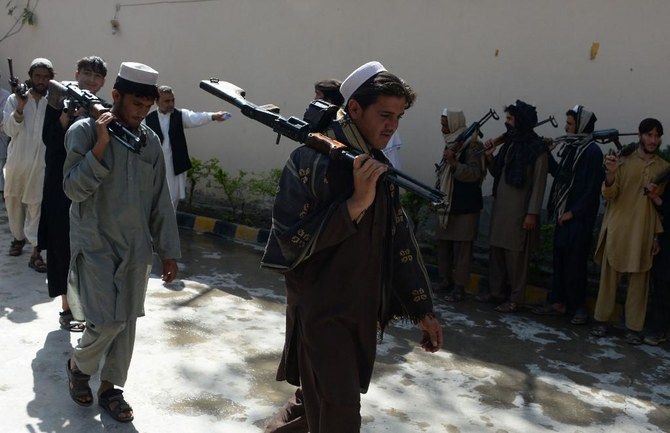
Taliban, US pact in Afghanistan could boost Daesh
- Some fighters join Daesh to protect them from those seeking retribution
- The affiliate group call themselves Daesh Khorasan


Latest updates


Recommended


© 2026 SAUDI RESEARCH & PUBLISHING COMPANY, All Rights Reserved And subject to Terms of Use Agreement.