A Minnesota federal judge on Saturday declined to order a halt to President Donald Trump’s immigration enforcement crackdown in Minneapolis, in a lawsuit by state officials accusing federal agents of widespread civil rights abuses.
US District Judge Kate Menendez in Minneapolis handed down the ruling. The lawsuit by the Minnesota Attorney General’s Office sought to block or rein in a US Department of Homeland Security operation that sent thousands of immigration agents to Minneapolis-St. Paul, sparking weeks of protests and leading to the killings of two US citizens by federal agents.
Trump said on Saturday that he has ordered the Department of Homeland Security to “under no circumstances” get involved with protests in Democratic-led cities unless they ask for federal help or federal property is threatened.
Menendez was appointed by Democratic former President Joe Biden.
Menendez noted the federal appeals court recently stayed a much narrower injunction curtailing US Immigration and Customs Enforcement tactics in Minnesota. “If that injunction went too far, then the one at issue here — halting the entire operation — certainly would,” she wrote.
State alleges racial profiling, unlawful detainment
The lawsuit accused federal agents of racially profiling citizens, unlawfully detaining lawful residents for hours and stoking fear with heavy-handed tactics. Minnesota Attorney General Keith Ellison, an elected Democrat, also accused the Trump administration of targeting Minnesota out of animus for its Democratic political leanings.
The Trump administration said the operation was aimed at enforcing federal immigration laws pursuant to the Republican president’s policies. Some administration officials said the surge would end if Minnesota acquiesced to certain demands, including ending legal protections for people living in the US without legal authorization.
“We’re obviously disappointed in the court’s ruling today, but this case is in its infancy and there is much legal road in front of us, so we’re fighting on,” Ellison said in a statement.
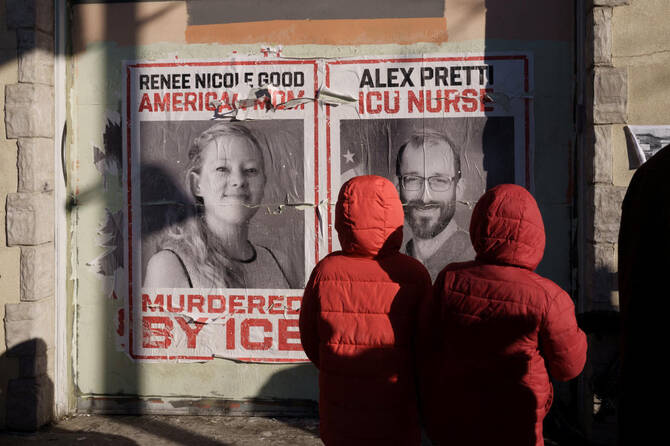
Tensions in Minneapolis-St. Paul ramped up after the January 7 killing of Renee Good, who was shot in her car by a federal immigration agent in an incident captured in widely circulated bystander videos. The fatal shooting of Alex Pretti by a Border Patrol agent on January 24 further inflamed tensions.
The Trump administration defended the agents, saying they had acted in self-defense. But videos of the events cast doubt on those narratives and fueled calls for the agents to be criminally prosecuted. Federal authorities refused to cooperate with local law enforcement investigations of the killings.
Trump and Minnesota’s Democratic Governor Tim Walz said they spoke on Monday and had a productive conversation about de-escalating tensions.
Trump has deployed federal law enforcement officers into several cities and states largely governed by Democrats, including Los Angeles, Chicago, Washington, D.C., and Portland, Oregon. He said his actions were necessary to enforce immigration laws and control crime, but Democrats accused Trump of abusing his powers as the top federal law enforcer.
But comments by Trump on Saturday suggested that federal law enforcement deployments will only happen in the future if cities request it.
“If they want help, they have to ask for it,” he told reporters aboard Air Force One on Saturday. “Because if we go in, all they do is complain.”


![]()

US judge declines to halt Trump’s Minnesota immigration agent surge
Short Url
https://arab.news/btdx6
US judge declines to halt Trump’s Minnesota immigration agent surge
- State officials’ lawsuit accused federal agents of illegal activities
- Ruling came amid protests in Minneapolis over immigration clampdown


Latest updates


© 2026 SAUDI RESEARCH & PUBLISHING COMPANY, All Rights Reserved And subject to Terms of Use Agreement.