TOKYO: Hiroshima marked the 74rd anniversary of the atomic bombing of the city with its mayor renewing calls for eliminating such weapons and demanding Japan’s government do more.
Mayor Kazumi Matsui raised concerns in his peace address Tuesday about the rise of self-centered politics in the world and urged leaders to steadily work toward achieving a world without atomic weapons.
“Around the world today, we see self-centered nationalism in ascendance, tensions heightened by international exclusivity and rivalry, with nuclear disarmament at a standstill,” Matsui said in his peace declaration.
He urged the younger generations never to dismiss the atomic bombings and the war as a mere events of history, but think of them as their own, while calling on the world leaders to come visit the nuclear bombed cities to learn what happened.
Matsui also demanded Japan’s government represent the wills of atomic bombing survivors and sign a UN nuclear weapons ban treaty.
Japan, which hosts 50,000 American troops and is protected by the US nuclear umbrella, has not signed the Treaty on the Prohibition of Nuclear Weapons, an inaction atomic bombing survivors and pacifist groups protest as insincere.
Prime Minister Shinzo Abe acknowledged widening differences between nuclear and non-nuclear states.
“Japan is committed to serve as a bridge between nuclear and non-nuclear states and lead the international effort, while patiently trying to convince them to cooperate and have a dialogue,” Abe said in his address at the ceremony. He vowed to maintain Japan’s pacifist and nuclear nuclear-free principles, but did not promise signing the treaty.
Survivors, their relatives and other participants marked the 8:15 a.m. blast with a minute of silence.
The Hiroshima anniversary ceremony came hours after North Korea launched suspected ballistic missiles in its fourth round of recent weapons demonstrations. The activity follows a stalemate in negotiations over its nuclear weapons.
The US attack on Hiroshima on Aug. 6, 1945, killed 140,000 people. The bomb dropped three days later on Nagasaki killed another 70,000 before Japan’s surrender ended World War II.


![]()

Hiroshima marks 74th anniversary of atomic bombing
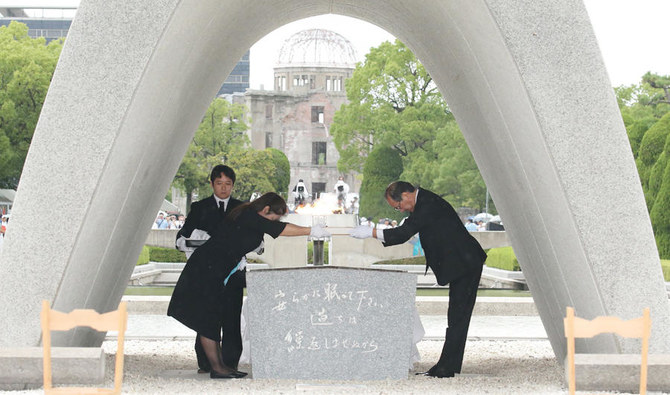
Hiroshima marks 74th anniversary of atomic bombing
- The US attack on Hiroshima on Aug. 6, 1945, killed 140,000 people. The bomb dropped three days later on Nagasaki killed another 70,000 before Japan’s surrender ended World War II


Latest updates


Recommended


© 2026 SAUDI RESEARCH & PUBLISHING COMPANY, All Rights Reserved And subject to Terms of Use Agreement.