

Inside Pakistan's Khewra, the second largest salt mine in the world

1 / 11
A view of a special train for visitors outside Khewra Salt Mine. (AN photo)
2 / 11
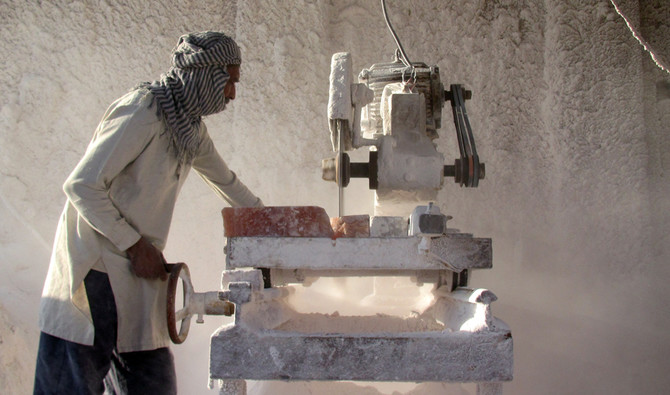
A labour crushes rock salt to make a souvenir at the Khwera Salt Mines.
3 / 11
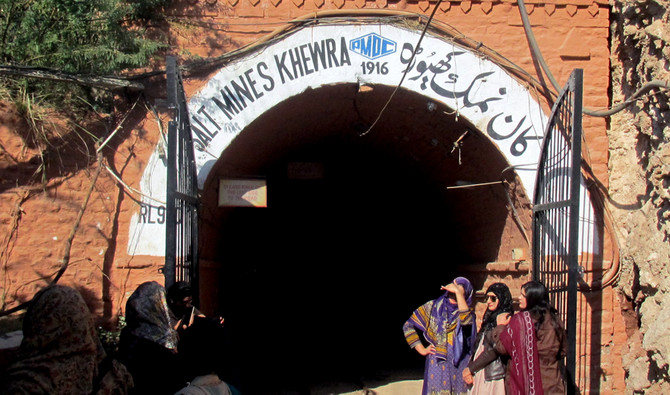
The main entrance of the Khewra Salt Mines. (AN photo)
4 / 11
A special dispensary for asthma patients inside the Khewra Salt Mines. (AN photo)
5 / 11
A view of a cannon at the Khewra Salt Mines. (AN photo)
6 / 11
Salt is visible in rocks and the sand in the area around the Khewra Salt Mines. (AN photo)
7 / 11
Tourists buy souvenirs inside the Khewra Salt Mine. (AN photo)
8 / 11
Tourists seen buying items made from rock salt at the Khewra Salt Mines. (AN photo)
9 / 11
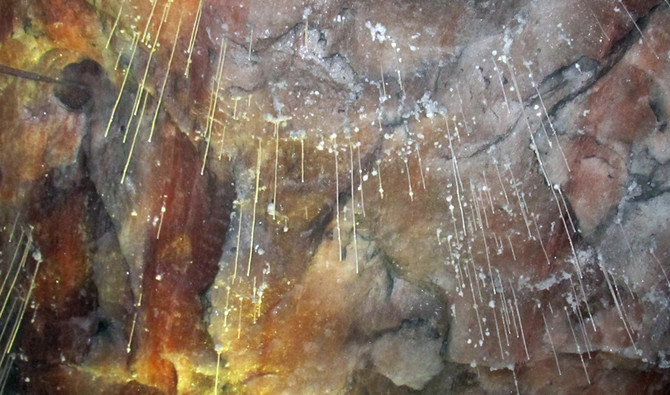
Melting salt particles seen inside a mine at the Khewra Salt Mines. (AN photo)
10 / 11
A tunnel view inside the salt mines of Khewra, Pakistan. The Khewra Salt Mines, located 100 miles south of Islamabad, are said to be the second largest salt mine in the world. (AN photo)
11 / 11
Workers load a truck with rock salt at the Khewra Salt Mines. (AN photo)
Updated 19 January 2019
Follow

Inside Pakistan's Khewra, the second largest salt mine in the world

  • The mines located about 160 kilometres south of the Pakistani capital of Islamabad
  • Nearly one million tourists visit the mine annually

KHEWRA: The Khewra Salt Mines, located about 160 kilometres south of the Pakistani capital of Islamabad, are said to be the second largest salt mine in the world and the largest in Pakistan. 

“Nearly one million tourists visit the mine annually,” senior guide Abid Hussain, who has worked at the mines since 1985, told Arab News. The entry fee is just 200 rupees. 

“Salt was previously extracted from the mine in three shifts, 24 hours a day, but now due to a shortage of workers it’s been limited to two morning and evening sessions,” Hussain said. The salt, normally used for human and animal consumption, is also exported to foreign countries including Korea, Japan and Malaysia.

The history of the mines dates back to 320 BC when Alexander the Great is said to have discovered them. The colonial British government improved mining practices in 1872. 

Shanzay Syed Bokhari, a seventh grade student from Kahuta, had come to Khewra just to see the salt mines. “It was interesting to read about it in our social studies book but seeing it is far better,” Bokhari said, saying she now planned to convince her classmates to pay a visit to the mines also.

“I must say it’s a beautiful gift from God to us,” said Syed Munir Hussain Shah, a school teacher who had brought his students to the mines on a field trip. “We explained the Khewra salt mines chapter to the students and today we brought them to show them. It will clear their minds and they will be able to explore it [the mines] by themselves,” Hussain said. 

The mines also have a souvenir store where you can buy models of the Minar-e-Pakistan, canons, and mosque made from salt bricks. There is also a restaurant and a unique dispensary where people with asthma spend 8-10 hours a day undergoing salt therapy.


Pakistan, ADB ink $61.8 million agreements for three development projects

Updated 4 sec ago
Follow

Pakistan, ADB ink $61.8 million agreements for three development projects

  • Agreements pertain to the upgradation of ML-1 railway link, key bus project in Quetta and water sector development in Balochistan
  • Pakistani official says projects will “significantly contribute” to long-term, sustainable economic growth, address infrastructure needs

ISLAMABAD: Pakistan and the Asian Development Bank (ADB) on Friday signed agreements for three major development initiatives worth $61.8 million to boost connectivity, urban transport and water sector in various parts of the country, state-run media reported. 

The two side signed agreements relating to project readiness financing for the Karachi-Rohri Section of the Main Line-I, a critical link needed to transport copper and gold from the Reko Diq mine in southwestern Pakistan to export hubs, for $10 million. 

Another project readiness financing agreement was signed for a bus rapid transit project in the southwestern city of Quetta worth $3.8 million. The last agreement pertained to additional financing for the Balochistan Water Resources Development Sector Project, which amounts to $48 million. 

“The secretary, Ministry of Economic Affairs, expressed appreciation for ADB’s role as a trusted development partner, and its continued support to Pakistan to complement the development agenda of the country,” the state-run Associated Press of Pakistan (APP) said. 

He said the critical projects would “significantly contribute” to Pakistan’s long-term and sustainable economic growth, address urban infrastructure needs of the provincial capital of Quetta, and enhance agricultural productivity in Balochistan.

ADB’s Country Director for Pakistan Emma Fan appreciated Pakistan’s commitment toward development initiatives. 

“She also reaffirmed ADB’s continued commitment to working closely with the Ministry of Economic Affairs and other stakeholders to ensure its support remains aligned with Pakistan’s development priorities,” APP said. 

ADB has undertaken initiatives to support Pakistan’s economic recovery by strengthening its public finances, social protection systems and helping Islamabad with its post-flood reconstruction efforts. 

The bank says it has committed 764 public sector loans, grants, and technical assistance to the South Asian country totaling $43.4 billion to date.