LONDON: British Prime Minister Theresa May on Monday accepted amendments to a customs bill put forward by Brexit hard-liners who oppose her plan for a “common rule book” with the European Union after the country leaves the bloc.
Even with those unwanted concessions, the government only barely won a Monday night vote, gaining 305 votes in favor and 302 against. The bill would prevent Britain from collecting tariffs on behalf of EU nations unless the EU does the same for the UK
The government avoided what would have been an embarrassing defeat, but the razor-thin margin reveals the fragility of May’s support as she tries to find a way to move the complex Brexit process forward.
A Downing Street spokesman said the government accepted the amendments because it sees them as consistent with the prime minister’s plan as set out in a formal white paper last week.
However, critics said May had caved in to pressure from Brexit supporters who want a complete break with Europe. They said the changes would greatly limit May’s ability to move forward with the plan that prompted two hard-liners in her Cabinet to resign in protest last week — and fresh resignations of lesser figures Monday.
The amendments seek to limit the government’s ability to set up the customs arrangements May has advocated, which would keep close ties to Europe. They were proposed by the European Research Group, the research arm of May’s Conservative Party which is headed by lawmaker Jacob Rees-Mogg.
Another Conservative Party legislator, Anna Soubry, who opposes the “hard” Brexit that would see Britain leave the EU without a trade deal in place, said the government’s acceptance of the four amendments mean that Rees-Mogg is now effectively “running Britain.”
May also came under fire Monday from a former Cabinet minister who called for a new Brexit referendum, an idea immediately rejected by the prime minister’s team.
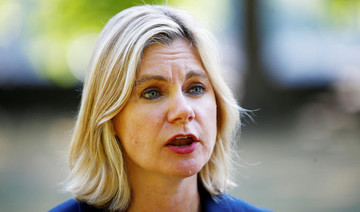
Former Education Secretary Justine Greening, also a Conservative, said the UK Parliament was “gridlocked” over the divisive issue. She said she and other senior Tory lawmakers favor a new vote.
Greening said she would campaign to keep Britain in the EU, if a new referendum were held.
The day’s developments heaped additional pressure on the beleaguered May, whose party is deeply split and does not enjoy majority control in Parliament.
Her recent white paper outlining plans for a common rule book with the EU over trade in goods has infuriated those who favor a complete break even if it risks causing an economic shock.
May defended her plan as she opened the Farnborough International Airshow. She said it would safeguard vital jobs in the aviation industry and keep Britain’s tradition as a nation in the forefront of the aviation industry.
The issue is sensitive because Airbus signaled in June that it would have to consider its long-term plans for Britain if there is no Brexit deal.
May said the plan outlined in the white paper honors the wishes of British voters — who in June 2016 backed Brexit with 52 percent of the vote — while protecting industry and national security.
May’s authority has been weakened with the resignations of major figures Boris Johnson and David Davis and a series of lesser officials who disagree with her Brexit plan.
The skirmishes are expected to continue Tuesday when a different trade bill is debated. There is also a move for Parliament to begin its summer recess several days early in a bid to curtail the chaos of recent weeks.


![]()


British PM accepts key amendments from hard-line Brexiteers
British PM accepts key amendments from hard-line Brexiteers
- Lawmakers in the House of Commons voted 305 to 302 to approve the amendment to the customs legislation, known as the Taxation
- May’s authority has been weakened with the resignations of major figures Boris Johnson and David Davis and a series of lesser officials who disagree with her Brexit plan

Greenland villagers focus on ‘normal life’ amid stress of US threat
- Proudly showing off photographs on her tablet of her grandson’s first hunt, Dorthe Olsen refuses to let the turmoil sparked by US president Donald Trump take over her life
SARFANNGUIT: Proudly showing off photographs on her tablet of her grandson’s first hunt, Dorthe Olsen refuses to let the turmoil sparked by US president Donald Trump take over her life in a small hamlet nestled deep in a Greenland fjord.
Sarfannguit, founded in 1843, is located 36 kilometers (22 miles) east of El-Sisimiut, Greenland’s second-biggest town, and is accessible by boat in summer and snowmobile or dogsled in winter if the ice freezes.
The settlement has just under 100 residents, most of whom live off from hunting and fishing.
On this February day, only the wind broke the deafening silence, whipping across the scattering of small colorful houses.
Most of them looked empty. At the end of a gravel road, a few children played outdoors, rosy-cheeked in the bitter cold, one wearing a Spiderman woolly hat.
“Everything is very calm here in Sarfannguit,” said Olsen, a 49-year-old teacher, welcoming AFP into her home for coffee and traditional homemade pastries and cakes.
In the background, a giant flat screen showed a football match from England’s Premier League.
Olsen told AFP of the tears of pride she shed when her grandson killed his first caribou at age 11, preferring to talk about her family than about Trump.
The US president has repeatedly threatened to seize the mineral-rich island, an autonomous territory of Denmark, alleging that Copenhagen is not doing enough to protect it from Russia and China.
He nevertheless climbed down last month and agreed to negotiations.
Greenland’s health and disability minister, Anna Wangenheim, recently advised Greenlanders to spend time with their families and focus on their traditions, as a means of coping with the psychological stress caused by Trump’s persistent threats.
The US leader’s rhetoric “has impacted a lot of people’s emotions during many weeks,” Wangenheim told AFP in Nuuk.
’Powerless’
Olsen insisted that the geopolitical crisis — pitting NATO allies against each other in what is the military alliance’s deepest crisis in years — “doesn’t really matter.”
“I know that Greenlanders can survive this,” she said.
Is she not worried about what would happen to her and her neighbors if the worst were to happen — a US invasion — especially given her settlement’s remote location?
“Of course I worry about those who live in the settlements,” she said.
“If there’s going to be a war and you are on a settlement, of course you feel powerless about that.”
The only thing to do is go on living as normally as possible, she said, displaying Greenland’s spirit of resilience.
That’s the message she tries to give her students, who get most of their news from TikTok.
“We tell them to just live the normal life that we live in the settlement and tell them it’s important to do that.”
The door opened. It was her husband returning from the day’s hunt, a large plastic bag in hand containing a skinned seal.
Olsen cut the liver into small pieces, offering it with bloodstained fingers to friends and family gathered around the table.
“It’s my granddaughter’s favorite part,” she explained.
Fishing and hunting account for more than 90 percent of Greenland’s exports.
No private property
Back in El-Sisimiut after a day out seal hunting on his boat, accompanied by AFP, Karl-Jorgen Enoksen stressed the importance of nature and his profession in Greenland.
He still can’t get over the fact that an ally like the United States could become so hostile toward his country.
“It’s worrying and I can’t believe it’s happening. We’re just trying to live the way we always have,” the 47-year-old said.
The notion of private property is alien to Inuit culture, characterised by communal sharing and a deep connection to the land.
“In Greenlandic tradition, our hunting places aren’t owned. And when there are other hunters on the land we are hunting on, they can just join the hunt,” he explained.
“If the US ever bought us, I can for example imagine that our hunting places would be bought.”
“I simply just can’t imagine that,” he said, recalling that his livelihood is already threatened by climate change.
He doesn’t want to see his children “inherit a bad nature — nature that we have loved being in — if they are going to buy us.”
“That’s why it is we who are supposed to take care of OUR land.”
Sarfannguit, founded in 1843, is located 36 kilometers (22 miles) east of El-Sisimiut, Greenland’s second-biggest town, and is accessible by boat in summer and snowmobile or dogsled in winter if the ice freezes.
The settlement has just under 100 residents, most of whom live off from hunting and fishing.
On this February day, only the wind broke the deafening silence, whipping across the scattering of small colorful houses.
Most of them looked empty. At the end of a gravel road, a few children played outdoors, rosy-cheeked in the bitter cold, one wearing a Spiderman woolly hat.
“Everything is very calm here in Sarfannguit,” said Olsen, a 49-year-old teacher, welcoming AFP into her home for coffee and traditional homemade pastries and cakes.
In the background, a giant flat screen showed a football match from England’s Premier League.
Olsen told AFP of the tears of pride she shed when her grandson killed his first caribou at age 11, preferring to talk about her family than about Trump.
The US president has repeatedly threatened to seize the mineral-rich island, an autonomous territory of Denmark, alleging that Copenhagen is not doing enough to protect it from Russia and China.
He nevertheless climbed down last month and agreed to negotiations.
Greenland’s health and disability minister, Anna Wangenheim, recently advised Greenlanders to spend time with their families and focus on their traditions, as a means of coping with the psychological stress caused by Trump’s persistent threats.
The US leader’s rhetoric “has impacted a lot of people’s emotions during many weeks,” Wangenheim told AFP in Nuuk.
’Powerless’
Olsen insisted that the geopolitical crisis — pitting NATO allies against each other in what is the military alliance’s deepest crisis in years — “doesn’t really matter.”
“I know that Greenlanders can survive this,” she said.
Is she not worried about what would happen to her and her neighbors if the worst were to happen — a US invasion — especially given her settlement’s remote location?
“Of course I worry about those who live in the settlements,” she said.
“If there’s going to be a war and you are on a settlement, of course you feel powerless about that.”
The only thing to do is go on living as normally as possible, she said, displaying Greenland’s spirit of resilience.
That’s the message she tries to give her students, who get most of their news from TikTok.
“We tell them to just live the normal life that we live in the settlement and tell them it’s important to do that.”
The door opened. It was her husband returning from the day’s hunt, a large plastic bag in hand containing a skinned seal.
Olsen cut the liver into small pieces, offering it with bloodstained fingers to friends and family gathered around the table.
“It’s my granddaughter’s favorite part,” she explained.
Fishing and hunting account for more than 90 percent of Greenland’s exports.
No private property
Back in El-Sisimiut after a day out seal hunting on his boat, accompanied by AFP, Karl-Jorgen Enoksen stressed the importance of nature and his profession in Greenland.
He still can’t get over the fact that an ally like the United States could become so hostile toward his country.
“It’s worrying and I can’t believe it’s happening. We’re just trying to live the way we always have,” the 47-year-old said.
The notion of private property is alien to Inuit culture, characterised by communal sharing and a deep connection to the land.
“In Greenlandic tradition, our hunting places aren’t owned. And when there are other hunters on the land we are hunting on, they can just join the hunt,” he explained.
“If the US ever bought us, I can for example imagine that our hunting places would be bought.”
“I simply just can’t imagine that,” he said, recalling that his livelihood is already threatened by climate change.
He doesn’t want to see his children “inherit a bad nature — nature that we have loved being in — if they are going to buy us.”
“That’s why it is we who are supposed to take care of OUR land.”
Latest updates


© 2026 SAUDI RESEARCH & PUBLISHING COMPANY, All Rights Reserved And subject to Terms of Use Agreement.