Pakistan identifies suicide bomber in Islamabad mosque attack that killed 31

Graphic content / People shift an injured man to a hospital following an explosion at a mosque in Islamabad on February 6, 2026. A blast at a Shiite mosque in Pakistan's capital Islamabad on February 6 killed 11 people and wounded 20, a police source told AFP. (AFP)
Short Url
Updated 06 February 2026
Follow

Pakistan identifies suicide bomber in Islamabad mosque attack that killed 31

  • Officials say bomber received training in Afghanistan amid renewed militant violence
  • The attack took place during Friday prayers in Tarlai area on the outskirts of the capital

ISLAMABAD: Authorities have identified the suicide bomber who killed 31 worshippers and injured 169 at a mosque on the outskirts of the Pakistani capital, said a government official on Friday, adding the attacker received training in neighboring Afghanistan.

The explosion occurred in the Tarlai area around the time of Friday prayers, with the Islamabad district administration sharing the number of fatalities in a statement.

The blast came amid a renewed surge in militant violence in Pakistan and followed a suicide bombing outside a district court complex in Islamabad in November last year that killed at least 12 people and wounded dozens, underscoring growing security concerns even in heavily guarded urban centers.

“The identity of the suicide bomber has been confirmed,” said a senior government official on condition of anonymity. “Verified information indicates that the suicide bomber received training for terrorist activities in Afghanistan.”

“The suicide bomber had traveled to Afghanistan multiple times and had returned recently,” he added.

The official reiterated Pakistan’s stance on recent militant attacks, saying various armed groups were based in Afghanistan and posed a serious threat to regional security under the patronage of the Afghan Taliban regime.

“Every terrorist incident in Pakistan has a nexus involving Afghanistan and India,” he continued.
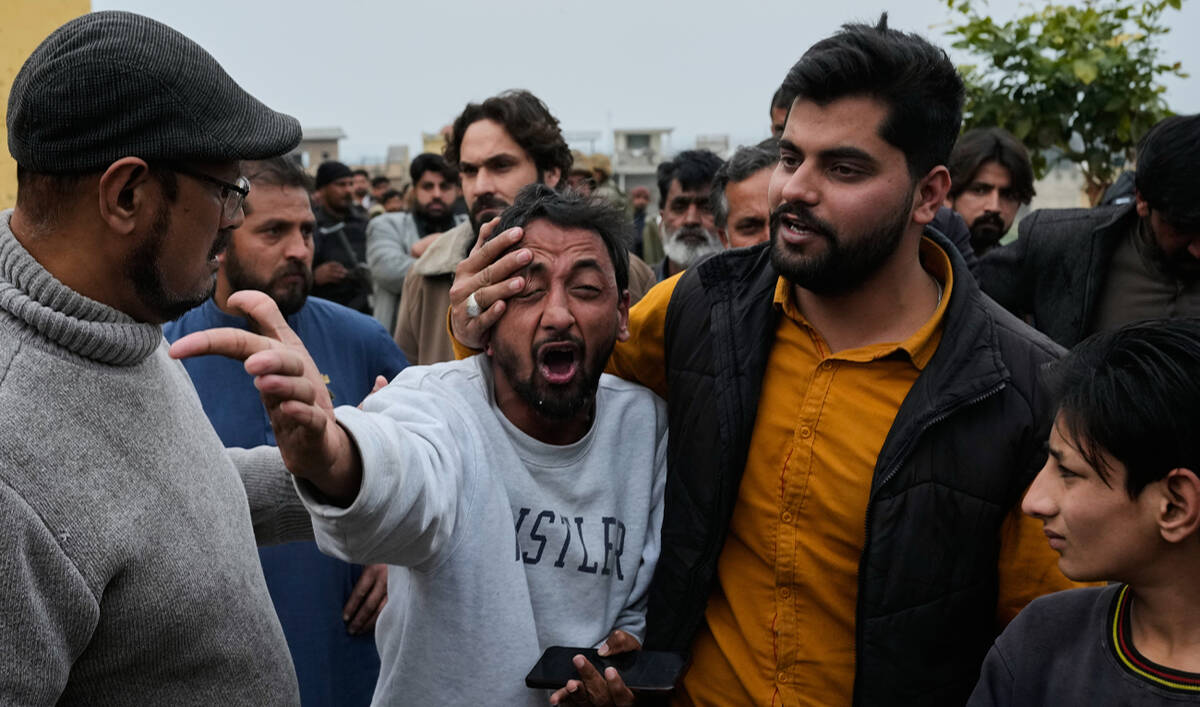


People comfort a man, center, mourning over the death of his relative, close to the site of a bomb explosion at a Shiite mosque, in Islamabad, Pakistan, on February 6, 2026. (AP)

Islamabad has long accused Kabul of allowing its soil to be used by militant groups and New Delhi of backing their cross-border attacks against Pakistani civilians and security forces. However, the Afghan and Indian governments have consistently denied the allegations.

Pakistan’s State Minister for Interior Tallal Chaudhry visited the site of the blast confirmed the same information.

“The terrorist carried out a suicide bombing,” he said during a media interaction outside the mosque. “Information about him has been obtained: he is not an Afghan citizen, but details about how many times he traveled to Afghanistan have been established.”
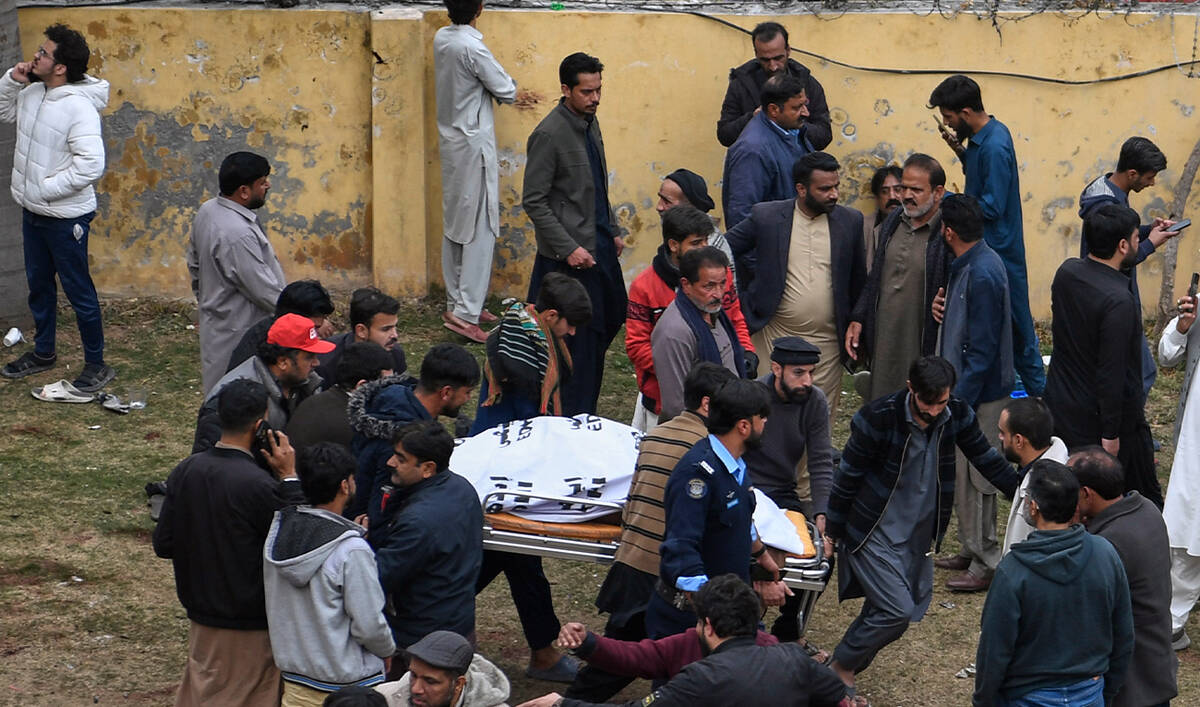


Rescue workers and volunteers remove a body from the site of a bomb explosion at a Shiite mosque in Islamabad, Pakistan, on February 6, 2026. (AP)

Earlier, emergency measures were imposed at the Pakistan Institute of Medical Sciences (PIMS), Polyclinic Hospital and the Capital Development Authority (CDA) Hospital after the incident, with assistant commissioners deployed at medical facilities to oversee the treatment of the wounded.

“The site of the blast has been completely sealed,” the district administration said in its statement.

Islamabad police spokesperson Taqi Jawad said the explosion occurred at an imambargah, a place of worship for the Shi’ite Muslim community.
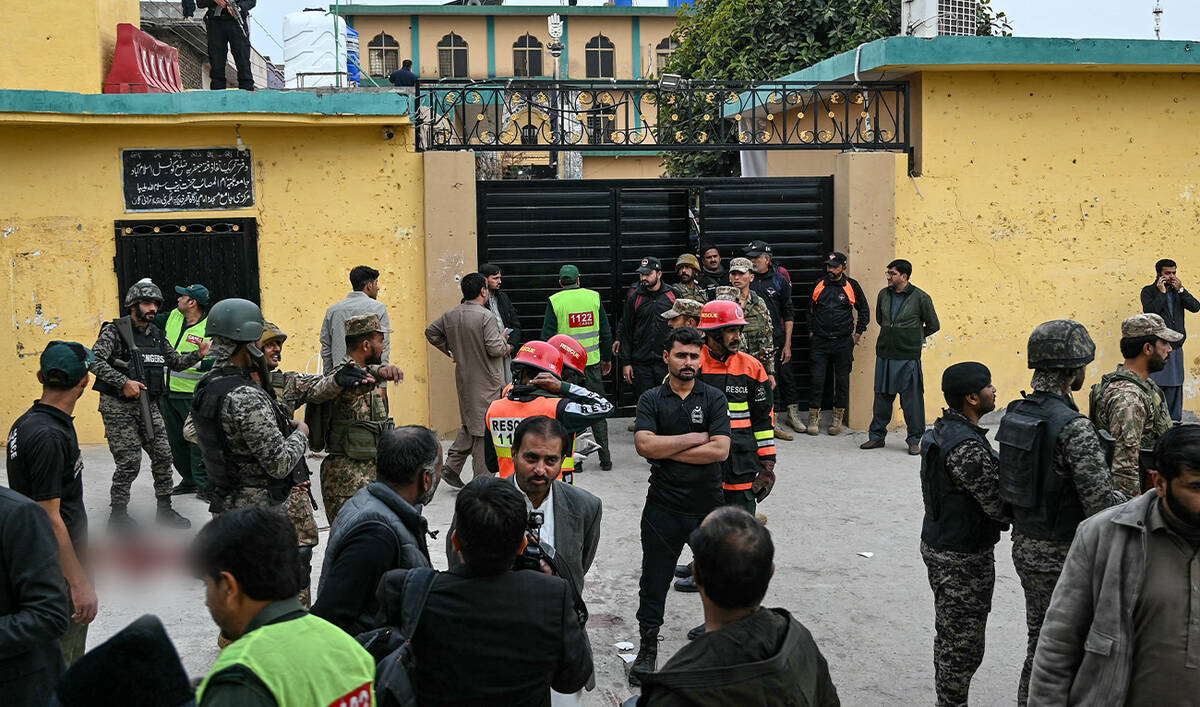


Security personnel stand guard outside a Shiite mosque following an explosion in Islamabad, Pakistan, on February 6, 2026. (AFP)

No group has so far claimed responsibility for the attack.

Islamabad has historically been less affected by militant attacks than Pakistan’s northwestern and southwestern regions, but the scale of Friday’s casualties has intensified fears about the capital’s vulnerability as the country grapples with a broader nationwide resurgence of militancy. 


Two Pakistani men indicted in $10 million Medicare fraud scheme in Chicago

Updated 12 February 2026
Follow

Two Pakistani men indicted in $10 million Medicare fraud scheme in Chicago

  • Prosecutors say defendants billed Medicare and private insurers for nonexistent services
  • Authorities say millions of dollars in proceeds were laundered and transferred to Pakistan

ISLAMABAD: Two Pakistani nationals have been indicted in Chicago for allegedly participating in a $10 million health care fraud scheme that targeted Medicare and private insurers, the US Justice Department said on Thursday.

A federal grand jury charged Burhan Mirza, 31, who resided in Pakistan, and Kashif Iqbal, 48, who lived in Texas, with submitting fraudulent claims for medical services and equipment that were never provided, according to an indictment filed in the US District Court for the Northern District of Illinois.

Medicare is the US federal health insurance program primarily serving Americans aged 65 and older, as well as certain younger people with disabilities.

“Rooting out fraud is a priority for this Justice Department, and these defendants allegedly billed millions of dollars from Medicare and laundered the proceeds to Pakistan,” Deputy Attorney General Todd Blanche said in a statement.

“These alleged criminals stole from a program designed to provide health care benefits to American seniors and the disabled, not line the pockets of foreign fraudsters,” he added. “We will not tolerate these schemes that divert taxpayer dollars to criminals.”

Prosecutors said that in 2023 and 2024, the defendants and their alleged co-conspirators used nominee-owned laboratories and durable medical equipment providers to bill Medicare and private health benefit programs for nonexistent services.

According to the indictment, Mirza obtained identifying information of individuals, providers and insurers without their knowledge and used it to support fraudulent claims submitted on behalf of shell companies. Iqbal was allegedly linked to several durable medical equipment providers that filed false claims and is accused of laundering proceeds and coordinating transfers of funds to Pakistan.

Mirza faces 12 counts of health care fraud and five counts of money laundering. Iqbal is charged with 12 counts of health care fraud, six counts of money laundering and one count of making a false statement to US law enforcement. Arraignments have not yet been scheduled.

Three additional defendants, including an Indian, previously charged in the investigation, have pleaded guilty to federal health care fraud charges and are awaiting sentencing.

An indictment contains allegations, and the defendants are presumed innocent unless proven guilty in court.