WASHINGTON: Could the crackdown on tax loopholes clamp down on corporate schmoozing?
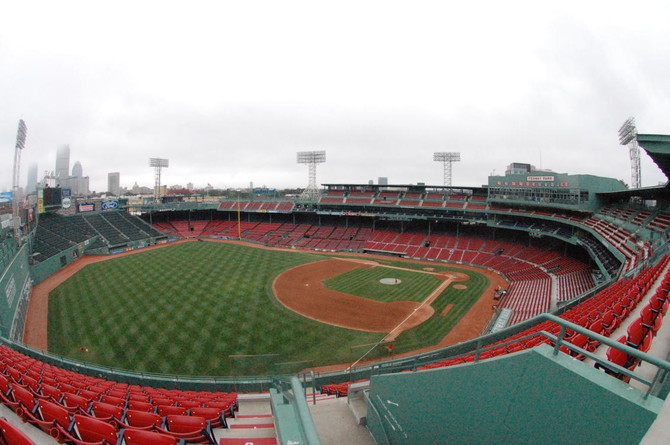
The new tax law ends a benefit prized by business for impressing customers or courting new ones. And the impact could be felt in the pricey boxes at sports stadiums. In Washington, lobbyists who helped craft the Republican tax legislation could now be pinched by it.
US companies spend hundreds of millions annually on entertaining customers and clients at sporting events, tournaments and arts venues, an expense that until this year they could partially deduct from their tax bill. But a provision in the new law eliminates the long-standing 50 percent deduction in an effort to curb the overall price tag of the legislation and streamline the tax code.
“Congress didn’t feel the government should subsidize it anymore. Firms are going to take a hard look at their entertainment budgets,” said Ryan Losi, a certified public accountant based in Glen Allen, Virginia.
The provision is one of the many under-the-radar consequences slowly emerging from the new tax legislation, the most sweeping rewrite of the tax code in three decades. Also embedded in the law are little-noticed provisions with the potential to bring major changes to mundane parts of American life — including home-buying, saving for school and divorce.
“You can believe there’s going to be more pressure on the sales people and marketing people to not go so crazy on the expenditures,” predicted Ruth Wimer, an executive compensation attorney at law firm Winston & Strawn who’s also a certified public accountant. “It’s going to be a consideration for companies — it’s going to cost them.”
Ending the deduction will save the government about $2 billion a year and $23 billion through 2027 in formerly lost revenue, Congress’ bipartisan Joint Committee on Taxation estimates.
Of course many companies will continue to spend without the tax incentive, for the benefits they get from entertaining such as the payoff in future revenue. But the tax change still could have a financial impact on sports teams and cultural institutions.
The prestigious US Open tennis tournament held for two weeks every summer in Flushing Meadows, New York, offers court-side suites. It sees around 40 percent of its revenue coming from corporate sales.
Chris Widmaier, managing director for corporate communications at the US Tennis Association, said it hasn’t seen an impact yet on ticket sales, but noted it’s still fairly early in the sales season.
“It’s a fair question,” he said.
“It is a concern,” said Kate McClanahan, director of federal affairs at Americans for the Arts, an advocacy group that coordinates local cultural organizations and business donors around the country. “It can have a negative impact on both the commercial and nonprofit arts.”
The industries that spend the most on this type of entertaining are banks and financial services, airlines, automakers, telecoms and media. This kind of organized socializing also is a staple of lobbying firms, of course. The K Street lobbyists often party with clients at Washington Nationals baseball games or Capitals hockey games. The firms may have tough decisions to make regarding spending on future outings.
“There is also the psychological impact,” said Marc Ganis, a co-founder of Sportscorp Ltd., a sports consulting firm. “When something is deductible, people think it’s less expensive; effectively the government is paying for part of it.”
Companies could fall into two camps around the impact of the tax change, experts suggest. Those that are profitable, paying taxes at the former top rate of 35 percent and using the 50 percent deduction for entertainment, were previously able to cut their tax rate to 17.5 percent. Now, with a zero deduction and a new 21 percent corporate tax rate, their tax liability would increase by only 3.5 percent, not a huge deal. By contrast, companies that are struggling or have been paying an effective tax rate below 35 percent because they were using deductions — they could see a substantial impact on their bottom line.
The irony of Washington lobbyists falling victim to their own successful work on the tax bill isn’t lost on some in the “swamp.”
Rep. Lloyd Doggett, D-Texas, a member of the tax-writing House Ways and Means Committee and a fierce critic of the tax legislation, called the end of the deduction for lobbyists’ entertaining “one positive sign in an otherwise dismal bill.”
Still, deductible or not, lobbyists and their company clients still will have “much to celebrate over fine wine and entertainment” from the legislation’s big corporate tax cuts, Doggett said.


![]()
US tax law change to shut corporate entertainment loopholes
US tax law change to shut corporate entertainment loopholes


Latest updates


© 2026 SAUDI RESEARCH & PUBLISHING COMPANY, All Rights Reserved And subject to Terms of Use Agreement.