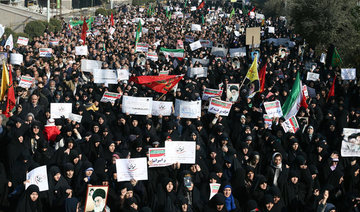
JEDDAH/WASHINGTON: Anti-regime protests continued in Iran on Tuesday for the sixth consecutive day, as the US piled pressure on Tehran by calling for an emergency meeting of the UN Security Council.
Nikki Haley, the US ambassador to the UN, said: “The UN must speak out in the days ahead, we will be calling for an emergency session. The people of Iran are crying out for freedom.”
The Donald Trump administration is also considering slapping sanctions on individuals who are behind the crackdown on Iranian protesters.
In an interview with the state-backed broadcaster VOA, Deputy Assistant Secretary of State for Iraq and Iran, Andrew Peek, said Washington was mulling targeted sanctions among a package of measures, which includes working with global partners to censure Tehran.
“From our part, we will hold accountable those people or entities who are committing violence, from the top to the bottom, against the protesters,” Peek said. “That involves examining actions we can take against those individuals, like sanctions and other means.”
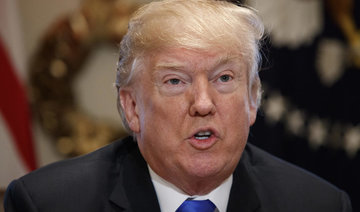
Trump tweeted again on Tuesday in support of the demonstrators.
“The people of Iran are finally acting against the brutal and corrupt Iranian regime,” he said. “The people have little food, big inflation and no human rights. The US is watching!”
France expressed concern over the “number of victims and arrests” during the protests. “The right to protest freely is a fundamental right,” said the French Foreign Ministry.
More than 20 people have been killed since the protests began last week, the Associated Press reported. Footage on social media showed riot police out in force in several cities as security forces struggled to contain the unrest.
Tehran’s deputy provincial governor was quoted by Reuters as saying more than 450 protesters had been arrested in the capital over the last three days. Hundreds of others have been detained around the country.
Nine people were killed in Isfahan province during protests on Monday night, including two members of the security forces, state television reported.
As the demonstrations showed no signs of abating, the head of Tehran’s Revolutionary Court, Musa Ghazanfarabadi, said protesters would face harsh punishments.
Detainees would be put on trial soon, and ringleaders could be charged with “moharebeh” — an Islamic term meaning warring against God — which carries the death penalty, Ghazanfarabadi said.
Shahriar Kia, a human rights activist and member of the opposition People’s Mojahedin Organization of Iran, told Arab News that the “inhumane regime,” which has ruled the country since the 1979 revolution, is on the verge of being ousted.
The protests are a result of “over three decades of crackdowns and the plundering by the clerics of the Iranian people’s property and wealth,” he said.
The regime has spent “billions of dollars of the Iranian people’s money to spread its fundamentalism and terrorism across the Middle East, and to support Syrian dictator Bashar Assad,” Kia added.
Maryam Rajavi, president-elect of the National Council of Resistance of Iran, said: “The ongoing protests in different cities against the regime reveal the explosive state of Iranian society and the people’s desire for regime change.”
Kia said: “I believe strongly that peace and stability in the Middle East and the world will be possible only through regime change in Iran.”


![]()

US calls for emergency UN session as Iran protests continue unabated
US calls for emergency UN session as Iran protests continue unabated

Latest updates


Recommended


© 2026 SAUDI RESEARCH & PUBLISHING COMPANY, All Rights Reserved And subject to Terms of Use Agreement.