BAGHDAD: The Iraqi Shiite-dominated Popular Mobilization Forces (PMF) will not be incorporated or dissolved, but will be restructured in line with military laws and regulations to ensure that fighters are free of ideological, political and partisan affiliations, Iraqi government spokesman Saad Al-Hadithi told Arab News on Sunday.
“According to the law approved by the Parliament, we have only one mechanism to resolve this case by issuing instructions and regulations to reorganize the work of the PMF,” said Al-Hadithi.
“This issue (the fate of the PMF) is resolved. The law authorized the prime minister to issue the required regulations to restructure this institution and reactivate its work in line with Iraqi law and submit it to the military regulations applied in all the Iraqi military institutions.
“(Resolving) this case is linked to the restructuring measures and (when it is) fully implemented on the ground, and this is what is currently being worked out with the participation of military specialists authorized to make (the required) decisions and representatives of the PMF,” Al-Hadithi, said.
Iraqi Prime Minister Haider Abadi last week declared the full liberation of the Iraqi territories seized by Daesh in the summer of 2014 after the collapse of the Iraqi army. Tens of thousands of Iraqis volunteered to fight Daesh and stop their advance on the capital.
The volunteers, mostly Shiite, have fought the militants alongside the government under the umbrella of the Popular Mobilization Units (PMU), a governmental body established by former Iraqi Prime Minister Nuri Al-Maliki to cover the armed factions who fought Daesh.
Although the PMU consists of tens of thousands of Shiite, Sunni, Turkmen, Christian and Yazidi volunteers, the Shiite militias have represented the backbone of PMF troops.
To subject PMF to the control of the government, the Iraqi Parliament voted on the law late in 2016. The law states that the PMF is a part of the regular Iraqi security establishment and subject to military laws and commanded directly by the commander-in-chief of the armed forces (the prime minister), who is fully responsible for arming, financing and equipping them.
PMF commanders and security officials contacted by Arab News confirmed that talks on the restructuring of the PMU had started weeks ago between the Iraqi Ministry of Defense and the commanders of the PMF.
Al-Hadithi said that as long as the PMF was a part of the Iraqi security establishment, “they must be fully subject to the will and decision of the commander-in-chief of the armed forces and central security institutions.”
The number of registered fighters on the payroll of the PMF is 120,000. Shiite-armed factions have played a key role in the three-year fight against Daesh.
The Iraqi government spokesmen said that all armed factions, individuals and parties that had fought Daesh alongside the government and were formally covered by the PMF, have no option but to legalize their existence and give up their political and ideological affiliations. This was “fundamental” for the work of the PMF, and the government was “fully keen to implement this.”
Al-Hadathi said that the commanders of the armed factions in the PMF had expressed their commitment to keep working under the umbrella of the PMF and to dismantle any political or ideological ties between the fighters and their parent organizations.
“Actually, the announced situations (of the commands of the Shiite-armed factions within PMF) related to this issue (to abandon affiliations), all have poured in this direction.
“We hope that there will be an understanding of the government’s position at this time and the necessity of taking this step during the next stage. The situations were all positive and we look forward to translating these positions into action,” Al-Hadithi said.
Al-Hadithi said that although there was no time limit to achieve this goal, the government was keen to accomplish it “as soon as possible.”
The Iraqi government estimated the cost of reconstruction and rehabilitation of the areas affected by terrorism, and the military operations to terminate the militants, at $100 billion. The support of the international community is vital for the Iraqi government to secure these funds, mainly by attracting foreign investment and donations from the international community.
“We look forward to bringing investors and international companies to work in Iraq. The existence of any armed manifestations outside the framework of state institutions sends a negative message (for the international community).
“The Iraqi government cannot alone provide the required funds of reconstruction and provide the basic services. Therefore, it is necessary to obtain international aid through (the recruitment) of major investment companies ... which can provide hundreds of thousands of jobs.
“Any step taken by any side that contradicts the will of the government to disarm (the armed factions) will damage the economy, the peace and security of the community and will negatively impact investment opportunities in Iraq.
“The Iraqi government will confront any armed faction operating outside the official system of the state, and will take all necessary legal measures to prevent its activity regardless of its title (name or affiliation),” Al-Hadithi said.


![]()
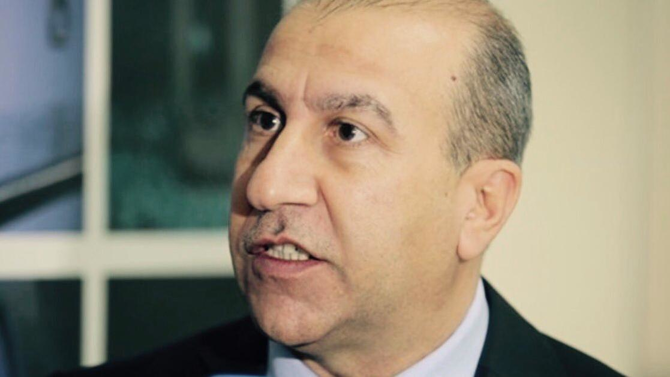

Iraqi mobilization forces will not be incorporated or dissolved: govt spokesman
Iraqi mobilization forces will not be incorporated or dissolved: govt spokesman

Iranian hardline clerics seek swift naming of new supreme leader
- Calls by the clerics suggest that at least some in the clerical establishment are uncomfortable with leaving a three-man council in charge
DUBAI: Two influential and hardline Iranian clerics have called for the swift selection of a new supreme leader to help guide the nation amid a new wave of US and Israeli strikes, Iranian media reported on Saturday.
The calls by the clerics suggest that at least some in the clerical establishment are uncomfortable with leaving a three-man council in charge, even temporarily under constitutional rules, after the killing of Supreme Leader Ayatollah Ali Khamenei.
US President Donald Trump has said the US should have a role in choosing the new leader, a demand Iran has rejected.
Naser Makarem Shirazi, a grand ayatollah, which means he commands a broad following for his religious rulings, said an appointment was needed swiftly to “help better organize the country’s affairs,” state media reported.
Last week, two senior Shi’ite religious authorities also issued fatwas, or religious decrees, calling on Muslims around the world to avenge the killing of Khamenei. Makarem Shirazi said it was a religious duty for Muslims “until the evil of these criminals is eradicated from the world.”
Grand Ayatollah Hossein Nouri Hamedani also urged members of the Assembly of Experts, a clerical body charged with choosing the new leader, to accelerate the process of picking Khamenei’s successor, state media reported.
Following rules laid out in Iran’s constitution, a three-man council comprising the president, a senior cleric and the head of the judiciary, has taken on the supreme leader’s role until the Assembly of Experts decides.
The constitution states a supreme leader should be chosen within three months, although with war raging, it is not immediately clear how quickly the 88-member Assembly of Experts can convene. Sources have said some clerics have held some consultations online.
The calls by the clerics suggest that at least some in the clerical establishment are uncomfortable with leaving a three-man council in charge, even temporarily under constitutional rules, after the killing of Supreme Leader Ayatollah Ali Khamenei.
US President Donald Trump has said the US should have a role in choosing the new leader, a demand Iran has rejected.
Naser Makarem Shirazi, a grand ayatollah, which means he commands a broad following for his religious rulings, said an appointment was needed swiftly to “help better organize the country’s affairs,” state media reported.
Last week, two senior Shi’ite religious authorities also issued fatwas, or religious decrees, calling on Muslims around the world to avenge the killing of Khamenei. Makarem Shirazi said it was a religious duty for Muslims “until the evil of these criminals is eradicated from the world.”
Grand Ayatollah Hossein Nouri Hamedani also urged members of the Assembly of Experts, a clerical body charged with choosing the new leader, to accelerate the process of picking Khamenei’s successor, state media reported.
Following rules laid out in Iran’s constitution, a three-man council comprising the president, a senior cleric and the head of the judiciary, has taken on the supreme leader’s role until the Assembly of Experts decides.
The constitution states a supreme leader should be chosen within three months, although with war raging, it is not immediately clear how quickly the 88-member Assembly of Experts can convene. Sources have said some clerics have held some consultations online.
Latest updates


© 2026 SAUDI RESEARCH & PUBLISHING COMPANY, All Rights Reserved And subject to Terms of Use Agreement.