LONDON: NATO is in talks to deploy more nuclear weapons, taking them out of storage and placing them on standby, in the face of a growing threat from Russia and China, the head of the alliance said on Monday.
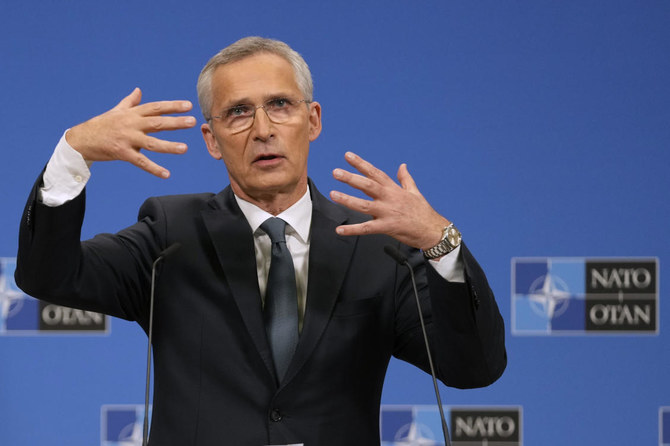
Jens Stoltenberg told Britain’s Telegraph newspaper that there were live consultations between members to use transparency around its nuclear arsenal as a deterrent.
“I won’t go into operational details about how many nuclear warheads should be operational and which should be stored, but we need to consult on these issues. That’s exactly what we’re doing,” he told the paper.
“Transparency helps to communicate the direct message that we, of course, are a nuclear alliance.”
“NATO’s aim is, of course, a world without nuclear weapons, but as long as nuclear weapons exist, we will remain a nuclear alliance, because a world where Russia, China and North Korea have nuclear weapons, and NATO does not, is a more dangerous world.”
Stoltenberg said last week that nuclear weapons were NATO’s “ultimate security guarantee” and a means to preserve peace.
Russian President Vladimir Putin has repeatedly warned that Moscow could use nuclear weapons to defend itself in extreme circumstances. It accuses the US and its European allies of pushing the world to the brink of nuclear confrontation by giving Ukraine billions of dollars worth of weapons, some of which are being used against Russian territory.
NATO, which has taken on a greater role in coordinating arms supplies to Kyiv, rarely talks about weapons publicly, although it is known that the US has deployed nuclear bombs to several locations in Europe.


![]()

NATO in talks to put nuclear weapons on standby, Stoltenberg tells UK’s Telegraph
Short Url
https://arab.news/b48tk
NATO in talks to put nuclear weapons on standby, Stoltenberg tells UK’s Telegraph
- Jens Stoltenberg tells paper there are live consultations between members to use transparency around its nuclear arsenal as a deterrent
- ‘Transparency helps to communicate the direct message that we, of course, are a nuclear alliance’


Latest updates


© 2026 SAUDI RESEARCH & PUBLISHING COMPANY, All Rights Reserved And subject to Terms of Use Agreement.