RIYADH: The head of the New York Stock Exchange has not given up on the initial public offering (IPO) of Saudi Arabian oil company Aramco, even as the kingdom’s bourse operator said it aspired to be the exclusive venue for the listing.
Thursday’s comments add to the mystery about Aramco’s listing venues as global exchanges compete to win part of the flotation as it will bring a major boost to trading volumes.
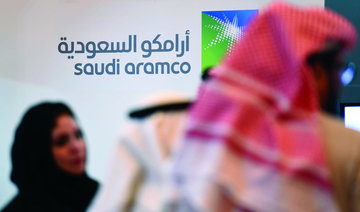
Saudi Aramco’s chief executive said this week that domestic and international exchanges such as New York, London, Tokyo and Hong Kong have been examined for a partial listing. The $100 billion IPO is aimed at helping raise the kingdom’s profile in the eyes of overseas investors, a key part of its goal to reform the economy that is reliant on oil revenues.
Asked by a reporter whether he had given up, NYSE Group President Thomas Farley replied: “No.”
Farley, who is attending an investment conference in Riyadh said the NYSE was talking to Saudi authorities about it but declined to elaborate.
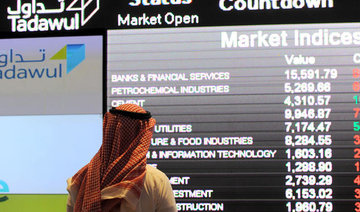
Khalid Al-Hussan, chief executive of the Saudi exchange, known as Tadawul, said earlier his exchange aspired to be the exclusive venue for listing the share sale and could absorb all of it.
Such a listing would dwarf anything else on the bourse.
Tadawul was working hard to convince Aramco of the merits of such a move, but the company had not yet decided, he said.
“Tadawul is the main exchange in the region and as the most liquid among the largest 25 exchanges in the world and among the 10 largest emerging markets, Tadawul aspires to be the exclusive venue,” he said at an investment conference in Riyadh.
Saudi Arabia expects to value the state-owned oil producer at a minimum of $2 trillion, in what could be the world’s biggest IPO, the centerpiece of its Vision 2030 plan to diversify the economy away from oil.
But some analysts have expressed concern about the risk of the share sale swamping the local market.
Tadawul’s market capitalization of Tadawul is about $340 billion. Saudi Basic Industries Corp. (SABIC), the largest company listed to date, has a market capitalization of about $78 billion.
“The exclusive listing of Aramco on the Saudi stock exchange is possible but at a speculated valuation of around $2 trillion it will be too large for Tadawul to solely handle the listing of even a 5 percent stake sale,” said Nitin Garg, senior analyst at SICO Bahrain. “The Saudi market does not have sufficient liquidity to absorb such a large initial public offering.”


NYSE president still keen on Aramco IPO

NYSE president still keen on Aramco IPO


Mexico eyes trade expansion, targets Saudi market with premium rice exports
RIYADH: Mexico is preparing to expand its trade ties with Saudi Arabia by exporting high-quality rice to the Kingdom, sources told Asharq Al-Awsat.
They said Mexico has an export offer for three premium rice varieties that meet the highest international standards.
Saudi Arabia imports limited quantities of Mexican rice, mainly for use in Mexican cuisine and in restaurants.
The latest initiative reflects the Kingdom’s position as one of the world’s largest rice consumers, with per capita consumption averaging 45.77 kilograms annually, the highest among plant-based food products.
Around 70 percent of consumption consists of basmati rice, while total annual imports exceed 1.3 million tonnes.
According to information obtained by Asharq Al-Awsat, the Saudi Ministry of Foreign Affairs received a request from the Mexican Embassy in Riyadh conveying the interest of the Mexican state of Nayarit in exporting premium rice to the Saudi market.
The embassy said that three rice varieties are available for export, including Super Extra Whole Grain Rice, long grain, with a monthly supply of 120 tonnes; Milagro Super Extra Rice, polished broad grain, with a capacity of 30 tonnes per month; and Morelos rice, a premium-grade variety.
Saudi Arabia has previously taken steps to encourage private-sector imports of Cambodian rice in a move aimed at diversifying supply sources alongside imports from India, Pakistan, the US, and Egypt.
Strong demand for favored rice varieties in Saudi Arabia and across the Gulf, combined with challenges such as rising shipping costs and climate-related disruptions, has occasionally led to price fluctuations. These factors have prompted the Kingdom to broaden its supplier base to ensure the availability of this commodity and maintain price stability.
The government recently decided to increase Pakistani rice imports to account for 20 percent of total needs, reinforcing supply stability and food security.
Forecasts suggest that per capita rice consumption in Saudi Arabia could rise to around 50 kg annually in the coming years, up from the current 45.77 kg, underscoring rice’s central role in the Kingdom’s food industry and traditional cuisine.


