RIYADH: The $500 billion mega-city planned by Saudi Arabia will be floated on financial markets alongside oil giant Saudi Aramco as part of the kingdom’s drive to diversify away from oil, Crown Prince Mohammed bin Salman said in an interview.
The 26,500-square kilometers business and industrial zone, named Neom, will extend into Jordan and Egypt. It was unveiled on Tuesday at a three-day international investment conference.
The surprise announcement is the latest — and most extraordinary — in a slate of privatization programs led by the floating of oil giant Saudi Aramco. The sales are designed to boost the Saudi economy and create jobs for millions of young people.
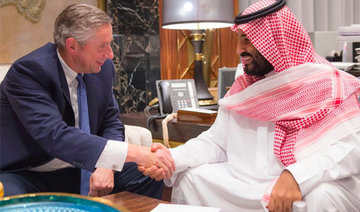
“Without a doubt, at the end of the day Neom will be floated in the markets. The first zone floated in the public markets. It’s as if you float the city of New York,” the Crown Prince said.
Prince Mohammed also said the Saudi Aramco IPO was on track for next year, dismissing reports of delays, adding it could be valued at more than $2 trillion.
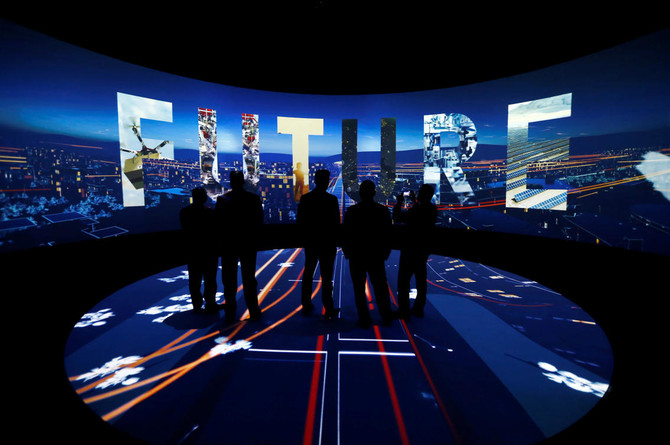
He spoke on the sidelines of the Future Investment Initiative conference, which has attracted nearly 4,000 delegates from around the world to Riyadh this week.
Adjacent to the Red Sea and the Gulf of Aqaba and near maritime trade routes that use the Suez Canal, the zone will serve as a gateway to the proposed King Salman Bridge, which will link Egypt and Saudi Arabia.
Neom will be fully owned by Saudi Arabia’s sovereign Public Investment Fund (PIF) until its listing, and will attract investments from companies in renewable energy, biotechnology, advanced manufacturing and entertainment, the PIF has said.
“It won’t be listed in the markets until the idea is mature enough,” he said. “It might be after 2030, it might be before, but the idea and the strategy is to float it eventually.”
He said the name mixed “neo,” meaning new, with M, the first letter of the Arabic word for future.
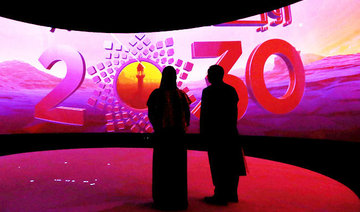
It is part of the Vision 2030 plan to overhaul the economy of Saudi Arabia, OPEC’s largest producer, and provide jobs for an overwhelmingly young population amid a global oil price decline since 2014.
Economic growth has slowed and the economy may shrink this year as the government introduces austerity measures.
“The idea is not to restructure the economy as much as to seize the opportunities available that we didn’t address before. We have high capacity and we use only a little.”
The Crown Prince said Saudi Arabia’s dispute with neighboring Qatar had not affected investment.
“Qatar is a very, very, very small issue,” he said.
Saudi Arabia and three Arab allies cut diplomatic and transport ties with Qatar earlier this year over accusations Doha supported Islamic “terrorists.” Qatar denies the allegations.
He said the kingdom’s war in Yemen would continue in order to prevent the Houthi armed movement from turning into another “Hezbollah” on Saudi’s southern border.
“We’re pursuing until we can be sure that nothing will happen there like Hezbollah again, because Yemen is more dangerous than Lebanon,” he said.


![]()
Saudi Crown Prince reveals Neom megacity to be listed
Saudi Crown Prince reveals Neom megacity to be listed

Latest updates




© 2026 SAUDI RESEARCH & PUBLISHING COMPANY, All Rights Reserved And subject to Terms of Use Agreement.