

Saudi Arabia announces $500 billion city of robots and renewables

1 / 5
Klaus Kleinfeld will be the president of the new project.
2 / 5
The wind and sun will allow NEOM to be powered solely by regenerative energy
3 / 5
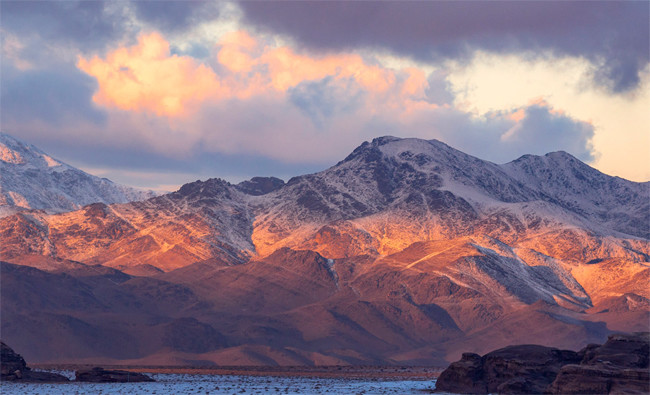
NEOM commands a unique location to bring together the best of Arabia, Asia, Africa, Europe and America
4 / 5
NEOM is developed to be independent of the Kingdom’s existing governmental framework
5 / 5
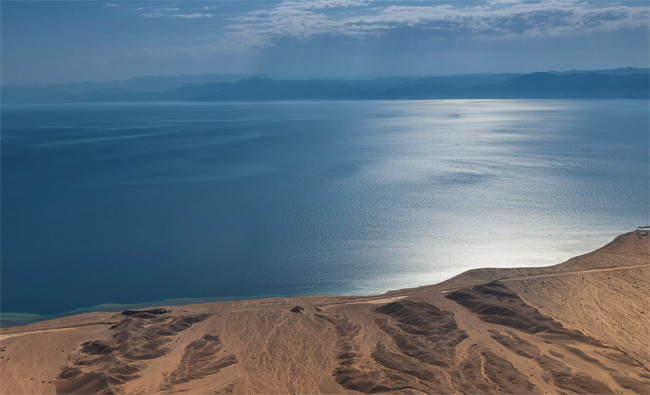
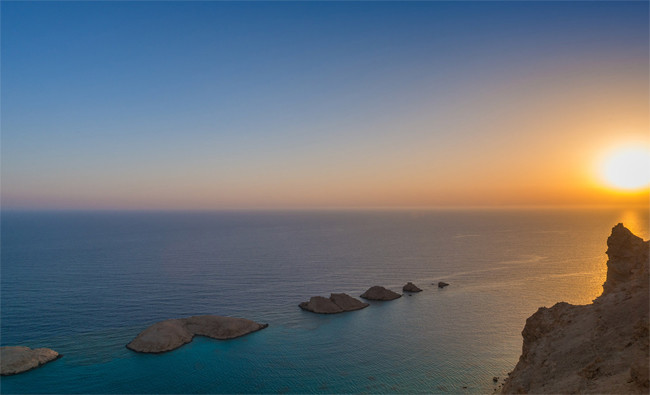
Overlooking the waterfront of the Red Sea to the South and the West, and the Gulf of Aqaba, NEOM enjoys an uninterrupted coastline stretching over 468 km
Updated 25 October 2017
Follow

Saudi Arabia announces $500 billion city of robots and renewables

LONDON: Saudi Arabia on Tuesday announced plans to build a $500 billion mega city on the Kingdom’s Red Sea coast, as part of a huge national push to diversify its economy.
The 26,500 square kilometers zone, known as Neom, will focus on industries including energy and water, biotechnology, food, advanced manufacturing and entertainment, Saudi Crown Prince Mohammed bin Salman said yesterday.
“The focus on these sectors will stimulate economic growth and diversification by nurturing international innovation and manufacturing, to drive local industry, job creation, and GDP growth in the Kingdom,” said Prince Mohammed, who is also the Chairman of the Public Investment Fund (PIF).
“Neom will attract private as well as public investments and partnerships. The zone will be backed by more than $500 billion over the coming years by the Kingdom of Saudi Arabia, the Saudi Arabian Public Investment Fund, local as well as international investors,” he added.
The business and industrial city will be located in the Kingdom’s northwestern region and is the world’s first zone to extend across three countries, stretching its borders into neighboring Jordan and Egypt.
Adjacent to the Red Sea and the Gulf of Aqaba, and near maritime trade routes that use the Suez Canal, the zone will power itself solely with wind power and solar energy.
The city aims to offer its inhabitants “an idyllic lifestyle paired with excellent economic opportunities that surpass that of any other metropolis. It will attract Saudi Arabians and expatriates, as do all other global societies,” PIF said in a statement.

Neom is the latest project in an ambitious plan to prepare Saudi Arabia for the post-oil era, and follows of plans sell shares in oil giant Saudi Aramco, create the world’s largest sovereign wealth fund and lift the long-standing ban on female drivers.
“Neom will be constructed from the ground-up, on greenfield sites, allowing it a unique opportunity to be distinguished from all other places that have been developed and constructed over hundreds of years,” he said.
PIF said in a statement that the first phase of the city would be complete in 2025. “(Neom) seeks to seize the great economic opportunities of the future by investing in them with confidence and vigor,” the investment body said.
“Neom provides a key opportunity to minimize GDP leakage by allowing those that normally would invest outside, to give them an option of investing locally, hence minimizing the GDP exodus that happens because of limited local investment opportunities,” PIF said in a statement.
The Kingdom has established a special authority to oversee Neom.
Wes Schwalje, COO of Dubai-based research and strategy center Tahseen Consulting, said: “Neom is bringing the same level of disruption to urban planning and economic development as Uber has brought to the technology sector. Investment is strongly influenced by stability, openness, and institutional quality.
“With the announcement of Neom, the Public Investment Fund and Saudi Arabia is communicating to the world that the Kingdom is open for business.”

Saudi Arabia exports 1st industrial water treatment plant with nanotechnology to Europe

Updated 11 sec ago
Follow

Saudi Arabia exports 1st industrial water treatment plant with nanotechnology to Europe

JEDDH: Saudi Arabia’s GI Aqua Tech is set to export its first industrial wastewater treatment plant using nanotechnology in early 2026, the company’s CEO, Sherif Desouky, told Al Eqtisadiah.

The project, which operates on a per-cubic-meter treatment system, is valued at approximately €5 million ($5.9 million), with the first plant set for France, marking the first nanotechnology-based water treatment and reuse system manufactured and exported from Saudi Arabia to the world.

Expanding exports to GCC states in Q1 2026

These plants are designed for 100 percent reuse of industrial wastewater, and the expansion plan includes exporting several units to Bahrain and other Gulf countries with a combined capacity of 10,000 cubic meters in the first quarter of next year.

Desouky noted that the plant being exported to France will be installed at a cosmetics manufacturing facility, one of the most challenging industries for wastewater treatment.

Previously, wastewater had to be collected and transported for incineration at high costs, but nanotechnology now allows on-site treatment and reuse with higher operational efficiency.

He added that the technology directly contributes to reducing liquid waste disposal costs, saving up to 80 percent of energy, and replacing conventional disposal with reuse solutions compliant with strict environmental standards.

Desouky stated that the technology was fully developed and manufactured in Saudi Arabia with government support, enabling the project to move from local implementation to exports to European and global markets.

The plant, located in Al-Kharj Industrial City under the Saudi Authority for Industrial Cities and Technology Zones, known as Modon, spans 23,000 sq. meters and is the first in the Middle East to combine nanomaterial production with wastewater treatment plant manufacturing, according to Desouky.

Investments reach €150m, with 50 percent of workforce Saudi nationals

The CEO explained that the project investments are expected to reach €150 million upon completion, with 54 percent of the workforce currently Saudi nationals.

He added that the technology has already been deployed across major projects in Saudi Arabia, successfully integrating large volumes of industrial and sanitary wastewater, including at Riyadh’s Third Industrial Area, where it achieved 100 percent water reuse in a global first. 

He added that while Modon allocated 40,000 sq. meters for the project, the technology required only 4,000 sq. meters, allowing the remaining land to be transformed into a public park irrigated entirely with treated, odor-free water, underscoring the high environmental standards achieved.

Decentralized plants in areas not connected to sewage networks

Desouky highlighted the world’s first decentralized nanotechnology wastewater treatment plant within a residential neighborhood in Al-Mousa district, northern Jeddah.

He explained that the plant was constructed and became operational in just 10 days to address the issue of areas not connected to the central sewage network, which previously relied on tankers, and it now serves 8,000 residents.

This model represents a global first as a rapid solution for water and environmental crises, with the added advantage that the plant can later be relocated without leaving any negative impact.

According to the CEO, applications of the technology have also included the world’s largest plant for treating concrete factory wastewater in Neom and the Samhan Hotel plant in Riyadh, which has successfully treated all types of hotel wastewater for a year, including kitchen, laundry, and blackwater — not just greywater, as is common in hotels.

He added that this has opened avenues for collaboration with the global Marriott chain, noting that exporting this technology allows Saudi Arabia to achieve record energy savings of 80 percent, reduce space requirements by 90 percent, and ensure water meets the highest quality standards.