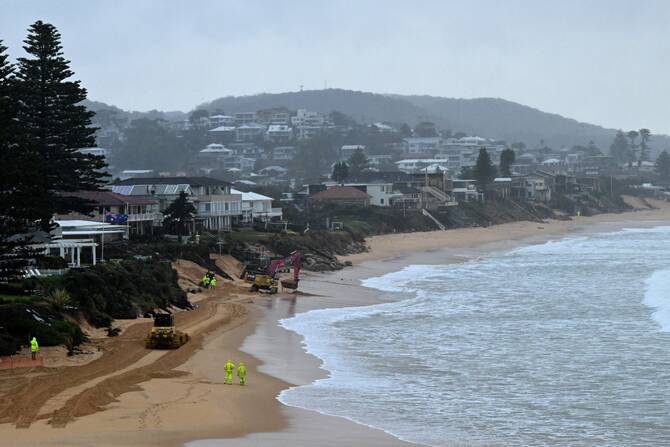
SYDNEY: Thousands of people in Australia's northeast state of Queensland were without power on Sunday after a tropical cyclone crossed the coast bringing heavy rain and destructive winds.
Koji, a category one cyclone, made landfall between the towns of Ayr and Bowen, about 500 km (310 miles) north of state capital Brisbane, before weakening to a tropical low, the nation's weather forecaster said.
The storm, with wind gusts of up to 95 kph (59 mph) and heavy rain, hit coastal towns including Mackay, a tourist hub and gateway to the Great Barrier Reef, it said.
Queensland state Premier David Crisafulli said around 15,000 properties had lost power due to Koji, which had also damaged property and boats, and closed roads.
Koji brought rainfall of up to 200 mm (7.8 inches) to some areas overnight and was expected to result in heavy downpours over the next 24 to 48 hours, Crisafulli said.
"There's the prospect of flooding, Queenslanders will handle that," he said in televised remarks from Brisbane.
Earlier, Prime Minister Anthony Albanese described flash flooding as a "major risk" across a large stretch of Queensland's coast.
The weather forecaster said the severe weather would likely persist through Sunday before possibly easing on Monday.
Koji comes after the state was hit in March by Alfred, a downgraded tropical cyclone, brought damaging winds and heavy rains, cutting power to hundreds of thousands.


![]()


Thousands of Australians without power after tropical cyclone hits Queensland
Short Url
https://arab.news/wyqqw
Thousands of Australians without power after tropical cyclone hits Queensland
56 Afghan civilians killed in conflict with Pakistan since last week: UN
- Hostilities between the neighboring countries intensified last week
GENEVA: The United Nations rights chief said Friday that 56 Afghan civilians had been killed, including 24 children, since hostilities with neighboring Pakistan intensified last week.
And since the start of the year, the number of civilians killed in Afghanistan stood at 69, with 141 injured, Volker Turk said in a statement, urging “the Pakistan military and Afghan de facto security forces to end immediately their fighting, and to prioritize helping the millions who depend on aid.”
And since the start of the year, the number of civilians killed in Afghanistan stood at 69, with 141 injured, Volker Turk said in a statement, urging “the Pakistan military and Afghan de facto security forces to end immediately their fighting, and to prioritize helping the millions who depend on aid.”
Latest updates


© 2026 SAUDI RESEARCH & PUBLISHING COMPANY, All Rights Reserved And subject to Terms of Use Agreement.