

Saudi Arabia announces $500 billion city of robots and renewables

1 / 5
Klaus Kleinfeld will be the president of the new project.
2 / 5
The wind and sun will allow NEOM to be powered solely by regenerative energy
3 / 5
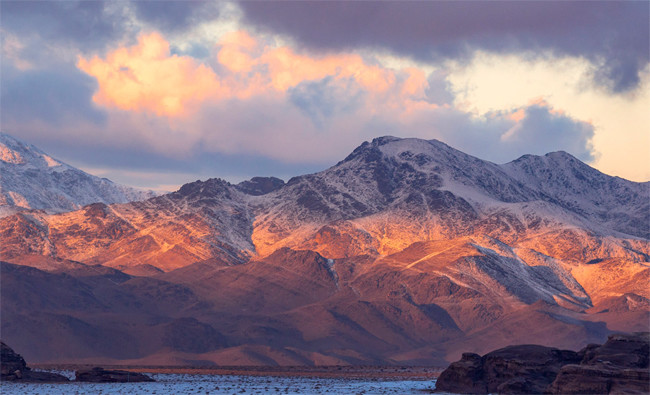
NEOM commands a unique location to bring together the best of Arabia, Asia, Africa, Europe and America
4 / 5
NEOM is developed to be independent of the Kingdom’s existing governmental framework
5 / 5
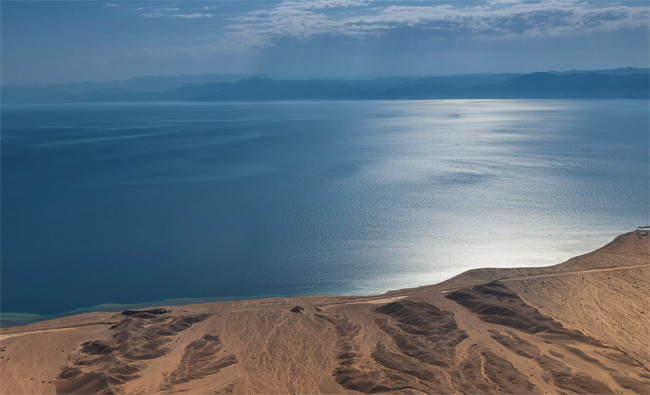
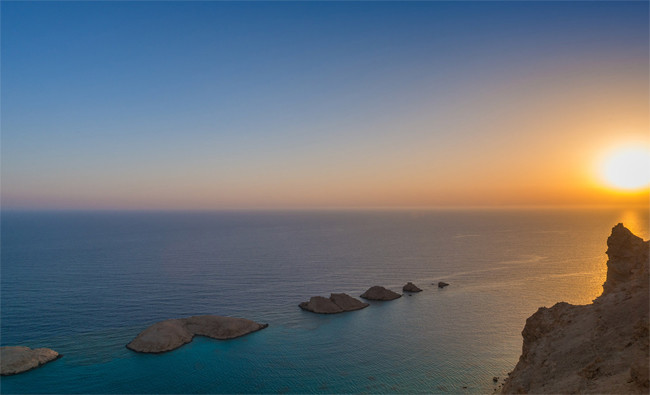
Overlooking the waterfront of the Red Sea to the South and the West, and the Gulf of Aqaba, NEOM enjoys an uninterrupted coastline stretching over 468 km
Updated 25 October 2017
Follow

Saudi Arabia announces $500 billion city of robots and renewables

LONDON: Saudi Arabia on Tuesday announced plans to build a $500 billion mega city on the Kingdom’s Red Sea coast, as part of a huge national push to diversify its economy.
The 26,500 square kilometers zone, known as Neom, will focus on industries including energy and water, biotechnology, food, advanced manufacturing and entertainment, Saudi Crown Prince Mohammed bin Salman said yesterday.
“The focus on these sectors will stimulate economic growth and diversification by nurturing international innovation and manufacturing, to drive local industry, job creation, and GDP growth in the Kingdom,” said Prince Mohammed, who is also the Chairman of the Public Investment Fund (PIF).
“Neom will attract private as well as public investments and partnerships. The zone will be backed by more than $500 billion over the coming years by the Kingdom of Saudi Arabia, the Saudi Arabian Public Investment Fund, local as well as international investors,” he added.
The business and industrial city will be located in the Kingdom’s northwestern region and is the world’s first zone to extend across three countries, stretching its borders into neighboring Jordan and Egypt.
Adjacent to the Red Sea and the Gulf of Aqaba, and near maritime trade routes that use the Suez Canal, the zone will power itself solely with wind power and solar energy.
The city aims to offer its inhabitants “an idyllic lifestyle paired with excellent economic opportunities that surpass that of any other metropolis. It will attract Saudi Arabians and expatriates, as do all other global societies,” PIF said in a statement.

Neom is the latest project in an ambitious plan to prepare Saudi Arabia for the post-oil era, and follows of plans sell shares in oil giant Saudi Aramco, create the world’s largest sovereign wealth fund and lift the long-standing ban on female drivers.
“Neom will be constructed from the ground-up, on greenfield sites, allowing it a unique opportunity to be distinguished from all other places that have been developed and constructed over hundreds of years,” he said.
PIF said in a statement that the first phase of the city would be complete in 2025. “(Neom) seeks to seize the great economic opportunities of the future by investing in them with confidence and vigor,” the investment body said.
“Neom provides a key opportunity to minimize GDP leakage by allowing those that normally would invest outside, to give them an option of investing locally, hence minimizing the GDP exodus that happens because of limited local investment opportunities,” PIF said in a statement.
The Kingdom has established a special authority to oversee Neom.
Wes Schwalje, COO of Dubai-based research and strategy center Tahseen Consulting, said: “Neom is bringing the same level of disruption to urban planning and economic development as Uber has brought to the technology sector. Investment is strongly influenced by stability, openness, and institutional quality.
“With the announcement of Neom, the Public Investment Fund and Saudi Arabia is communicating to the world that the Kingdom is open for business.”

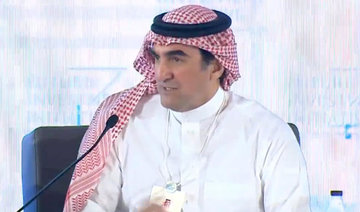
UNCTAD, Social Development Bank launch fellowship to power Saudi entrepreneurs

Updated 23 December 2025
Follow

UNCTAD, Social Development Bank launch fellowship to power Saudi entrepreneurs

RIYADH: The Social Development Bank has signed a memorandum of understanding with UN Trade and Development to launch the “Empretec Saudi Fellowship,” a new initiative aimed at equipping high-potential Saudi entrepreneurs with advanced training and tools to scale their ventures.

The agreement was signed on the sidelines of the second edition of the DeveGo 2025 forum, held on Dec. 21–22 at the King Abdulaziz International Conference Center in Riyadh. The event brought together entrepreneurs, policymakers, and representatives from regional and international organizations, alongside public and private sector leaders.

Featuring more than 150 exhibitors, 85 speakers, and 45 workshops, the forum focused on sharing local and global best practices and strengthening the Kingdom’s entrepreneurial ecosystem.

The Empretec Saudi Fellowship is part of UNCTAD’s flagship capacity-building program to promote entrepreneurship and support micro, small, and medium-sized enterprises and startups. Active in more than 40 countries, the program seeks to develop personal entrepreneurial behaviors through intensive training, access to international experts, and technical tools that help transform promising ideas into scalable, high-impact businesses.

Rebeca Grynspan, UNCTAD secretary-general, said Saudi Arabia offers fertile ground for entrepreneurial growth.

“Saudi Arabia has a wonderful platform to bring everybody up, and the entrepreneurs here are so eager. They have ideas, creativity, and energy,” she told Arab News. “If they come through our program with the Social Development Bank, which does a wonderful job, they will be more successful — because that’s what we want.”

In his opening remarks, Saudi Minister of Human Resources and Social Development Ahmed Al-Rajhi, who also chairs the SDB board, highlighted the rapid evolution of the Kingdom’s startup landscape.

“The Kingdom is witnessing a qualitative transformation in the entrepreneurship and freelance ecosystem, enabling young men and women to enter new promising sectors such as artificial intelligence, renewable energy, advanced technologies, and venture capital,” he said. “This provides broader opportunities to contribute to innovation, expansion, and global competitiveness.”

During a tour of the exhibition alongside Al-Rajhi, Grynspan met a wide range of small and medium-sized businesses and handicraft makers, praising the depth of local talent. She noted that participants spanned the full spectrum of enterprises — from early-stage ventures to more established and sophisticated companies — reflecting a rich diversity of experience.

Al-Rajhi said the Social Development Bank invests more than SR8 billion annually to support enterprises and entrepreneurs, helping raise employment in bank-financed businesses from about 12,000 in 2021 to more than 140,000 in 2025.

Beyond financing, the bank runs several non-financial programs, including the Jada 30 business communities, which have incubated more than 4,300 enterprises across 13 cities, and the Dulani Business Center, which has delivered over 67,000 consultations benefiting more than 150,000 male and female entrepreneurs.

Speaking on the broader economic outlook, Grynspan added: “This is a wonderful place to come. Now is an economy that is thriving, is a population that is hopeful. And you have these young, talented people that are only waiting for an opportunity to make it happen for everybody.”

During the forum, the bank also signed multiple cooperation agreements spanning key sectors such as finance, education, energy, healthcare, heritage, the nonprofit sector, and freelance work. The partnerships align with SDB’s strategy to build an integrated system of financial and non-financial empowerment tailored to the needs of entrepreneurs, startups, and micro-enterprises.